The story of ‘Magic’ and his rescue

‘Magic’ is another of our rescued dog stories, for the story of his rescue and recovery is nothing but ‘magical’.

Last year when the Commonwealth Games 2010 ended, it was time to release the street dogs back into the games venue areas where they were picked up from and kept in at shelters for the period of the games.

The Municipal Corporation of Delhi’s SSCBC (Society for Stray Canine Birth Control) decided then that to ensure transparency, the release of all dogs back into their respective areas will be photographed and video-graphed as evidence to comfort all that ‘no dog was dislocated from its original territories’ in conformation with the Animal Birth Control Rules 2001 (drafted under the Prevention of Cruelty to Animals Act 1960).

On one such Dog-release exercises happening in South Delhi, I had volunteered to be part of the Release Team and photograph/videograph the release of the dogs as per the details we had of their respective areas at the time of picking them up.

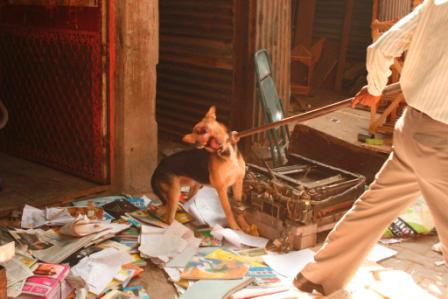
As we were releasing some dogs in the area of R.K Puram, a middle-aged lady came up to me and pointed to a dog that had taken shelter in a shop of his rag-dealer husband. She told me ‘Take him, he has lost his eye’. I asked what happened and went close by, only to see something that I had not imagined. The left side of this male dog’s face was completely chewn apart by maggots and so was his left eye and we all could literally peep into his jaw, see his tongue and it was to say the least, a painful sight.

I requested the MCD Dog Catchers who were accompanying me in the Release vehicle to help catch that dog, but this was not a rescue for the faint-hearted and they couldn’t catch him and he ran far far away.

MCD’s dog catcher tries to catch the maggot infested dog ‘Magic’ but he resists the catching attempt and runs away -Image Copyright: Jaagruti

Next day morning, we at ‘Jaagruti’ decided to make another trip to that area as that lady had shared with me that the maggot-infested dog stays in and around their shop only.

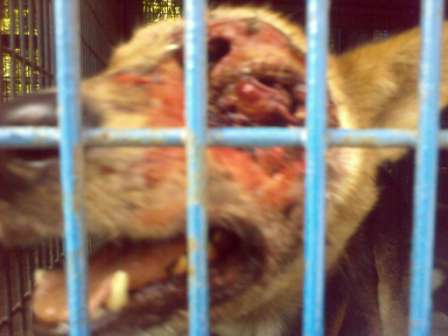
After a few minutes of searching for him, we were able to locate this dog, but now came the big challenge of how to win this dog’s confidence and pick him up to keep him in our car…we had done this before, but this time around we needed some help and help did come to us in the form of the rag-dealer husband of that lady, who was friendly with that dog and helped pick him up and place him in our car. We had used the tried and tested trick of covering his eyes with a cloth and tying a leash around his neck…but then mayhem was to follow as this dog kept running up and down in our car and was scratching his face with the windowpanes, visibly in pain with the maggots tearing into his flesh, oozing blood all over.

We then called upon the ambulance from the Animal Hospital we at ‘Jaagruti’ support through monetary and in-kind contributions and requested them to help us with this rescue case. To our good fortune, their ambulance was nearby…and then we were successfully able to transfer this dog from our car into the ambulance and off he was sent to the hospital.

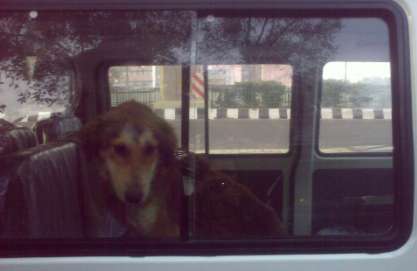
‘Magic’ after being put in the Animal Ambulance- Image Copyright: ‘Jaagruti’

In the case of any other animal hospital in any part of Delhi or the world, such a severe case of maggot infested dog would have perhaps been euthanized or as they say’ peacefully put to sleep’ and we at ‘Jaagruti’ were prepared to hear that from our trusted vet too, but that wasn’t to be as the docs decided to give it a shot and then began the ‘magical’ treatment of this dog, whom we chose to name ‘Magic’…perhaps because his recovery was magical news for us and also because the name of the dreaded maggots who made this dog’s life hell started that way as well!

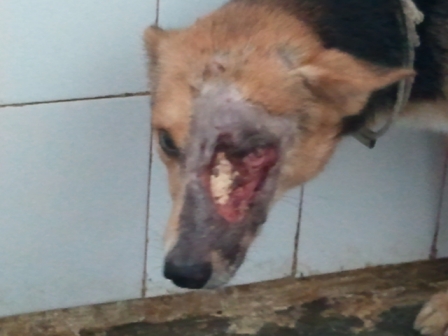
As ‘Magic’ underwent treatment, on day 1 his maggots and wound were cleared, on day 2 he was put on drips because with all the maggot clearing medicines going into his mouth, he had stopped eating food through his mouth…the glucose drips continued till day 4 and then came the good news, that Magic had started taking his food himself..

‘Magic’ on the road to recovery at the Animal Hospital – Image Copyright: ‘Jaagruti’

Another month of treatment and recovery followed and on Day 40, he was released back into his area where he was welcomed back by the area residents, all astonished and pleased that he had recovered and so were we!

‘Magic’ in the ambulance post recovery and before being released back into his area -Day 40 (Image Copyright: ‘Jaagruti’)

‘Desty’ – Destiny’s child!

For all animal cases that we get to attend directly to at ‘Jaagruti’, we just prefer to give them a name rather than referring to them as an anonymous dog or any other creature. But that name is just for us so that on platforms like this blog, we can share that animal’s story with you. We make it a point not to call that animal being treated out with that name, lest the animal gets used to it and then has no one to call it out when he goes back to his/her life on the street after spending his days of recovery either with us or at a boarding or at an animal hospital shelter.

Now, to who is Desty?

Desty is the name we gave to a street dog who landed out of nowhere at our doorsteps a few months back, we were alerted to his presence by the barking and screaming of the other dogs that live on our street. Desty was a new dog, we hadn’t seen him anywhere near the stretch of our colony or the colonies adjacent to ours!

And visibly as we could make out, Desty was unwell. He resisted the barking of our area’s street dogs and made himself comfortable next to our doorstep, we thought he won’t make it and won’t eat, but then when we placed a bowl of milk next to him so that we could examine him, he gulped it in seconds as if he was thirsty for ages…we gave him another bowl and he gulped it again. He was clearly in no mood to go anywhere and he just stayed put over there for the next two days and we kept feeding him. He had no visible signs of injury, but then we noticed something, he was showing signs of twitching and was coughing, symptoms characteristic of early stages of Canine Distemper.

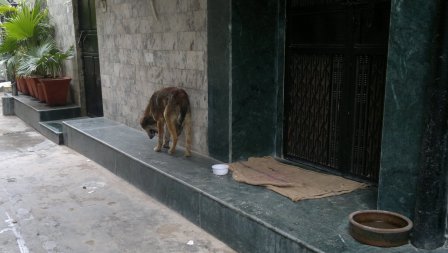
'Desty' as we saw him on Day 1- Image Copyright: 'Jaagruti '

Since we were feeding him, he trusted us enough to lift him and put him in the car to take him to our vet for examination or perhaps when we now look back, we think this was what Desty had come to our doorsteps for!

As the vet examined him, our fears were proved true, Desty was indeed showing signs of  Canine Distemper, but the good news was that this was perhaps the initial stage and as per our trusted vet’s advice, we shifted him to the isolation ward of the animal hospital we support and there, under the supervision of our trusted vet, began Desty’s ‘homeopathic’ treatment, a specially designed course designed by human homeopathic doctor by the name of  Dr. Shukla who works out of Noida, comprising of homeopathic medicines like Distemperium and Agaricus mixed in strict-secret proportions by him and given every few hours.

Within a span of 10 days, Desty was fit and fine again and we decided to leave him on the street at the very car parking spot where we had first noticed him prior to him coming on his own to our house doorsteps!

We had opted to release him back on the street in the early hours of the morning, so that he could safely chart his way back to whichever area he belonged to and sure enough he did.

'Desty' before being released back on the street-Post-treatment (Day 12) - Image Copyright: 'Jaagruti '

We kept thinking about Desty as we couldn’t locate him again after that morning, perhaps this dog was just destined to come to our doorsteps on his own to get himself treated of Distemper, a life threatening disease with no cure if not detected and cured in the early stages of infection. And that is why we chose to name him ‘Desty’.

We were in for another surprise a month down the line, we noticed Desty next to our home yet again, this time hale and hearty and even showing his teeth to the dogs that inhabit our street. We came out, noticed him and remembered him and then he looked at us and sprinted away…we guess he had only come to tell us that he was fine and happy now and to put us at ease.

It is these little inexplicable and often ‘divine’ moments of satisfaction and joy of seeing an animal you helped treat back on its feet again that uplifts our sagging spirits to keep on in our efforts to help those who can’t help themselves.

A school presentation, a Teacher, Delhi Fire Service and a rescued Pigeon

Life is a puzzle which gets deciphered when we look back and connect the dots. When I was in school, I had yearned for people to come over and talk to us about animals and environment but no one did, I tried to do it myself-telling my fellow classmates about not using polybags to dump kitchen waste as it kills a cow and clogs our drains, but no one listened….probably I didn’t communicate the right way or perhaps that was because our teachers didn’t reinforce what I said or probably because no one had the time to think about ‘going green’ as that buzzword wasn’t around at that time, neither was ‘Environment’ a career option as my School counsellor was clueless when I went and asked her about it.

Nevertheless growing up, I had always harboured deep within me a dream and a desire to go back to my school and speak to students and teachers therein on subjects pertaining to animals and environment because this is all I had always wanted to do and this is one of the reasons ‘Jaagruti’ was born…

And who says, dreams don’t come true, they do take time but I believe they do come true…and sometime back I had the opportunity to go back to my school and address the students in there not once but twice on subjects close to my heart, once on ‘Waste Management’ and the second time around I had the opportunity to address an Eco-Club seminar which was attended to by eco-club teachers from about 15 more schools and a group of Eco-club students from Classes 9-12. The focus of this interaction with teachers and students was to apprise them of the little things they can share with their colleagues/students/classmates on what all we as ‘individuals’ can do in our daily lives to help street animals and care for the environment.

One of the many things I had touched upon in this interaction was how many birds-eagles/kites, crows, mynahs and pigeons often become victims of kite strings-the glass manjhas/threads used by people to fly their kites high into the sky.

Though the kite flying games end, these kite strings often end up tearing through many a birds wings, either while they navigate through the open skies or when later on when these birds perch on the tree branches-their tiny claws/legs and wings remain susceptible to be trapped in the strings left wound around tree branches forever…

Someone in the audience that day in my former school was listening carefully to what I was saying and that was Ms. Rajbir Kaur, a teacher from a neighbouring school who was faced with a similar situation a few weeks later and that is when she called us over on the ‘Jaagruti’ helpline.

As Ms. Kaur’s family was attending to guests, the little kids in the family spotted a pigeon hung upside down from the branch of a Eucalyptus tree, the kids tried and tried along with their father of ways to get the pigeon down, but the tree was so far away from any houses’ balcony and the branches were too high, that it was not within reachable distance from the common ladders and poles we all have in our homes and they were now feeling helpless.

Ms. Kaur called us over, and after listening to the story thus far, we just gave her one calm advice to follow-to call the Delhi Fire Service on 101 and request them to send over their Fire Brigade as their long ladder will help. The Delhi Fire Service staff has time and again helped people help birds stuck in such situations and needless to say when Ms. Singh called 101, they were prompt in sending their Fire Brigade over….just that there was one thing she missed telling them…which is what height the pigeon was stuck on and thus the Fire Brigade that came didn’t have a ladder that long to reach the pigeon. And it was then that we all had to sincerely request the Delhi Fire Service staff to call for the Fire Brigade with a longer ladder and they agreed after initial hesitation. Their hesitation was that since this was a festival day and there could be fire emergencies in the city, how could they be here saving a bird…we assured them that if there is any such emergency; we will let them go and may be God will be kind enough to spare Delhi of any fire disasters and then they agreed :)

The Delhi Fire Service then called upon their most prized possession ‘The Bronto Skylift’, a new entrant into their fleet of Fire Brigades and then began the story of a heroic rescue of nothing but a pigeon who was hanging upside down and still uptil then making everyone wonder whether it was even alive!

But then, as soon as the Bronto Skylift’s ladder reached near that branch, the Pigeon started fluttering its wings in hope and excitement as if to convey that it was well alive and kicking!

The Delhi Fire Service staff got a heroic applause as they brought the pigeon safely down and then taking it to Ms. Kaur’s residence even helped cut the kite string which was wound around its wing, in such a neat manner that there was no injury caused to the pigeon, now named ‘Hero’ by Ms. Kaur’s husband-Mr. Singh. Since it is not advisable to release birds like Pigeons at night time, Mr. Singh’s family gave ‘Hero’ a nice place to rest, grains and water to feed on and even put on their water cooler (while switching the fan off) so that ‘Hero’ has a restful sleep.

Next morning, we went and took the pigeon for further examination to Abhinav at Fauna Police and then the next day since the pigeon was all good and healthy, Mr. Singh got him back on his way back from work and released it onto his balcony.

And then, the anticlimax happened, ‘Hero’ actually ended up being a ‘Heroine’, which is that Pigeon wasn’t a male but rather a female pigeon who then chose to use an abandoned nest atop an almirah placed in Mr. Singh’s balcony to lay her eggs :)

The story of Heroine’s rescue and release has been delightfully documented in the video shared by Mr. Singh with us below. Have a look!

Mr. Singh had this to say, “By saving this bird’s life, the Delhi Fire Service has shown that they respect and value all life (humans and animals) and that is what all of us need to learn and imbibe”.

Then onwards Mr. Singh’s family has also taken the initiative of getting all of their colony’s street dogs vaccinated against Rabies, which were uptil then only being fed by the area residents, but they took on additional responsibility and expense to make sure that these dogs are now vaccinated as well.

It is said that doing one good deed prompts you to do the next one and thus, the spirit of compassion continues to flow!

Adopt a dog, stay medically fit

By Ipshita Mitra (Courtesy: The Times of India, dated 14 July 2011) 

They are cuddly, cutesy and furry but that’s not about it. More than just friends, dogs can be your medical guardians too.

Dog ownership can assure you a healthy living sans the dreadful pills. And yes, more than often they take on the role of teachers too. Pets double up as friends and add novelty to your life. Here’s how:

Pets chase loneliness away
Pet companionship has therapeutic value. When everything seems to fail, there is chaos and distress everywhere, a tight hug or an emotional release with your pet heals you in no time. When a bad fight with a friend, an unexpected tiff with your lover or a verbal brawl with parents unsettles you, a pet comes to your rescue. Shubhankar Paul, a media professional, says “In times of gloom and disturbance, a gentle caress of my dog washes off all my worries. It strengthens me to face situations with confidence.”

When you bid goodbye to your pet in the morning before leaving for work, you are well aware that somebody would be waiting to greet you at the door once you return after a hard day’s work. The unconditional love that a dog gives you transcends all definitions of love that in human relations is governed by ‘terms and conditions apply’.

Heart condition? Bring home a pet
Allopathy may disappoint you but pet therapy works wonders and is medically approved.

Dr. Stephen Sinatra, cardiologist and nutritionist in his book Heart Sense for Women says for heart disease patients, grief and loneliness can be debilitating. According to the study by Sinatra, heart patients who own pets have a higher survival rate than the ones who don’t. Moreover, pets help in reducing blood pressure and stress.

If you have an ailing elderly person at your residence without adequate company, a pet is an apt solution. Be assured of positive results with pet companionship. No medical bills and absolutely free of side-effects!

Psychological security
We are often put out by unnecessary judgmental behaviour of others. But a pet never imposes moral dictates on you. He listens silently and responds with adorable gestures that calm you down.

Connecticut psychologist Herbert Nieburg, author of Pet Loss: A Thoughtful Guide for Adults and Children confirms that “pet ownership is psychologically beneficial”. Pets offer you comfort without asking for anything in return.

Avers Srishty Chaudhary, a media professional and owner of two Pomeranian dogs, “It is like writing a diary entry where you can pour your heart out without the fear of being reprimanded or jeered at. Whenever my mother scolded me, my dog would cast an angry stare at her only to prove his allegiance towards me. And I would feel so secure.”

With pets come responsibility
Pets are popular across age groups. Research shows that married couples who are without kids often prefer to adopt a pet to cultivate a sense of responsibility in the process of nurturing their pet.

Children and the elderly are among others who bask in the company of a pet, preferably a dog. Dr. Rima Sehgal, psychologist and counsellor says that “a pet in the house exudes a healthy atmosphere and makes you learn the nuances of nurturing and responsible behaviour.”

Pets are a blessing for kids with working parents and no siblings. Inanimate toys can never substitute a living, receptive and responsive companion. Pets are a vibrant company therefore.

Learning tolerance
Besides making you more responsible, a pet has a sobering effect on you. It’s a beautiful feeling to share with your dog, from food to love of your family members, not to mention, giving in readily to its attention-seeking antics. An impatient self is healed in a pet’s company.

With them you laugh, learn and love. Bring home a pet and discover the joys for yourself.


Elbow rashes in street dogs- the ‘magic’ cure!

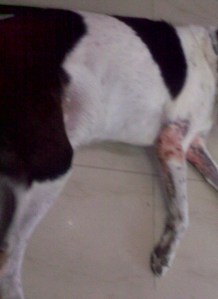
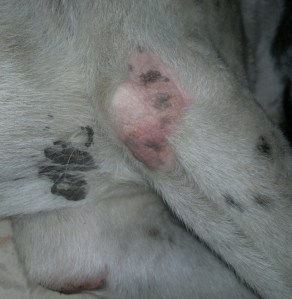
Our patient: A dog with elbow rashes in his forelegs

See the photograph above, it is of our neighbourhood street dog who had been having these elbow rashes in both of his fore legs, as time passed by and rains  intensified last year this infection spread on to the whole of his front forelegs. We took him to one doctor after the other and met with no success, he was repeatedly administered antibiotics and we were advised to orally administer him Avil (Anti-allergc drug), Ampoxin, Topclav and so many other medicines at various intervals by so many of the vets we consulted, but over a period of 3 months we met with no success at all!

 
But finally a vet asked us to follow the below mentioned external treatment protocol for this infection every alternate day and we are happy to share that after a month and a half of diligently following this medical treatment protocol, this dog was cured of its elbow rashes and thats the reason we wish to share it with you all:
 
1. Wear gloves
 
2. Mix a few crystals of Potassium Permanganate (KMNO4) in filtered water. (You can get these crystals from your local chemist shop). KMNO4 is a disinfectant.
 
3. We then cleansed the whole infected portion on this dog’s forelegs with cotton swab dipped in the Potassium Permanganate solution.
 
4. We then took an empty syringe and filled it with H2O2 (Hydrogen Peroxide)- you can get a suspension for this at your local chemist shop.
 
5. Then it was time to gently release the H2O2 droplets from the syringe onto the infected portion cleansed with KMNO4 solution, we saw bubbles but that wasn’t a reason to worry, as its just a chemical reaction happening between H2O2 which is a mild acid with KMNO4…but we identified that perhaps it is this ‘magic’ step which actually helped kill the infection causing microbes on this dog’s legs.
 
6. After having repeated step 5 for all infected portions on this dog’s legs, we were advised to rub oodles and oodles of  Himax ointment (An Ayurvedic veterinary ointment) mixed with equal portions of Spectrazole ointment onto the whole of the infected portion. We made sure we were wearing sturdy gloves during this process.
 
7. We repeated steps 1-6 every alternate day for this dog and the result is there to see in the photograph below.

The elbow portion of the dog-post treatment


Ear infections in Street Dogs-our experience at treating them

Come rains, comes humidity and mositure in the air, the ideal weather for microrganisms like bacteria, yeast and fungi to proliferate. How often have you seen a dog walking with his/her head titled to one side or continuously shaking its ear? If you do see any dogs exhibiting the above symptoms or scratching its ear with a wall or body of a car, our advice is do not ignore that sight, if you do care for the well being of that street dog…for this could well be an indicator that the dog is battling with a microbial infection in its ear.

We at Jaagruti had two such doggy patients to attend to in the past month and in this post we share what we did to get their infection treated.

Case 1: We saw a dog walking with its head tilted to its left, he was badly shaking his head and was in visible pain. On closer examination we found that his external ear had pus accumulated in it. Though the dog was friendly, we took no chances and tied his mouth with a cloth string and then using cotton dipped in Betadiene solution went about clearing his ear as much as possible of the accumulated pus, which if not removed would have served as an ideal breeding ground for more insects and flies and could have also resulted in maggot infestation in the dog.

We kept on changing the cotton swab till we were able to clear most of the pus and then we tried to trace the location from where the pus was oozing out from and noticed that it was coming out from a spot in the ear lobe. The first aid treatment in the form of clearing of this pus from the dog’s ear visibly relieved the dog and he was now much ata ease and trusted us to put him in our car and take him to our consultant vet. At the vet’s clinic, after an examination it was found out that this dog was suffering from Yeast infection in its ear and that was what had caused the Pus. At the vet’s clinic, a thorough cleansing of both the ears of that dog was done (yes, we got both ears cleansed, even though the pus infection was just in one year), two  injections followed, one an antibiotic and the other being Belamyl (a Multi-Vitamin injection) and then the doctor advised us to administer ear drops into the Dog’s ear for a course of 3 days.

We were advised by our vet to administer Cipla’s Otibact Ear Drops into that dog’s ears-these ear drops contain Enrofloxacin and Silver Sulfadiazine, costs Rs. 80 for a 15 ml bottle. These ear drops are used in case of canine external ear infections complicated by yeast/fungi/bacteria.  The ear drops look more like a white emulsion and contains drugs that inhibit the multiplication of the microbe by acting on the enzymes involved in that microbe’s DNA Replication process). The dose prescribed by our vet was 4-5 drops of Otibact once daily targeted into the ear lobe and then we were advised to rub the ear so that the drops get rubbed into the ear skin properly.

We religiously administered these ear drops, and the dog’s ears were fit and fine again and had even regained their original shape and were back to being standing ears again from the floppy ones! :)

We also learnt that ear infections are more common in dogs with floppy/bent ears than those with standing ones as shade and mositure are easily available in a floppy ear which are ideal conditions for microbial infection, whereas in dogs with standing ears, there is more access to air and light.

Case 2: Involved a middle aged female dog who was continuously scractching her ears and shaking her head vigorously. On closer examination of her ears, we found a coat of dry powdery looking ear skin in both her external ears. To fix this problem we followed a simple course of administering her a set of ointments for a period of 3 days before she was fit again.

Treatment course followed is mentioned below:

Wear gloves, muzzle the dog and then squeeze ample amount of Spectrazole (anti-fungal, anti-microbial) ointment , mixed with some bit of Betadiene ointment onto the gloves and rub it onto the inner part of the dog’s ear flaps, then gently rub the dogs ears from outside in such a way that the ointment spreads itself all over the infected portion. Just make sure that you do this with gentle hands, because even street dogs like us, don’t like their ears pulled for no reason :)

Please remember that since we are dealing with street dogs in both the above cases and if you happen to be doing something similar, it is important that our first effort is to restrain these dogs using a muzzle or a cloth string, if need be even gently cover their eyes with dark wet cloth, this will help calm the animal down while you put drops or rub ointment into their ears.

Limping Dogs: A treatment we used that worked!

Many a time we at Jaagruti have come across street dogs with a limp in either their hind (back) legs or the fore (front) legs. The cause for these limping legs is not difficult to guess, more often than not it is inflicted by humans whereby dogs get hit by vehicles or often it is self-inflicted when the severely territorial street dogs acting macho enter into ‘dog fights’ to shoo other street dogs from intruding into their areas.

But, since it is practically impossible to pick up all limping street dogs and take them to a vet to get antibiotics and painkillers administered for a course of 3-4 days, we were looking for a simpler method to treat such dogs, a method which gives us the flexibility to treat them on the street with minimal fuss.

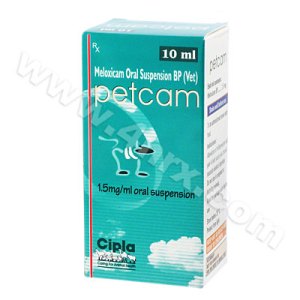
Thankfully, while exploring such options, our consultant vet suggested we try out a veterinary liquid syrup based medicine named, ‘Petcam’/now renamed ‘Melcam’ (Brand of CIPLA) or ‘Melonex’ (Brand of INTAS). For Rs.50-Rs.80 for a 10 ml bottle depending on the brand one buys, it was and is not a strain on the pocket either.

As we purchased our first bottle of Petcam/Melcam/Melonex, our eyes noticed its key ingredient, which was ‘meloxicam’ (also the more generic name of this medicine). Meloxicam is a non-steroidal anti-inflammatory drug (NSAID). It is also the substitute advised in place of ‘Doclofenac’.

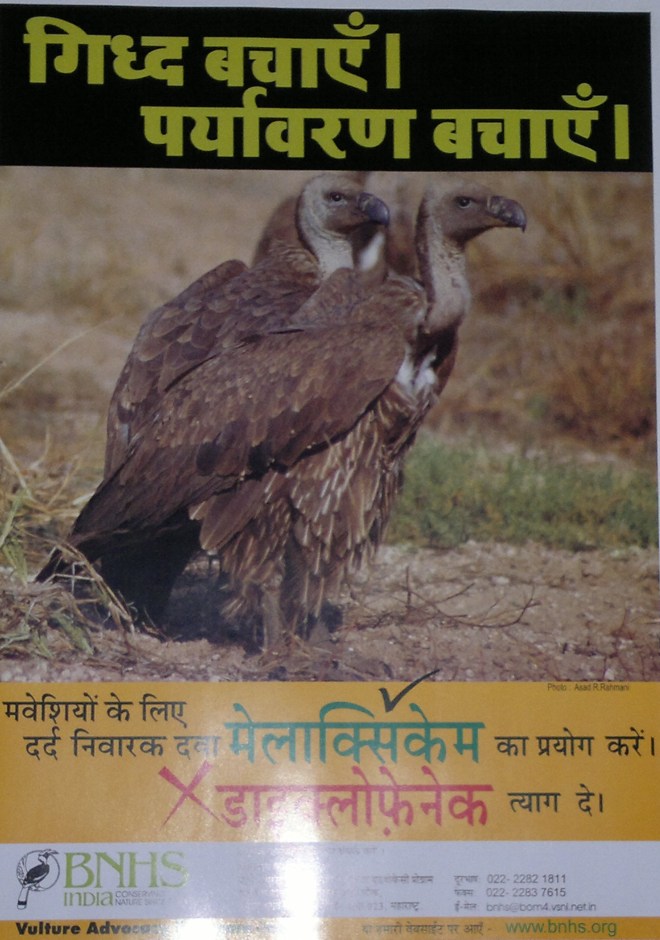
A poster being used to make public aware of using 'Meloxicam' in place of 'Diclofenac' as a veterinary drug/painkiller (As Diclofenac administration to cattle is being held responsible for the decline in vulture population that feeds carcasses of cattle that had been administered Diclofenac)

‘Diclofenac’ is a veterinary drug (commonly used in cattles) which is now being held responsible for the decline in India’s vulture population, prompting the Indian Government to ban its sale. Latest news reports and studies validate say that this ban on use of Diclofenac has proved effective.

Now coming back to how we have used the bottle of Petcam medicine to cure 6 dogs with limping legs over the past few months.

Petcam, as the bottle cover says is used for control of osteoarthritis assoiated (i.e bone related) pain in dogs. Petcam Oral Solution can be used on a long-term and continuous basis (but what is advised is that you follow the veterinary doctor’s advice depending upon the severity of the limp), as obviously Petcam can’t cure fractured bones!

Petcam-Oral-Suspension-Meloxicam

Follow the directions for using this medicine provided by your veterinarian. Use Petcam Oral Suspension exactly as directed.

The dosage of Petcam to be given to street dogs is easily adjusted according to the dog’s weight. This medicine box comes with a syringe marked with gradation from 1ml to 10 ml.

The medicine is usually administered as a single dose of 0.2 mg/kg body weight (i.e 1ml of this suspension for every 10 kg of dog weight) on the first day of treatment. Thereafter it is administered once daily as 0.1 mg/kg.

For example: If the dog weighs around 30 kgs, the dose that needs to be given to him on Day 1 would be 6 ml followed by 3ml doses for the next 2-3 days. Normally clinical signs of improvement would be noticed by  Day 4 of treatment.

The oral suspension can be either mixed with food or placed directly into the dog’s mouth. The way we have preferred to give it is by putting it in diluted milk placed in a plastic vessel.

Chintu

Of the many dogs we have administered Petcam succesfully, one of the cases has been that of Chintu, a street dog who with his habit of sleeping underneath cars was constantly limping around with one or the other leg of his. Chintu’s condition was brought to our attention by two families caring for him residing on the ground floor of the very building whose stairs are Chintu’s home. Beginning with a 4 ml dose on Day 1 followed by 2ml doses over the next three days, we were successfully able to get Chintu back on his feet.

Another case was that of a dog, whom we found on a road divider next to  Dilli haat, Pitampura, he had such a severe limp that one of his hind legs was completely bent and lifted upwards.

On Day 1 we gave him a 6ml dose of Petcam followed by 3 ml doses for the next few days till he was able to put his feet back on the ground.

Petcam can also be served in a minimal dose of just 1-2 ml mixed in diluted milk (every alternate week) to an old street dog in your area who is having troubles walking either due to his age or due to his weight.

However, like all medicines, it is advised that you use Petcam with discretion. Please also note that it is not recommended to use Petcam Oral Suspension in pregnant and lactating dogs or in dogs younger than 6 months of age.

In defense of the street dogs of Kashmir

http://www.thepetitionsite.com/1/jkmassculling/
 
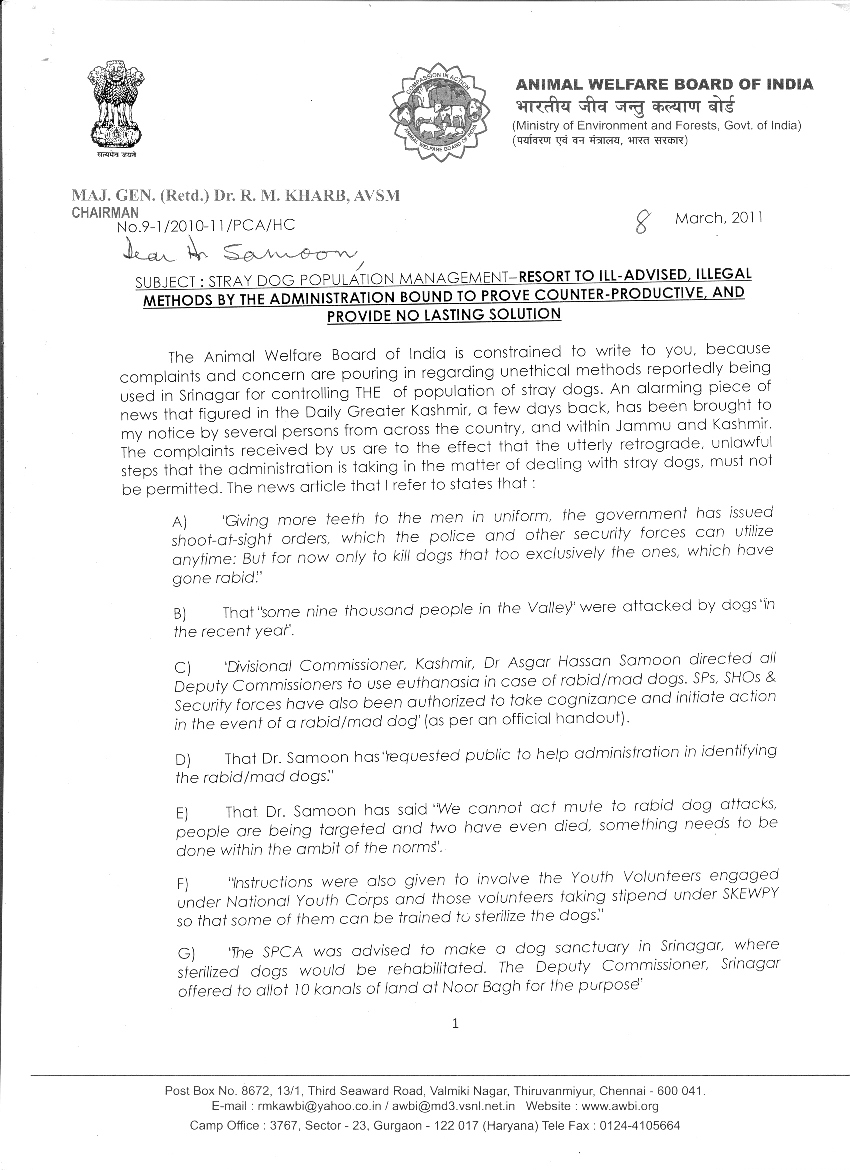
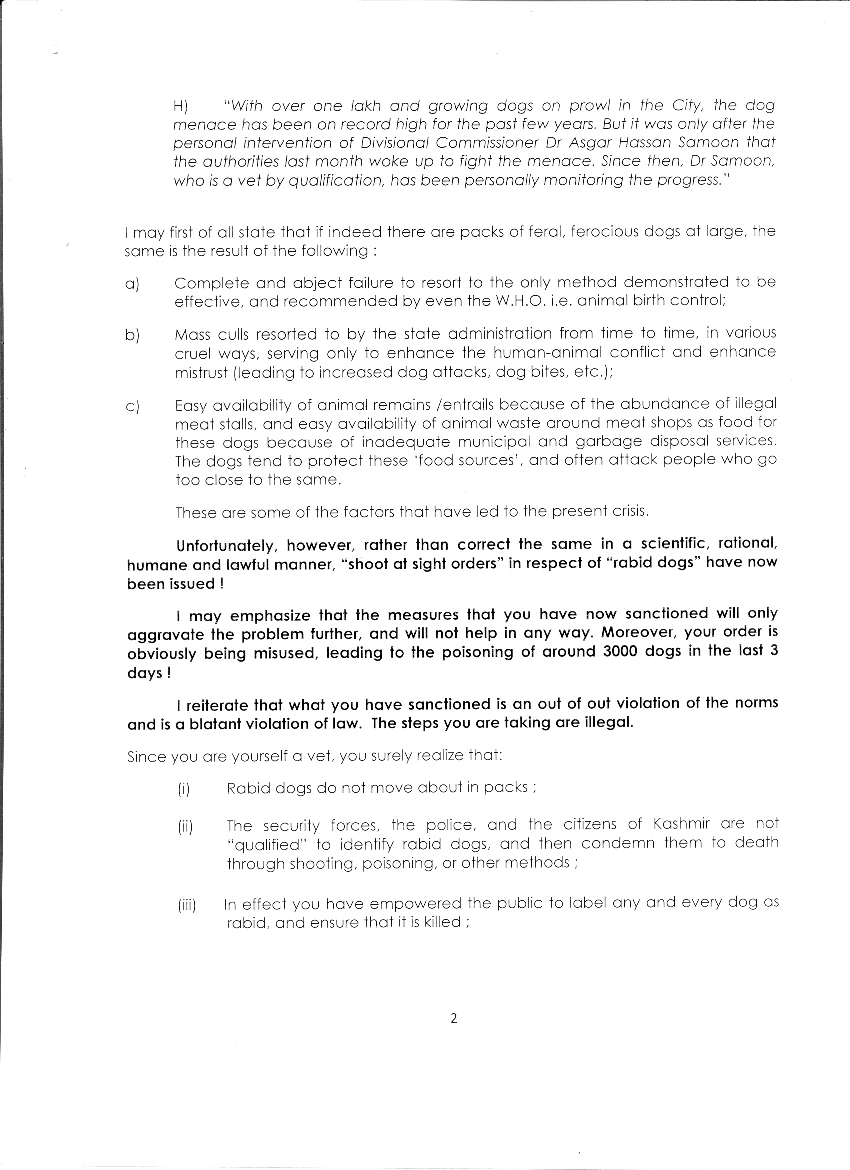
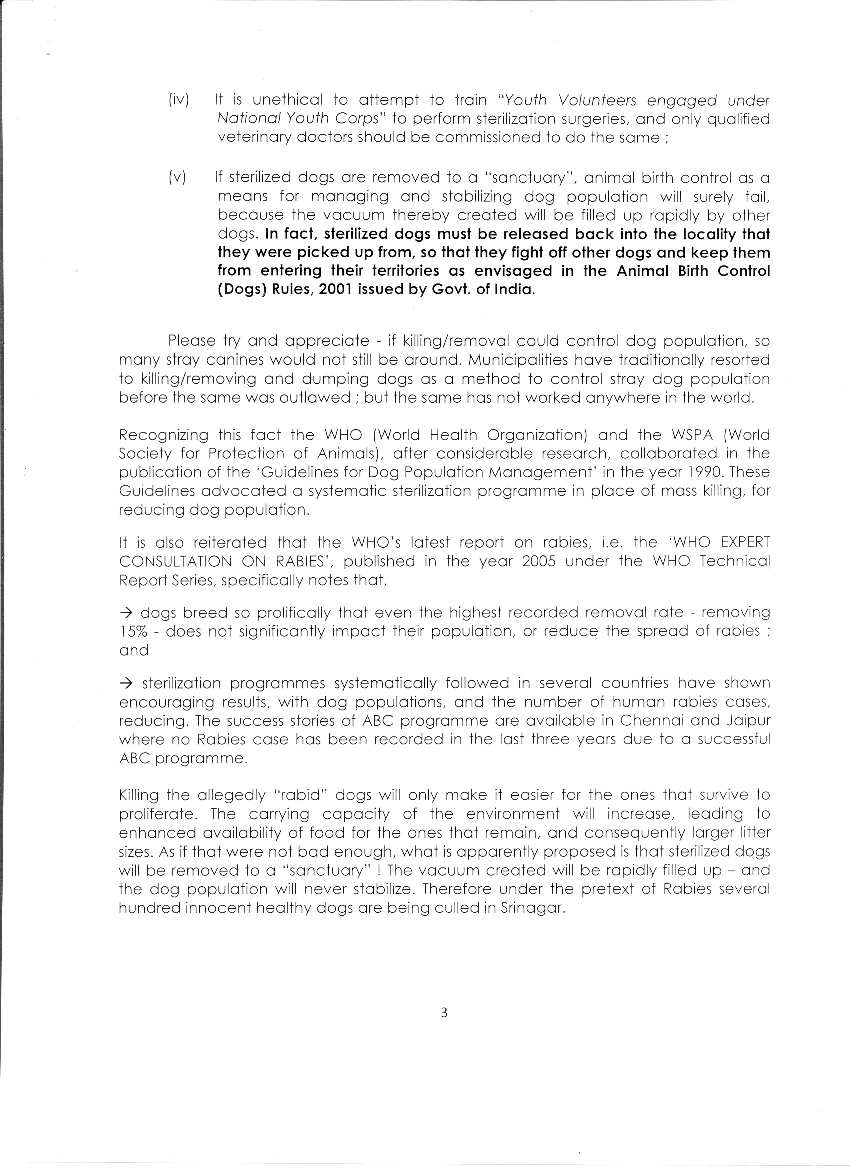
Dr. Asgar Samoon, Divisional Commissioner, Kashmir, had issued orders in March 2011 to kill all street dogs of Kashmir.

A qualified veterinarian, he has admitted to the Animal Welfare Board  of India, to requesting the ‘public’ to identify rabid dogs !

He obviously hasn’t let his veterinary knowledge come in his way. Carnage is reported to be occurring in Kashmir everywhere. Dogs are being poisoned and killed brutally in the name of rabies which is nowhere to be found or identified.
Mass graves are being dug and dogs being dumped into that. Any neighbour who has a grudge against another with a pet has now the licence to kill that pet dog.

Animal activists have demanded suspension of the Divisional Commissioner and appealed to the Veterinary Council of India to revoke his licence as he is not fit to be a vet. If you support this, please write to:
 
VETERINARY COUNCIL OF INDIA
A statutory body of Government of India established
under the Indian Veterinary Council Act 1984.
A-Wing, 2nd Floor, August Kranti Bhawan
Bhikaji Cama Place, New Delhi – 110066
Phone: 011-26184149, 26184354 Fax: 011-26182434
Email vciinfo@vhub.nic.in
 
 
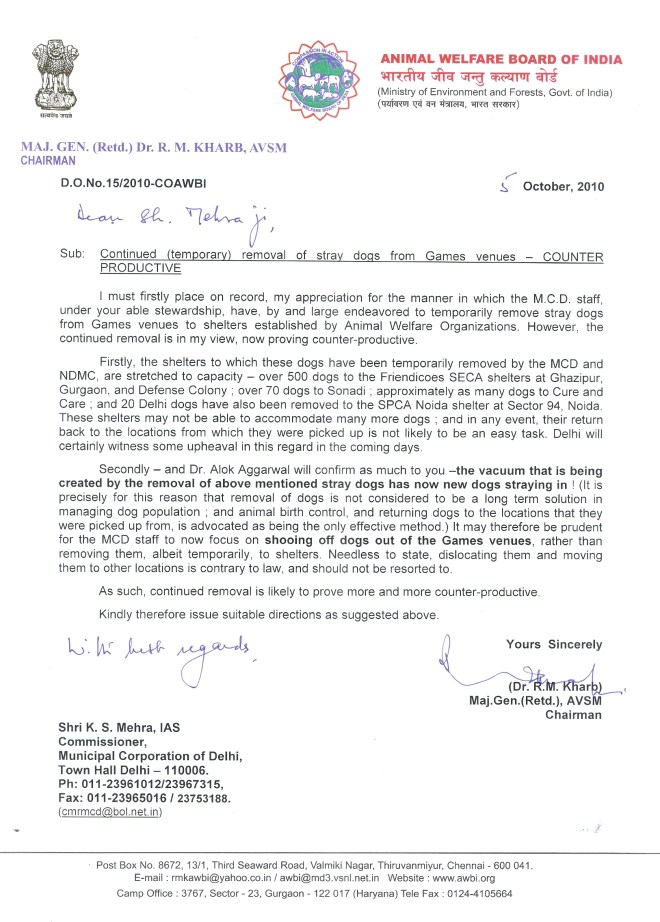
AWBI has also send notice to Dr. Samoon which is attached here.

Below are presented a series of articles that explan why Kashmir needs its street dogs…in a state which has been marred by violence, bloodshed and terrorism all these years, this state provoked bloodshed of innocent animals will only bring in more misery to the state. Read on..

Article in Greater Kashmir

Srinagar needs its street dogs. Here’s why

Other opinion by Lisa Warden

Do you consider street dogs to be a barking, snarling, stinking menace? Do you wish they would all just get hauled off somewhere and be made to disappear? Perhaps you’re even one of the many people who support the poisoning of dogs. If so, then you are doing yourself and your family a distinct disservice. This is why:

People still die every year in India from rabies, the majority of those due to bites from infected dogs. Death from rabies is completely preventable; it’s a disease that has been eradicated in many parts of the world. Ironically, the best defense against rabies is not the absence of dogs, but their presence – the presence of vaccinated dogs, that is. Dogs that have been vaccinated against rabies actually serve to protect the human inhabitants of their neighborhoods from the disease.

How? Simple. Dogs are territorial creatures. They do not allow new dogs to migrate into their areas. If, in addition to anti-rabies vaccination, the dogs have been sterilized, they will not reproduce, and the dog population in your area will decrease naturally over time. The average life expectancy of a dog in urban India is only 3.4 years.

 The killing of dogs does not work as a population control policy. It has never worked anywhere in the world that it has been undertaken, even when the numbers of dogs killed are in the tens of thousands. This is because dogs are so fertile that they simply repopulate the existing habitat in the subsequent breeding season.

 Furthermore, in cities like Srinagar, where public sanitation is still a work in progress and there is ample garbage lying around, dogs perform an essential service, that of waste processing. Garbage is habitat. If there are no dogs in a place with lots of uncollected waste, nature will fill the vacuum with some other scavenger, inevitably one that is more problematic in its relationship to humans. Take what happened in Surat in 1994. The municipal authority made the decision to kill thousands of dogs. Cause led to effect: the rat population, all of a sudden blessed with a massive increase in available food (garbage), and thousands fewer predators (dogs), exploded. Bubonic plague eventually arrived on the scene, and hundreds of people were infected. Fifty-seven people died.

Are dogs ever a menace? Yes, and those that engage in bonafide, unprovoked, biting attacks on humans need to be removed from the population. This needs to be done by qualified animal welfare workers. However, the two most significant factors that result in dog bites – migration and mating – are actually exacerbated by killing or removing dogs, and failing miserably at the sterilization project.

Let me reiterate, if Kashmiris are serious about addressing the “dog menace” in their cities, killing dogs categorically will not work. This has been proven time and again the world over. The only solution that has been scientifically proven to eradicate rabies and decrease the street dog population has been large-scale sterilization and anti-rabies vaccination. Further, it is essential to the success of any intervention that the dogs be put back in their original locations following sterilization and anti-rabies vaccination.

 Whether you love dogs or hate them, it is in your best interests to let your neighborhood dogs live in peace exactly where they are. You just need to ensure your municipal authority does its duty by sterilizing and vaccinating those dogs. Things will not get better until 75 per cent of the street dog population of Srinagar has been sterilized, vaccinated against rabies and left in peace, and until the municipal authority implements proper waste management reform.

 (The author Lisa Warden is founder and director of DOGSTOP, a non-profit advisory group dedicated to rabies eradication and street dog population management in India. She also serves as advisor to ABC India, a pan-Indian organization devoted to the control of street dog populations throughout the country via large-scale sterilization and anti-rabies vaccination.)

Article in The Pioneer

Mass killing of loC that guard Kashmir

By Hiranmay Karlekar

The slaughter of street dogs in the Kashmir Valley calls for a full inquiry. The hapless animals served as watchdogs for the Army against infiltrators crossing the LoC and alerted security forces whenever danger was afoot.

The reported mass killing of stray dogs in Srinagar merits a serious probe. On September 22, 2009, a report in The Times of India by Ajay Sura had stated that stray dogs had become watchdogs for the Army against infiltrators crossing the Line of Control in Jammu & Kashmir. The report quoted Lt-Col NK Airy, spokesperson for the Army’s Tenth Division, as saying that these dogs recognised troops and local civilians and started barking whenever there was any movement of strangers. They were quick to train, easy to maintain, did not take a huge amount to procure and could not be recognised by the infiltrators as Army dogs.

Many Army officers have testified to the invaluable role of such dogs. One of them is Mr Habib Rehman, who began life in the Army and retired as the head of a well-known hotel chain. In his touching book, A Home for Gori, about a dog who adopted his family and became a deeply-loved member, he narrates how his love for dogs was awakened by his acquaintance with Bullet, which he made as a Second-Lieutenant posted in what is now Arunachal Pradesh. Every Army picket from the LoC in the north-west to Arunachal Pradesh in the north-east, had a dog like Bullet, a mongrel of Bhutia origin of the kind found all along the Himalayan ranges, as an additional member, rendering signal service in alerting it to an enemy’s approach and any other threats. A deep bond invariably develops between such canines and Army personnel.

In an article entitled The dog that did India proud in The Pioneer of March 24, 2007, Major-General Ashok Mehta (Retd) wrote fondly about Krupa, a Bakerwal puppy, who was picked up in 1963 and lovingly reared by a unit of the Gorkha Rifles serving along the LoC, then called the Ceasefire Line. Krupa did yeoman service not only with it but also the Sikh and Garhwal regiments that followed

Law enforcing authorities everywhere have acknowledged the important role played by stray dogs. As Director-General of Police, Andhra Pradesh, Mr Swaranjit Sen had advised police stations to adopt stray dogs for being alerted against approaching Maoists. Not surprisingly, Maoists in West Bengal had asked villagers to kill all village dogs. Even earlier, terrorists coming across the Line of Control had asked villagers close to it to kill their dogs; so had terrorists in Punjab.

The point in mentioning all this is the recent report in several newspapers of Sajjad Afghani, an important leader of Jaish-e-Mohammad, being killed along with this bodyguard, Omar Bilal, by the Jammu & Kashmir Police in an encounter on March 10. The reports quoted Mr RM Sahai, Inspector-General of Police, Kashmir, as saying that they were trying to set up a base in Srinagar “to carry out big strikes in the future on security force installations”. Was the killing of stray dogs meant to facilitate the strikes? The matter needs to be investigated because of the State Government’s shocking delay in entering into a partnership with the Animal Welfare Board of India in implementing the canine Animal Birth Control programme, the only effective means of controlling stray dog populations.

Terrorists have reason to oppose the programme which involves the neutering and vaccination (against rabies) of stray dogs and their return to where they had been picked up from. Implemented area-wise, it is calculated to taper off a city or State’s stray dog population as the neutered and vaccinated dogs live out their life-spans. This means that they will continue to remain in their areas for some years and continue to alert security forces to the approach of terrorists who, one hopes, would be routed by the time the dogs live out their biological life-spans.

On the other hand, as the Guidelines for Dog Population Management, jointly released by the World Health Organisation and the World Society for the Protection of Animals in 1990, killing never succeeds in providing a solution. What it can do, however, is a temporary reduction of stray dog populations in specific areas and thus help terrorist strikes. Is this the reason why some in Jammu & Kashmir oppose the implementation of the ABC programme and favour killing? If so, who are they? One needs to find out.

Article in The Pioneer

Stray dogs alert terrorists’ approach

By Hiranmay Karlekar

As several authorities cite that stray dogs warn of approaching terrorists, there is every possibility that terrorists are orchestrating not only a mass hysteria against stray dogs in Kashmir but also the demand for their killing

A report in Greater Kashmir of April 21, 2011, states, “The police top brass (on) Wednesday dispelled the notion given by some media agencies that the elimination of stray dogs would facilitate a rise in militancy”. The report did not mention the name of the agencies but carried quotes from my column in The Pioneer of 17 March on the mass killing of stray dogs in Srinagar, which clearly indicated that the reference was to the latter. The report further quoted a Deputy Inspector General of Jammu & Kashmir Police as saying that there was no relationship between stray dog populations and militancy, which were altogether different issues. It quoted the DIG, who described “dog menace” as a big issue”, as saying that it was for bodies like the Srinagar Municipal Corporation to “get rid of the problem.” The police was ready to help them in whatever way they wanted.

I will begin with reference to my column. The part of it which referred to terrorism in Kashmir, mentioned among other things, media accounts of the death of a JeM militant and his driver in an encounter with the police on March 10, and added, “The reports quoted Mr RM Sahai, Inspector General of Police, Kashmir, as saying that they were trying to set up a base in Srinagar ‘to carry out big strikes in the future on security force installations.’ Was the killing of stray dogs meant to facilitate the strikes?” Clearly, I was referring to efforts to set up bases to carry out big strikes and not, repeat not, increasing militancy. The two are entirely different things.

A terrorist strike is a single act. It is a part of militancy, which is a complex and wider phenomenon. At one level, militancy is the state of mind which is a blend of alienation, anger and aggression, prone to explode in violence. Since violence is an expression of militancy, the latter at the social context connotes a situation created by violence and the aggression associated with militancy. An increase in militancy means a rise in the incidence of militancy-related violence and the number of militants, as well as the spread and intensification of the aggressive mindset associated with militancy.

A single terrorist strike — or several strikes — however severe, need not indicate increasing militancy if more strikes do not follow. It is easier to organise a single or a couple of terrorist strikes than sustaining an increase in the level of militancy which requires the establishment of an infrastructure for procuring funds, arms, ammunition, explosives and the provision of electronic communication facilities through emails, phones and so on. It also requires propaganda for the militants’ cause, recruitment, training and indoctrination of terrorists and the organisation of shelters, false travel and identification documents, and storage of arms, explosives and so on. Nine-eleven in the United States and 7/11 (attacks on London’ underground subway system) in 2005 sent shockwaves throughout the world but did not lead to rising level of militancy in America and Britain.

Surprise is critical to the success of terrorist strikes. It can be neutralised by an efficient intelligence set-up which collects advance information and pre-empts terror strikes and destroys terrorists’ infrastructure. Equally, a strike can be neutralised if an alert is sounded as terrorists approach their target, enabling the security forces to repulse them. As several authorities cited in my column aver, stray dogs sound precisely such an alert. There is, therefore, every possibility that terrorists are orchestrating not only a mass hysteria against stray dogs in Kashmir but also the demand for their killing.

It is possible that the reporter, who did not understand what I had written, had also failed to understand what the DIG had said. If, however, the latter did say what he reportedly has, then he has betrayed a very narrow and conventional approach to counter-terrorism which ignores the complex and mutli-dimensional nature of the challenge. Referring to terrorism in India, Maj-Gen (Retd) Afsir Karim writes in his contribution entitled “Terrorism: the Indian Experience”, in Confronting Terrorism edited by Mr Maroof Raza, “The challenges of internal destabilisation, subversion, creation of administrative and economic chaos, and engineering divisions among diverse socio-political and ethnic groups cannot be met by conventional responses.” No further comments.

Cruelty to animals has serious repercussion

Courtesy: The Pioneer

By Hiranmay Karlekar

Research shows that cruelty to animals often transmogrifies into criminal misdeeds and adds to a city’s list of crimes. The new Commissioner of Delhi Police would do well to crack down on those who treat animals without compassion.

The new Commissioner of Delhi Police, Mr BK Gupta, doubtless has a host of problems on his plate, including coping with terrorism and keeping the crime rate down when sociological, cultural and economic factors combine with the national capital’s peculiar location to push it upward. Nevertheless, an area which requires urgent attention is cruelty to animals.

Though the Delhi Police has been somewhat sensitised in the matter over the last few years, much still remains to be done. It continues to show a tendency not to take complaints of cruelty to animals seriously. In a recent instance in Mukherjee Nagar, north Delhi, an FIR against people accused of brutally beating a stray dog to death was reportedly registered only after intervention by those who matter.

Navbharat Times_28 February 2011


Hindustan Times_28 February 2011

The tendency towards ‘burking’ (doctoring of crime figures through non-registration of FIRs or recording offences as less severe), which policemen display everywhere, is more evident in the case of animals.

The need for a change in the police’s approach to complaints of cruelty to animals is urgent because animals have right to live safely and happily and human beings, the most advanced and evolved of all living species, have a responsibility to ensure that they do so. It is also important because instances of people going scot free after violations of the Prevention of Cruelty to Animals Act of 1960, increases the tendency toward taking laws in general lightly, which is increasingly in evidence today. Equally significant, cruelty toward animals is indicative of aggression or latent or active criminality in a person and identification of such an individual and keeping him or her under surveillance is important for any police force.

Violent criminals tend to be cruel to both humans and animals. In their paper, ‘From Animal Cruelty to Serial Murder: Applying the Graduation Hypothesis’ (The International Journal of Offender Therapy and Comparative Criminology), Jeremy Wright and Christopher Hensley write that since the late-1970s, the FBI has considered animal cruelty as a possible indicator of future serial murder.

“The FBI documented the connection between cruelty to animals and serial murder following a study of 35 imprisoned serial murderers. The convicted murders were asked questions regarding their childhood cruelty toward animals. More than half of the serial murderers admitted to hurting or torturing animals as children or adolescents (Humane Society of the United States, 2001).”

They further point out that in 1987, animal cruelty was added to the Diagnostic and Statistical Manual of Mental Disorders-III (R) as a symptom of conduct disorder and was retained in the 1994 DSM-IV (American Psychiatric Association 1987, 1994). According to DSM-IIIR and DSM-IV description of conduct disorders, it commonly involves physical violence and harm to humans and animals.

In another paper entitled ‘Childhood Cruelty to Animals and Subsequent Cruelty to Humans’ (The International Journal of Offender Therapy and Comparative Criminology), Linda Merz-Perez, Kathleen M Heide, and Ira J Silverman write that cruelty to animals has long served as “a red flag in law enforcement circles with respect to extremely violent offenders” and state that “the expansive literature with respect to serial killers has often cited cruelty to animals as a precursor to the violence later targeted against human victims (Lockwood & Church, 1998)”.

They conclude that the study’s overall results support previous research efforts indicating “a relationship between cruelty to animals committed during childhood and later violence perpetrated against humans.”

Noting that the matter is complex, the authors say that cruelty to animals in children can provide insights into violent behaviour that may or may not translate later into violence against human beings and that cruelty to animals often reveal insightful analogies to violence against human beings. They cite the example of a “violent offender, a repeat sex offender” who had been “convicted of a crime against nature for sodomising a reformatory pig” and another, “convicted of sexual batter on a person 65 years or older”, described how he would throw stones at stray animals to “beat and hurt them as my parents hurt me”.

Prompt and effective action regarding offences affecting animals should, therefore, be considered a critical and integral part of policing. Mr BK Gupta would make a signal contribution to enhancing citizens’ security in Delhi if he can impress this on his force.

Priya, Dog breeding and the Income Tax Department

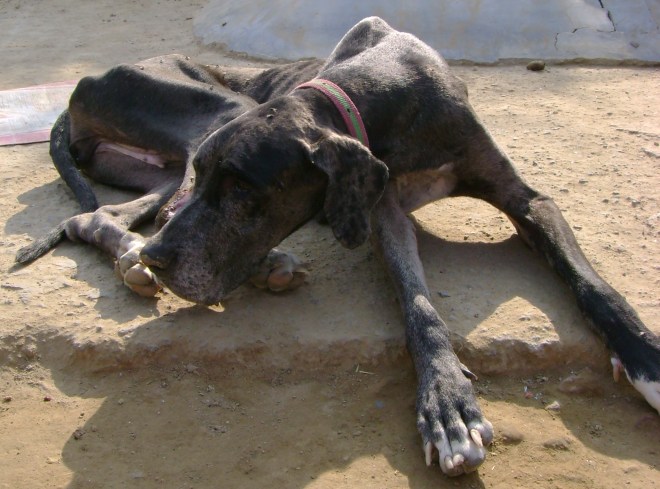
On a visit to an animal shelter a few weeks back, we met Priya, a female great Dane who was found abandoned on the road side by an animal ambulance. She was suffering from a tumour- a seemingly malignant one. Looking at her condition, it was quite evident that she was chucked out by a Dog breeder when she was no longer ‘a machine’ of use to him in his ‘puppy farm/factory’, i.e. ‘factories run by greedy humans in which female pedigreed dogs are repeatedly mated and bred so that they could give birth to puppies that can be sold at handsome rates’ and fill in the coffers of these ‘dog breeders’!

Photo copyright: 'Jaagruti'
Priya, a Female Great Dane abandoned by a Dog breeder to die on the streets- Her eyes say it all! Photo Copyright – ‘Jaagruti’ 

So, when dogs like Priya are no longer able to produce babies or turn sick beyond cure, these people who had over the years exploited her to give birth to pups repeatedly find her a burden and cose thereby to dump her on the roadside!

For a peep into the horrendous puppy mill trade, please look at the video below.

So, Next time you wish to adopt a dog, adopt for an Indian dog on the street or adopt one from a nearby shelter. Please do not buy a puppy ever because demands create supplies!

Remember ADOPT, Dont BUY!

Dog breeding in India is an unregulated business in alomost every city, a business that brings in huge profits to those who do it, be it big breeders carying this out in their farms, dog trainers who carry it out on their roofs atop their shanty quarters in areas like Dwarka Mod, Palam and across many such habitations in Delhi or even those who carry it out in their houses next doors to yours by repeatedly getting their pet dogs to mate and breed.

That is why news items like the ones below come as a breath of hope!

Income Tax Department issues directive to keep tabs on all breeders who sell newborn puppies for huge profit (Source: Mid Day, 23rd March 2011)

The Rs 500-crore pet dog business has come under the scanner of the Income Tax department.

The I-T department headquarters, New Delhi, has issued fresh directives to all its regional offices to keep tabs on all dog breeders who sell newborn puppies for huge profits.

All pet shops and known dog breeders are now under the surveillance of sleuths.

A senior I-T officer said, “Most canines of good lineage are sold at exorbitant prices and without any receipts. Some of the deals even run into crores.”

According to the I-T directive (copy available with MiD DAY), it has been noticed in recent years that pet shops have spread rampantly across the major cities.

These shops are technically licensed to sell animal food and accessories, but they also deal in canines and exotic birds to make a quick buck.

The order stated that it is suspected that a majority of these transactions are outside the tax net, so appropriate action should be taken against them.

Senior I-T officials, including Chief Commissioner P P Shrivastava, however, are tight-lipped about the directive and how they plan to crack down on the tax evaders.
 
According to I-T sources, the demand for exotic dogs increased after a cellular company used a pug in its advertisements.

According to sources, a 45-day-old pug is priced at more than Rs 40,000 in the open market.

Pet dealers at Crawford Market told MiD DAY that a Cocker Spaniel puppy is priced around Rs 7,000.
 
“Pet dealers are not sensitive to the health of the animals as they are more concerned about making money. Breeding is done regularly. This should be banned,” said Dr J C Khanna, member, Animal Welfare Board of India.

500 breeders

According to a modest estimate, there are more than 500 commercial dog breeders in Mumbai, Thane and Vasai. There are an estimated 7,000 such breeders across the country.

Dog breeding is a flourishing business in New Delhi, Chandigarh, Gurgaon, Andhra Pradesh, Himachal Pradesh and Chennai as well. The turnover is estimated to be around Rs 500 crore.

The volume of the business can be gauged from the fact that even a fake certificate to prove the breed of canine fetches between Rs 2,000 and Rs 3,000 on the streets of Mumbai. 

But, all dog breeders are not tax evaders. Mayur Shinde, owner of Shinde Kennel, Pune, said, “Dog breeding and selling is my full-time business. I give genuine receipts and also pay income tax regularly.”

Procedure to buy a puppy
Before buying a puppy, it is necessary to get a licence from the respective municipality. BMC charges only
Rs 100 as fees and Rs 200 for vaccine per year. The seller should be registered with the Animal Welfare Board of India (AWBI).

…and ‘doggedly’ Moti opposes the Gujarat Cement Plant

यह गली के कुत्ते ….

By आशीष पांडे

Courtesy: Navbharat Times Monday March 14, 2011

एक शख्स ने पेपर में छपने के लिए शिकायत भेजी कि हमारे मोहल्ले में कई आवारा कुत्ते हैं। जब देखो भौंकते हुए पीछे पड़ जाते हैं, सड़क पर आराम से चलने भी नहीं देते। मौका मिले तो काट भी लेते हैं। उन्होंने इस बात पर अफसोस भी जताया कि हमारे कानून ऐसे हैं कि आवारा कुत्तों को मारा नहीं जा सकता।

एमसीडी (दिल्ली नगर निगम) वाले मरे मन से उन्हें पकड़ते हैं लेकिन जल्द ही छोड़ना पड़ता है। बाहर निकलकर वह अपनी तादाद फिर बढ़ा लेते हैं। इनकी समस्या इतनी बेकाबू हो गई है कि इंसानों का घर से बाहर निकलना भी मुश्किल हो गया है।

बहुत ही जेनुइन प्रॉब्लम है। कुछ वैसी ही जैसी हमारे दफ्तर में काम करने वाली, हमारे मोहल्लों में रहने वाली और हमारे कॉलेजों में पढ़ने वाली लड़कियां, औरतें और बुजुर्ग महिलाएं रोज झेलती हैं।

फर्क बस इतना है कि आवारा कुत्तों की जगह हमारे समाज के मर्द ले लेते हैं। जो जब देखो फब्तियां कसते हुए पीछे पड़ जाते हैं, सड़क पर तसल्ली से चलने भी नहीं देते। मौका मिले तो रेप करने या मर्डर करने तक से नहीं चूकते। अफसोस ऐसे लोगों के खिलाफ हमारे पास मौत की सजा का कानून नहीं है।

जो मजबूरी कुत्तों को पकड़ने में एमसीडी की है, कुछ वैसी ही मजबूरी दिल्ली पुलिस की भी है। मरे मन से पकड़ तो लेते हैं लेकिन जल्द छोड़ना पड़ता है। समस्या इतनी बेकाबू हो गई है कि लड़कियों और औरतों का इस दिल्ली में घर से निकलना मुश्किल हो रहा है।

बहरहाल, कुत्तों से परेशान मर्दों का सुझाव है कि इसका एक ही इलाज है, सभी आवारा कुत्तों को मार दिया जाए। न रहेंगे कुत्ते न रहेगी समस्या। भले ही एकाध कुत्ते ही इतने खतरनाक हों जो काटने को आते हों, लेकिन वे मानते हैं कि सभी को मार देने से यह समस्या खत्म हो जाएगी।

उनकी इस सोच के आधार पर मर्दों से परेशान औरतें क्या सोचती हैं, वह बताने की जरूरत है क्या….

Animal Abuse-from F.I.R to Jail

We at Jaagruti had attended the ‘India for Animals’ 2011 conference held at Chennai from 29-31 January 2011, with the objective of sharing our learnings from the conference with the readers of this website as well as the many people who keep searching the internet for information on such topics and often end up being disappointed with the paucity of easily understandable information available online on subjects of animal welfare and laws for the common man who cares for animals on the street and empathizes with the suffering of animals. The information presented below will be useful for reporting cases and lodging F.I.Rs with police on issues other than animal abuse as well.

Mr. Ajay Marathe, an RTI Activist from Mumbai shares this important brochure titled, “First Information Report (F.I.R) and YOU’ prepared by the Commonwealth Human Rights initiative which provides answers to all the questions related to F.I.R’s that may cross our mind often. You can download this brochure by clicking here.

Below is a handout shared by Ms. Anjali Sharma (Advocate, Legal advisor and board member, Animal Welfare Board of India) and Inspector Ajaib Singh of Punjab Police in the workshop they had held on Day 2 of this conference titled, “Animal Abuse-F.I.R se Jail tak

WHAT IS AN FIR, AND WHO CAN LODGE AN FIR?

First Information Repot (FIR) is a written document prepared by the police when they receive information about the commission of cognizable offence.  It is generally a complaint lodged with the police by the victim of a cognizable offence, or by someone on his/her behalf.  Any one who knows about the commission of a cognizable offence, including a police officer who comes to know about the same, can lodge an FIR.

WHAT IS A COGNIZABLE OFFENCE?

A cognizable offence is one for which the police are authorized to start investigation on their own, and do not require any order from the court to do so. They are authorized to arrest without warrant.

WHAT IS A NON-COGNIZABLE OFFENCE?

A non-cognizable offence is an offence in which a police officer has no authority to arrest without warrant.  The police cannot investigate such an offence without the court’s permission.

THE POLICE MAY NOT INVESTIGATE A COMPLAINT AND REGISTER FIR IF:-

(i)              The case, in the opinion of the officer in charge of a police station, is not of serious nature;

(ii)            The police feel that there is not enough ground to investigate.

However, the police must record reasons for not conducting an investigation, and in the latter case, must also inform the complainant.

HOW SHOULD YOU GO ABOUT LODGING AN FIR?

i)                Inform the officer in charge of the concerned police station, either orally, or in writing, regarding the commission of the offence ;

ii)              When information about the commission of a cognizable offence is given orally, the police must write it down ;

iii)            It is your right as the person giving information regarding the commission of an offence to demand that the information recorded by the police be read over to you.

iv)             You should sign the report only after verifying that the information recorded by the police is as per the details given by you.

v)               Always ask for a copy of the FIR, since it your right to get it free of cost.

WHAT SHOULD YOU MENTION IN YOUR COMPLAINT THAT YOU WANT REGISTERED AS AN FIR?

  • Your name and address;
  • Date, and time and the location at which the incident that you wish to report about, occurred;
  • An accurate description of the incident that you wish to report;
  • Names and descriptions of the persons involved in the incident.

WHAT CAN YOU DO IF YOUR FIR IS NOT REGISTERED?

  • You can meet the Superintendent of Police or other higher officers like Deputy Inspector General of Police or Inspector General of Police, and bring your complaint to their notice.
  • You can send your complaint in writing and by post to the Superintendent of Police concerned.  If the Superintendent of Police is satisfied with your complaint, he shall either investigate the case himself or order an investigation to be made.
  • You can file a private complaint before the court having jurisdiction.

——–             ——–             ——–             ——–

THE POLICE ACT, 1861

An Act for the Regulation of Police

Preamble: – WHEREAS it is expedient to re-organise the police and to make it a more efficient instrument for the prevention and detection of crime; It is enacted as follows: –

——–

34. Punishment for certain offences on roads, etc:- Powers of police officers.-

Any person who, on any road or in any 2[open place or] street or thoroughfare within the limits of any town to which this section shall be specially extended by the State-Government, commits any of the following offences, to the obstruction, inconvenience, annoyance, risk, danger of damage of the 3[ residents or passengers] shall, on conviction before a Magistrate, be liable to a fine not exceeding fifty rupees, or to imprisonment 4[with or without hard labour] not exceeding eight days; and it shall be lawful for any police officer to take into custody; without a warrant, any person who, within his view, commitsany of such offences namely :-

First-Slaughtering cattle, Curious riding, etc:- Any person who slaughters any cattle or cleans any carcass; any person who rides or drives any cattle recklessly or furiously, or trains or breaks any horse or other cattle;

Second-Cruelty to animal:- Any person who wantonly or cruelly beats, abuses or tortures any animal; .

——–             ——–             ——–             ——–             ——–             ——–

THE DELHI POLICE ACT, 1978

An Act to amend and consolidate the law relating to the regulation of the police in the Union territory of Delhi.

It is to be noted that the Delhi Police act has a special chapter, i.e Chapter 9 devoted to empowering officials of Delhi Police with special powers over and above those mentioned in the Prevention of Cruelty to Animals Act 1960 to enforce this act further

——–

CHAPTER IX (DELHI POLICE ACT): Special Powers under the Prevention of Cruelty to Animals Act, 1960

73. Powers with regard to offences under Act 59 or 1960. (1) When in respect of an animal an offence punishable under sub-section (1) of Sec. 11 or Sec. 12 of the Prevention of Cruelty to Animals Act, 1960 has been committed, when there is a reasonable ground for suspecting that such offence has been committed, a police officer may-

(a) take the animal to the Metropolitan Magistrate, or

(b) if the accused person so requires, take the animal to a veterinary officer specified by general or special order by the Administrator in this behalf:

Provided that the police officer may, instead of taking the animal to a veterinary officer, take the animal for detention in a dispensary, or in any suitable place approved by the Administrator by general or special order and the animal shall thereupon be detained there until its production before a Metropolitan Magistrate, or

(c) take the animal to an infirmary appointed under Sec. 35 of the said Act for treatment and detention thereto, pending direction of a Magistrate under sub-section (2) of that section, or

(d) when the animal is in such physical condition that it cannot be taken to a veterinary officer or a Metropolitan Magistrate, draw up a report of the condition of the animal in the presence of two or more respectable persons describing such wound, sores, fractures, bruises, or other marks of injury as may be found on the body of the animal:

Provided that the police officer may take the animal for detention in a dispensary or any suitable place approved by the Administrator by general or special order and the animal shall thereupon be detained there until its produce before a Metropolitan Magistrate.

(2) Where an animal is detained in a dispensary, infirmary or other place under sub-section (1), the animal shall be produced before a Metropolitan magistrate with the least possible delay and in any case within a period not exceeding three days from the date on which it was so detained.

——–

77. Power of police officer to unsaddle animal or to unload it. When a police officer in good faith suspects that any animal being employed, in any work or labour is, by reason of any sore, unfit to be so employed, he may require the  person  in  charge  of  such  animal  to

unsaddle or unload it for the purpose of ascertaining whether any sore exists and. if any person refuses to do so, such police officer may himself unsaddle or unload the animal or may cause the same to be unsaddled or unloaded.

78. Arrest without warrant in case of certain offences under Act 59 of 1960. Any police officer may arrest, without a warrant from a Magistrate, any person committing in his presence any offence punishable under clauses (a) to (m) (both inclusive) of sub-section (1) of Sec. 11 of the Prevention of Cruelty to Animals Act, 1960.

MADRAS CITY POLICE ACT, 1888

An Act to regulate the Police of the City of Madras.

——–

Section 24 – Police Officers and Agent of the Society for the Prevention of Cruelty to Animals may arrest without warrant in view of offence

(1) Notwithstanding anything contained in this Act or any other Law for the time being in force :-

(a) any offence made punishable by Sections 45, 46, 49-A, 72 or 75 shall be cognizable.

(b) any Police Officer may arrest without a warrant any person committing in his view any offence made punishable by this Act.

(2) Any agent of the Society for the Prevention of Cruelty to Animals who is specially empowered by the State Government in that behalf may arrest without a warrant any person committing in his view any offence punishable under Section 53.

(3) The agent shall have power to release any person so arrested on his executing a bond with or without sureties, for his appearance before a Magistrate if and when required.

——–

Section 53 – Penalty for cruelty to animals

Whoever cruelly beats, ill-treats or tortures any animal, or causes any animal to be cruelly beaten, ill-treated or tortured, shall be liable on conviction to fine not exceeding one hundred rupees or to imprisonment, not exceeding three months, or to both.

——–             ——–             ——–             ——–             ——–             ——–


THE INDIAN PENAL CODE, 1860

——–

Mischief by killing or maiming animal of the value of ten rupees.

428. Mischief by killing or maiming animal of the value of ten rupees.-Whoever commits mischief by killing, poisoning, maiming or rendering useless any animals or animal of the value of the ten rupees or upwards, shall be punished with imprisonment of either description for a term which may extend to two years, or with fine, or with both.

Classification of Offence:- The offence under this section is cognizable, bailable, compoundable and triable by any Magistrate.

Mischief by killing or maiming cattle, etc., of any value or any animal of the value of fifty rupees.

429. Mischief by killing or maiming cattle, etc., of any value or any animal of the value of fifty rupees.–Whoever commits mischief by killing, poisoning, maiming or rendering useless, any elephant, camel, horse, mule, buffalo, bull, cow or ox, whatever may be the value thereof, of any other animal of the value of fifty rupees or upwards, shall be punished with imprisonment or either description for a term which may extend to five years, or with fine, or with both.

Classification of Offence:- The offence under this section is cognizable, bailable, compoundable and triable by Magistrate of the first class.

——–

Negligent conduct with respect to poisonous substance.

284. Negligent conduct with respect to poisonous substance.–

Whoever does, with any poisonous substance, any act in a manner so rash or negligent as to endanger human life, or to be likely to cause hurt or injury to any person, or knowingly or negligently omits to take such order with any poisonous substance in his possession as is sufficient to guard against probable danger to human life from such poisonous substance, shall be punished with imprisonment of either description for a term which may extend to six months, or with fine which may extend to one thousand rupees, or with both.

Classification of Offence:- The offence under this section is cognizable, bailable, triable by any Magistrate, and non-compoundable.

——–             ——–             ——–             ——–             ——–             ——–

THE PREVENTION OF CRUELTY TO ANIMALS ACT, 1960

Section 11. Treating animals cruelly : (1) If any person

(a) beats, kicks, over-rides, over-drives, over-loads, tortures or otherwise treats any animal so as to subject it to unnecessary pain or suffering or causes, or being the owner permits, any animal to be so treated; or

(b) 13(employs in any work or labour or for any purpose any animal which, by reason of its age or any disease) infirmity; wound, sore or other cause, is unfit to be so employed or, being the owner, permits any such unfit animal to be employed; or

(c) wilfully and unreasonably administers any injurious drug or injurious substance to 14(any animal) or wilfully and unreasonably causes or attempts tocause any such drug or substance to be taken by 15(any animal;) or

(d) conveys or carries, whether in or upon any vehicle or not, any animal in such a manner or position as to subject it to unnecessary pain or suffering; or

(e) keeps or confines any animal in any -cage or other receptacle which does not measure sufficiently in height, length and breadth to permit the animal a reasonable opportunity for movement; or

(f) keeps for an unreasonable time any animal chained or tethered upon an unreasonably short or unreasonably heavy chain or cord; or

(g) being the owner, neglects to exercise or cause to be exercised reasonably any dog habitually chained up or kept in close confinement; or

(h) being the owner of (any animal) fails to provide such animal with sufficient food, drink or shelter; or

(i) without reasonable cause, abandons any animal in circumstances which tender it likely that it will suffer pain by reason of starvation thirst; or

(j) wilfully permits any animal, of which he is the owner, to go at large in any street, while the animal is affected with contagious or infectious disease or, without reasonable excuse permits any diseased or disabled animal, of which he is the owner, to die in any street; or

(k) offers for sale or without reasonable cause, has in his possession any animal which is suffering pain by reason of mutilation, starvation, thirst, overcrowding or other illtreatment; or

(1) mutilates any animal or kills any animal (including stray dogs) by using the method of strychnine injections, in the heart or in any other unnecessarily cruel manner or;

(m) solely with a view to providing entertainment

(i) confines or causes to be confined any animal (including tying of an animal as a bait in a tiger or other sanctuary) so as to make it an object or prey for any other animal; or

(n) organises, keeps uses or acts in the management or, any place for animal fighting or for the purpose of baiting any animal or permits or offers any place to be so used or receives money for the admission of any other person to any place kept or used for any such purposes; or

(o) promotes or takes part in any shooting match or competition wherein animals are released from captivity for the purpose of such shooting:

he shall be punishable 19(in the case of a first offence, with fine which shall not be less than ten rupees but which may extend to fifty rupees and in the case of a second or subsequent offence committed within three years of the previous offence, with fine which shall not be less than twenty-five rupees but which may extend, to one hundred rupees or with imprisonment for a term which may extend, to three months, or with both.

(2) For the purposes of section (1) an owner shall be deemed to have committed an offence if he has failed to exercise reasonable care and supervision with a view to the prevention of such offence;

Provided that where an owner is convicted permitting cruelty by reason only of having failed to exercise such care and supervision, he shall not be liable to imprisonment without the option of a fine.

(3) Nothing in this section shall apply to –

(a) the dehorning of cattle, or the castration or branding or nose roping of any animal in the prescribed manner, or

(b) the destruction of stray dogs in lethal chambers by such other methods as may be prescribed, or (Note from ‘Jaagruti’: nothing is prescribed on this front under any laws or directives, humane sterilization of dogs is the only method advocated to control dog population and euthanasia can be administered to terminally ill and incurable animals only)

(c) the extermination or destruction of any animal under the authority of any law for the time being in force; or

(d) any matter dealt with in Chapter IV; or

(e) the commission or omission of any act in the course of the destruction or the preparation for destruction of any animal as food for mankind unless such destruction or preparation was accompanied by the infliction of unnecessary pain or suffering.

12. Penalty for practising phooka or doom dev : If any persons upon any cow or other milch animal the operation called practising phooka or doom dev or any other operation (including injection of any or doom dev. substance) to improve lactation which is injurious to the health of the animal or permits such operation being performed upon any such animal in his possession or under his control, he shall be punishable with fine which may extend to one thousand rupees, or with imprisonment for a term which may extend to two years, or with both, and the animal on which the operation was performed shall be forfeited to the Government.

——–

28. Saving as respects manner of killing prescribed by religion : Nothing contained in this Act shall render it an offence to kill any animal in a manner required by the religion of any community.

——–

38. Power to make rules.

——–

(3) If any person contravenes, or abets the contravention of, any rules made under this section, he shall be punishable with fine which may extend to one hundred rupees, or with imprisonment for a term which may extend to three months, or with both.


——–             ——–             ——–             ——–             ——–             ——–

TRANSPORT OF ANIMALS, RULES, 1978

In exercise of the powers conferred by clause (h) of sub-section (2) of Section 38 of the Prevention of Cruelty to Animals Act, 1960 (59 of 1960); the Central Government hereby makes the following rules, the same having been previously published as required by the said Section, namely :

——–


2. Definitions : In these rules, unless the context otherwise requires–

(a)       qualified veterinary surgeon means one who holds a diploma or a degree of a recognized veterinary college.

——–

96. Issue of certificate before transportation

(1) A valid certificate issued by an officer or any person or Animal Welfare Organisation duly recognised and authorised for this purpose by the Animal Welfare Board of India or the Central Government shall be procured by any person making transport of any animal before transportation of such animal verifying that all the relevant Central and State Acts, rules and orders pertaining to the said animals including the rules relating to transport of such animals have been duly complied with and that the animal is not being transported for any purpose contrary to the provision of any law.

(2) In the absence of such certificate, the carrier shall refuse to accept the consignment for transport.

97. Cancellation of permit or authorisation for transport

(1) In the event of contravention or non compliance of any of the rules contained in these rule for transport of animals, if it is pointed out in writing by any officer or persons or Animal Welfare Organisations authorised for this purpose by the Animal Welfare Board of India or the Central Government, then, any permit or authorisation issued for such transport shall be immediately cancelled by the concerned authority and it shall be the duty of the police to stop the further transport even from the intermediary station and proceed against the said offenders and deal with the animals in accordance with law.

(2) The custody of the animals immediately after unloading from the rail wagons, truck or any other vehicle shall be given to the authorised Animal Welfare Organisation if available, till the competent authority or the magistrate having jurisdiction decides about their care and upkeep.

98. General conditions of transport

(1) Animals to be transported shall be healthy and in good condition and such animals shall be examined by a veterinary doctor for freedom from infectious diseases and their fitness to undertake the journey; provided that the nature and duration of the proposed journey shall be taken into account while deciding upon the degree of fitness.

(2) An animal which is unfit for transport shall not be transported and the animals who are new born, diseased, blind emaciated, lame, fatigued or having given birth during the preceding seventy two hours or likely to give birth during transport shall not be transported.

(3) Pregnant and very young animals shall not be mixed with other animals during transport.

(4) Different classes of animals shall be kept separately during transport.

(5) Diseased animals, whenever transported for treatment, shall not be mixed with other animals

(6) Troublesome animals shall be given tranquilisers before loading during transport.

(7) Animals shall be transported in their on-farm social groups (established atleast one week prior to journey).

——–             ——–             ——–             ——–             ——–             ——–

More articles on this subject and Animal laws of India can be accessed under the following category of posts on Jaagruti


Basic life saving steps for injured/ill pigeons or any bird

Courtesy: The wonderful angel that she is, Cindy Boyce from Pigeon Angels:http://www.pigeonangels.com/

It is vital to stabilize an ill or injured pigeon or dove as soon as possible after rescue.

Three basic steps should be followed.

HEATISOLATIONHYDRATION

HEAT:

A bird must be warmed gradually to a normal body temperature and be responsive (able to swallow). It is not unusual for a baby bird presented for rehabilitation to be very cold. (If a bird is unresponsive, please seek the assistance of an experienced rehabber or avian vet immediately.)

If head trauma is suspected, do not place them on heat.

Give the bird a quick, superficial examination. Unless there is a critical situation, e.g., (severe bleeding) all birds should be covered and placed on a heat source* (see below) for at least 20-30 minutes to bring the body temperature back to normal.

ISOLATION:

Allow the bird to stabilize in a quite, dark, warm area.

While the bird is warming, take the opportunity to prepare any other items you may need to care for the bird, e.g., International Rehydrating Solution (recipe noted below)

A ‘COLD’ BIRD SHOULD NEVER BE GIVEN FLUID OR FOOD, PERIOD!!

HYDRATION:

Fluids should be given after, and ONLY AFTER, the bird has been warmed, examined for any injuries & a determination is made as to the severity of his dehydration.

All fluids should be warmed or at room temperature!

Description and degrees, of hydrated and dehydrated birds

A well hydrated bird will be very alert, have elastic skin, bright eyes, moist, plump membrane inside the mouth and well formed moist droppings.

A moderately dehydrated bird will be less than fully alert, have dry, flaky skin, dull eyes, non-formed droppings and have a sticky membrane in the mouth.

A severely dehydrated bird will be lethargic or unconscious, the skin will ‘tent’ when slightly pinched, have sunken eyes, dry or absent droppings and have dry membrane in the mouth.

Depending on the cause and degree of dehydration, reversing this condition can take up to 24 hours. If the bird is alert, he may be rehydrated using an eye dropper and putting drops along his beak every few minutes, making sure the fluids are room temperature or warmed slightly. BE CAREFUL SO AS TO NOT LET THE WATER ENTER HIS NOSTRILS. Initially, a rehydrating solution should be administered. Plain water should not be given unless nothing else is available.

Please follow these simple, basic, yet most important steps.

The cells of the body simply don’t work properly when dehydrated. Absolutely no digestive processes can take place if the gut CAN’T work. Absorption will not take place, food sits in the gut, undigested, and will eventually kill the bird.

* Heat source suggestions:

Towel lined heating pad, set on low

Towel lined hot water bottle

Low wattage lamp, directing the light into the cage.

* Emergency heat source substitute:

Fill an old sock about 2/3 full of rice. Microwave the sock for a few seconds. Making sure it isn’t too hot, place it around the bird.

* International Rehydrating Solution:

To a cup of warm water add a pinch of salt & sugar, mix well. Use this solution to rehydrate by mouth.

* Emergency rehydrating substitute:

Pedialyte, unflavored.

By following these basic steps you have done your best to stabilize your little feathered patient until further assistance is available.


Home remedy to cure dry, flaking skin and lice infestation in dogs

With the onset of such chilly winters in the city, here is a simple home remedy we at ‘Jaagruti’ have used to treat dogs suffering from dry, flaky skin which can if ignored really leave the dog irriated and sleepless at nights:

 
1. Warm good quality coconut oil (like Marico’s Parachute) and massage it on to the dog’s scalp. You will realise as you do this that dogs love to have their hair massaged this way and some may even try to lick and taste the coconut oil, which does no harm anyways to them.
 
2. As you massage the dog’s hair with coconut oil, you will see a lot of the dogs hair shedding so make sure that you make your dog lie down on a mattress/bed sheet that you could conveniently wash later, without getting your fancy bedcover or upholstery spoilt.
 
3. Use a fine flea comb to comb through your dog’s hair and all the bad hair will shed alongwith the dandruff and the scaly scalp leaving your dog’s coat and hair neat and shining!
 
You may have to repeat this process for a few days till all the flaky skin and bad hair are removed from his scalp and don’t worry if this oil massaging leaves behind a few bald patches on your dog’s scalp as those hair will regrow if you continually massage your dog’s calp with coconut oil a few times a week through the winters.
 
Do not try bathing your pets too hard in winters as that will only make their skin more dry and itchy..
 
In case your dog has lice or lice eggs ( a common problem with puppies), you can preceed the above mentioned treatment with the following:
 
Give the puppy/dog a bath with Mediker anti-lice treatment shampoo, taking care that the shampoo doesn’t go into the dogs eyes and use luke warm water to rinse it off, then blow dry the dog’s hair if its a young pup and after the hair have dried, repeat the above treatment with coconut oil as that helps trap teh lice and then they can be easily removed once you pass the flea comb (with fine bristles) gently through the dog’s hair coat.
 
We at ‘Jaagruti’ have seen the above mentioned treatments working very well with dogs/street dogs, however if the situation of your dog is serious as per your judgement, please take your dog to a registered veterinarian in your city.
 Thanks. 
If you have further queries or nice home remedies to suggest for animals, please mail us at contact@jaagruti.org
 

What does it take to rescue an animal? – A poem by Bhavani Sundaram

This poem is the first in the series of many poems penned down and shared with us by Ms. Bhavani Sundaram to inspire you in sustaining your efforts to rescue an animal in distress…

A heart of gold to accept all animals in whatever state they come in

A heart of steel to be able to say no when there just isn’t room for one more dog

Knowing that you cannot save them all

Patience with breeders who don’t seem to care, won’t help saying it’s not their problem

Patience with those dogs that may never get adopted

A smiling face as it’s the only way to hide the agony, pain in one’s heart

A team effort where everyone contributes and works as for for one goal

Willingness & Openness to work for animals

Last but not the least a compassionate, loving heart….

Dogs are family, can use lifts for free, rules court

In August, this year when we at ‘Jaagruti’ received a call from the Gulati family in Faridabad alerting us to the fact that their colony RWA was disallowing them to take their dog ‘Pixie’ in the building lift, it prompted us to do some research on such cases in India, following which we had come out with this article explaining how people could act in such cases.

Yesterday, however brought good news to many a residents fighting this battle for their dogs with their colony RWAs with the Consumer Disputes Redressal Forum at Mumbai giving a judgement in favour of the D’Souza family and saying that, “Dogs are part of family, and they can use lifts for free”

Please read the article below in Times of India dated 30th November 2010

(Times of India_30th November 2010)

The below story Courtesy: Anand Holla and Mumbai Mirror gives more details on this ruling of the court.

Dogs are family, can use lifts for free, rules court

This judgment by a Consumer Disputes Redressal Forum at Mumbai will help make life much easier for pet owners in multi-storeyed apartment complexes facing harassment from their RWAs regarding use of lifts by pets.

Mahim society asked to stop charging residents for letting pets use building elevators. Consumer forum says if milkmen can use it, so can dogs

The status of dogs in housing societies have been elevated. In a judgment that will set a precedent for housing societies on how to treat pets, the Central Mumbai Consumer Redressal Forum has rapped a Mahim society for charging one of its member Rs 500 for each of his two dogs using the elevator.

The D’Souzas had been paying Rs 500 a month so their dog Barney could use the lift

Noting that pets are members of the modern, urban family, the forum ruled there is no reason why pets can’t use elevators when outsiders, including service providers such as milkmen and vendors, have access to the facility without any charges.

The family in question — the D’Souzas — resides on the 10th floor of Our Lady Of Velankanni And Perpetual Succour society. The D’Souzas, 58-year-old Allwyn and Eleanor, 52, were shocked by the resolution passed during the society’s general body on August 10, 2008, charging Rs 500 per month for each pet using the lifts. The move hit the couple hard as they would use the elevator to take their pet dogs Barney, a labrador, and Dash, a mongrel, for a daily walk.

When the family protested, the society management justified the decision by saying the pets cause “nuisance due to the stench and threat, causing inconvenience to the members” and that “extra electricity (was) consumed due to unnecessary trips by the lift because of the dogs,” among other factors.

The D’Souzas were left to fend for themselves as the other family in their building that had a pet stayed on the third floor and took to stairs after the diktat. Challenging the society’s decision, Allwyn D’Souza moved the consumer forum while continuing to pay Rs 1,000 every month “under protest”, along with maintenance bills.

D’Souza’s lawyers Udav Wavikar and Rashmi Manne contended before the forum that pets are pampered and loved as much as any other family member, and hence, should be considered part of the family. Invoking religion and mythology, the lawyers said a dog is considered an incarnation of a deity in Maharashtrian culture.

The lawyers further argued that forcing dogs up and down 10 floors amounts to sheer cruelty. To bolster his case, Allwyn collected signatures of society residents to attest that they had no complaints against his dogs. The society, however, said the dogs dirtied lifts by either urinating in them or soiling them, and there was the danger of them biting other residents. The society also argued that dogs are not members of the D’Souza family, and the Maharashtra Co-operative Societies Act doesn’t include them in the bracket of family members. It claimed the forum had no jurisdiction to hear the complaint.

However, the bench of Nalin Majithia and Bhavna Pisaal observed last week, “We don’t find the society’s view correct. The D’Souzas pay all normal charges and to charge them an extra Rs 500 towards each dog is illegal, and is an instance of unfair trade practice. In Indian culture, dogs are common pets and usually treated as lovingly as other members of the family.”

The forum noted that no resident had ever taken any objection to D’Souzas’ pets. “In a populous city like Mumbai, there is always a shortage of space and multi-storeyed buildings are fast filling up the landscape. Several outsiders such as milkmen, newspaper and vegetable vendors, laundrymen, sweepers, etc, use the building lifts on a daily basis. In such a scenario, the society’s decision to levy charges on residents’ pets for lifts usage is inappropriate,” the forum held.

Ordering the society to return the entire amount it has collected from the D’Souzas along with nine per cent interest and Rs 5,500 towards mental and physical torture and legal costs, the forum held, “The society has indulged in unfair trade practices and it is incorrect on their part to charge the D’Souzas.”

From October 2008 till September 2010, D’Souza paid “dog fees” to the society. Allwyn said, “Our dogs were kept absolutely clean and healthy. We would take them out only twice a day and they never misbehaved with anybody, nor dirtied the lift or the society premises. Some members of the society passed this order only to harass us.” Happy with the order, he said, “This will come as a relief to many residents who are similarly harassed over their pets.”

Lawyer Wavikar said, “If pets dirty the premises, their owners should be made to clean up the place. However, charging residents for keeping pets is completely unjust. With the city constantly experiencing vertical growth, this landmark judgment will go a long way in settling the issue on pets and their rights to use building facilities.”

The society’s lawyer, Anand Patwardhan, termed the forum’s order as ‘perverse’ saying the case should have been decided by a co-operative court. “The society is fully justified in charging additional money as provided in the by-laws of the Co-operative Society Act. Consumer forums shouldn’t trespass the jurisdiction of other courts – in this case a co-operative court.”

While Dash died last year, Barney can now use the lift without burning a hole in his owner’s pocket.

New Page added: Animal Helplines in Mumbai

After ‘Animal Helplines in Delhi and NCR‘ we at Jaagruti are happy to share with you all our new webpage titled, ‘Animal Helplines in Mumbai‘.

We hope to expand this list to an all-India level in times to come so that no one on the street ever feels helpless and ignores the sight of an animal in pain just because they find themselves clueless on whom they could call or take the animal to.

If you wish to list your organisation’s helpline number on this website, please do mail us at contact@jaagruti.org or post a comment underneath and we will make a note of it from there.

Thanks!

Bakr-Eid: what happens to the goat?

This is one of the goats that would be sacrificed during this Bakr-EId. This photo was clicked while walking through the narrow bylanes of Chawri Bazaar in Old Delhi (Photo credit: Jaagruti)

Before you begin reading this, please allow us a moment to introduce Meera Ahmad (the contributor of the below post) to all of you.

Meera is a Ph.D student at University of Delhi and lives with her mother, brother Kabir and her canine companions in Nizamuddin. Meera is secular by birth, born to a Hindu mother and a Muslim father, her home is lovingly referred to as ‘Chintu Ghar’, the first time I visited her, I thought Chintu was the name of their first pet, but infact as Meera’s mother amusingly shared Chintu was their stuffed toy ‘Elephant’ whom they cuddled and cared for and were even willing to risk their lives for! (yes! yes! that is what Meera’s brother Kabir tried to do, when he jumped from the auto-rikshaw thinking that Chintu was in the bag that had fallen from her mother’s lap on the road). Perhaps it was Chintu, the elephant toy that made them realise that before they realised that their heart was filled with love for animals. Meera and her family look after and feed the many street dogs in Nizamuddin and at Lajpat Nagar as well, besides taking the responsibility of getting them sterilized and vaccinated at nearby animal hospitals.

When she saw a man taking his sick goat to an animal hospital yesterday, she was prompted to reflect over her thoughts on Bakr-Eid. Read on…

Bakr-Eid: what happens to the goat?

By Meera Ahmad

Yesterday, a man from my colony in Nizamuddin West took a sick goat to the nearby Friendicoes Animal Hospital

He said to the doctor: ” Please treat my goat so that it becomes well quickly. I have to cut it day after tomorrow.”

Animal sacrifice is the biggest farce and misplaced superstitious belief in the name of religion.

Today (17th November, 2010) is the first day of three days of Bakr-Eid or Eid al-Adha or Eid-e-Qurban. For Muslims it is a day to celebrate how Prophet Ibraham willingly almost sacrificed his own son Isma’il as an act of obedience to God, before God intervened and gave him a ram to sacrifice instead. To commemorate it Muslim families blindly sacrifice many animals (goat, cow, sheep, camel) on this day often after days of feeding and caring for them extremely well. The act of sacrifice carried out in Muslim homes is extremely cruel as the goats are killed slowly in front of each other by the very people who fed and nurtured them and whom they came to trust deeply. Children too are encouraged to cut them on these days from a very young age so that they become conditioned to it.

In my colony a few weeks before the festival it is common to see children roaming about with healthy and well nurtured goats and grazing them in the parks and bylanes. After the sacrifice I have spoken to them and they comfortably and eagerly narrate gory details of how they carried out halal (religiously permissible form of sacrifice in which the animal’s throat is slit to slowly bleed it death so that it is drained of all the blood before being skinned and cut) of the goats.

So deeply engrained becomes the notion of halal in them that they even practice it on toys and stuffed animals. In an extreme case I remember hearing that a child slit the throat of his pet rabbit. When his mother came running on hearing the wails of the poor animal and asked the child why he did it he said proudly that he had done halal. My neighbor’s young daughter who studies in class 2 was last year wailing uncontrollably outside her house on Bakr-Eid for she wanted to cajole her father to let her keep the baby goat that he had brought for sacrifice and not let it be killed. When her father asked her the reason for it she said she wanted to play with it and make it her pet. However, her tantrums didn’t have any effect. A few ays back when I saw her roaming in the park with a goat on leash I could not resist asking her what she would do with it. She said that she would do it halal. Her father had convinced her that the goats that are done halal on these days are fortunate as they go straight to God (Allah).

That the animals are alive and moving for quite sometime after their throats are cut and while they are being skinned was pointed out to me by children who have witnessed and participated in the sacrifice.The goats that are to be cut on the following days are kept in the same place where their fellows were cut, skinned and hung in front of their eyes. They kick and cry loudly for days and nights before the sacrifice, but once the killing begins they go eeringly quiet. It is as if the face of imminent death makes them mum. A look at their faces and in their eyes chills the soul. I have always felt it is a look of resignation, dullness and deep gloom.

“The mullah finishes the prayer. Ameen. He picks up the kichen knife with the long blade. The custom is to not let the sheep see the kinife. Ali feeds the animal a cube of sugar – another custom, to make eath sweeter. The sheep kicks, but not much. The mullah grabs it under its jaw and places the blade on its neck. Just a second before he slices the throat in one expert motion, I see the sheep’s eyes. It is alook that will haunt my dreams for weeks. I don’t know why I watchj this yearly ritual in ou backyard; my nightmares persist long after the blood stains on the grass have faded. But I always watch. I watch because of that look of acceptance in the animal’s eyes. Absurdly, I imagine tha animal understands. I imagine the animal sees that its imminent demise is for a higher purpose. This is the look……..” -Khaled Hosseni, The Kiterunner.

Nature provides food to goats, cows, sheep so they can live well. Humans provide food to them so they can kill and cut them. Nature provides food to goats, cows, sheep so they can live well. Humans provide food to them so they can kill and cut them. If we really love our earth and want it to be a comfortable place for future generations, we all need to start reflecting on our daily decisions. How we live. What we eat. What we buy. How and where it is made. How we travel. Everything we habitually do has an impact and also sets an example. One of the most important among these is our relationship with the animals of this planet that should be of compassion and protection. This change may not always be easy or comfortable, but it is certainly better than doing nothing and lamenting later. Let us start by raising our voice against animal sacrifice and slaughter.

kurbaan-kurbaani_goats-before-being-scarificed-on-id_ht-city_281109

Other posts by Meera Ahmad:

Abandoning one’s pet: Could there be a crime bigger than that?

The ABC of stray dogs

Animal Birth Control: Its as easy as ABC (Image Courtesy PETA)

Animal Birth Control/ABC Programm involves sterilizing street dogs, vaccinating them against rabies and releasing them back into the areas where they were picked up from.

The article below is kind courtesy of  The Pioneer Newspaper, penned by noted senior journalist Mr. Hiranmay Karlekar who is also the author of a book titled ‘Savage Humans and Stray Dogs’, the article sheds light on the ‘ABC’ of Delhi’s Animal Birth Control/ABC Programme, comes in the wake of the Commonwealth Games recently organised in Delhi in which many street canines (sterilized as well as non-sterilized) were temporarily (for the period of these games) relocated to Animal shelters across Delhi and Noida from many games venues, stadia, hotels, all of whom have now been released back into the areas where they were picked up from (and those canines that were not sterilized were also sterilized in the process and vaccinated against Rabies at the shelters/hospitals they were housed at prior to being released back to their homes). There is a whole scientific basis and reasoning behind doing so and that is what Mr. Karlekar enlightens us all on below. If you still have doubts, drop in a comment underneath or mail us at contact@jaagruti.org

The Pioneer EDITS | Saturday, October 23, 2010, By Hiranmay Karlekar

It’s a fallacy to believe that killing street dogs will bring down their numbers. But sterilising them helps in reducing and stabilising their population

According to a report, the Mayor of Delhi has said in an interview to a news channel that the national capital’s stray dogs, which had been removed from their habitats for the duration of the Commonwealth Games, should be killed or kept where they had been taken. He, however, has also reportedly said on television that it was inhuman to kill dogs. I have neither heard either statement nor talked to him. I will, therefore, not go into what he did or did not say. Nor will I criticise him on that account. Instead, I would focus on the issues in question.

Animal Birth Control (Dog) Rules, notified in December 2001 under the Prevention of Cruelty to Animals Act (1960), prohibits the killing of stray dogs except in special cases, as when they are rabid or terminally ill. In these too, prescribed procedures have to be followed. Besides, the Rules provide that stray dogs can only be removed from their habitats for neutering and immunisation against rabies. Both done, they have to be returned to places from which they had been taken.

The Rules prescribe the only scientific — and also humane — way of controlling stray dog populations. Killing or removal has not helped anywhere. Dr K Vogel, Chief Veterinary, Public Health, Division of Communicable Diseases, World Health Organisation, and Mr John Hoyt, then President, World Society for the Protection of Animals, made this clear in their joint preface to the Guidelines for Dog Population Management, released by the WHO and WSPA in May 1990. They stated, “All too often, authorities confronted by problems caused by these (stray) dogs have turned to mass destruction in the hope of finding a quick solution, only to find that the destruction had to continue year after year, with no end in sight.”

In its Eighth Report (WHO Technical Report Series 824), WHO’s Expert Committee on Rabies, which met in Geneva from September 24 to 30, stated, “There is no evidence that the removal of dogs has ever had a significant impact on dog population densities and the spread of rabies. The population turnover of dogs may be so high that even the highest recorded removal rates (about 15 per cent of the dog population) are easily compensated by survival rates.” This has been conclusively established in Delhi. In his “Dogs and Dog Control in Developing Countries”, published in The State of Animals 2005, Dr JF Reese writes, “In Delhi, a concerted effort (pre-Animal Birth Control, or ABC) at dog removal killed a third of the straying dogs with no reduction in dog population.”

It has been the same experience everywhere. In his paper, “ABC responsible for decline in human rabies cases”, Dr Chinny Krishna, co-founder and chairman of the Blue Cross Society of India, cites the instance of Madras Corporation’s catch-and-kill programme that began in 1860. He quotes Mr Theodore Bhaskaran, a retired Post Master-General, as stating in an article, “In the 1970s the number of stray dogs destroyed by the corporation was so high that the Central Leather Institute, Madras, designed products —such as neckties and wallets — from dog skins.” Dr Krishna has pointed out elsewhere that the number of dogs killed by the corporation had gone up to 30,000 per year by 1995. Yet the city’s stray dog population and the incidence of rabies continued to increase.

Why does killing or removal not help? According to the Guidelines for Dog Population Management, each habitat has “a specific carrying capacity for each species”, which “essentially depends on the availability, quality and distribution of the resources (shelter, food, water) for the species concerned. The density of population for higher vertebrates (including dogs) is almost always near the carrying capacity of the environment. Any reduction in the population density through additional mortality is rapidly compensated by better reproduction and survival.”

The argument that such a situation will not arise if all stray dogs in a city or country are killed at one go, holds little water. Nowhere has such a venture succeeded. Besides, dogs are territorial. Dogs from one area do not allow those from other areas to enter their areas. Dogs from other areas will occupy any area in which all stray dogs have been massacred. This territorial character of dogs lies at the heart of the ABC programme. With sterilised and vaccinated dogs keeping un-sterilised and un-vaccinated dogs away from their areas, those implementing the programme can concentrate on progressing area by area until a whole city is covered. Otherwise, they will have to keep returning to areas where they had already been with the stray dog population continuing to grow elsewhere.

Significantly, WHO’s Expert Consultation on Rabies, held in Geneva from October 5 to 8, 2004, had stated (WHO: Technical Report Series 824), “Since the 1960s, ABC programmes coupled with rabies vaccination have been advocated as a method to control urban street male and female dog populations and ultimately human rabies in Asia The rationale is to reduce the dog population turnover as well as the number of dogs susceptible to rabies in Asia and limit aspects of male dog behaviour (such as dispersal and fighting) that facilitate the spread of rabies.”

Delhi has had a reasonably successful ABC programme since 2003. Between 40 and 50 per cent of the dogs removed from the Commonwealth Games sites to the care of NGOs were found neutered. At this rate the target of 70 per cent, required to stabilise and then gradually bring down stray dog populations, should be reached in the next few years. Meanwhile, one needs to congratulate the Government and Municipal Corporation of Delhi, the New Delhi Municipal Council and NGOs like Friendicoes, Cure & Care, Sonadi, PAWS and Sanjay Gandhi Animal Care Centre and SPCA NOIDA for the manner in which they temporarily relocated and looked after around 700 dogs. The glitches that occurred were perhaps inevitable in an exercise of the magnitude undertaken. While Mr Rakesh Mehta, Chief Secretary of Delhi, and Mr KS Mehra, Commissioner of MCD, cut through all bureaucratic red tape to promptly take the big decisions, Dr RBS Tyagi and Dr Alok Agarwal of MCD and Dr Dinesh Yadav of NDMC worked tirelessly, almost round-the-clock. Animal lovers throughout India need to warmly applaud all of them.

Foods and Poisonous Plants to avoid for Cats and Dogs

This post is kind courtesy of Charu Shah

FOOD TO AVOID FOR DOGS-

  • Alcoholic beverages–  Can cause intoxication, coma, and death.
  • Avocado– The leaves, seeds, fruit, and bark contain persin, which can cause vomiting and diarrhea.
  • Bones from fish, poultry, or other meat sources–  Can cause obstruction or laceration of the digestive system.
  • Cat food– Generally too high in protein and fats.
  • Chocolate, coffee, tea, and other caffeine – Contain caffeine, theobromine, or theophylline, which can cause vomiting and diarrhea and be toxic to the heart and nervous systems.
  • Citrus oil–  extracts Can cause vomiting.
  • Fat trimmings–  Can cause pancreatitis.
  • Fish (raw, canned or cooked) – If fed exclusively or in high amounts can result in a thiamine (a B vitamin) deficiency leading to loss of appetite, seizures, and in severe cases, death.
  • Grapes, raisins and currants – Contain an unknown toxin, which can damage the kidneys. There have been no problems associated with grape seed extract.
  • Hops- Unknown compound causes panting, increased heart rate, elevated temperature, seizures, and death.
  • Human vitamin supplements containing iron – Can damage the lining of the digestive system and be toxic to the other organs including the liver and kidneys.
  • Macadamia nuts- Contain an unknown toxin, which can affect the digestive and nervous systems and muscle.
  • Marijuana – Can depress the nervous system, cause vomiting, and changes in the heart rate.
  • Milk and other dairy products- Some adult dogs and cats may develop diarrhea if given large amounts of dairy products.
  • Moldy or spoiled food, garbage- Can contain multiple toxins causing vomiting and diarrhea and can also affect other organs.
  • Mushrooms- Can contain toxins, which may affect multiple systems in the body, cause shock, and result in death.
  • Onions and garlic (raw, cooked, or powder)- Contain sulfoxides and disulfides, which can damage red blood cells and cause anemia. Cats are more susceptible than dogs. Garlic is less toxic than onions.
  • Persimmons Seeds- can cause intestinal obstruction and enteritis.
  • Pits from peaches and plums- Can cause obstruction of the digestive tract.
  • Raw eggs- Contain an enzyme called avidin, which decreases the absorption of biotin (a B vitamin). This can lead to skin and hair coat problems. Raw eggs may also contain Salmonella.
  • Raw meat- May contain bacteria such as Salmonella and E. coli, which can cause vomiting and diarrhea.
  • Rhubarb leaves- Contain oxalates, which can affect the digestive, nervous, and urinary systems.
  • Salt- If eaten in large quantities it may lead to electrolyte imbalances.
  • String- Can become trapped in the digestive system; called a “string foreign body.”
  • Sugary foods- Can lead to obesity, dental problems, and possibly diabetes mellitus.
  • Table scraps (in large amounts)- Table scraps are not nutritionally balanced. They should never be more than 10% of the diet. Fat should be trimmed from meat; bones should not be fed.
  • Tobacco Contains nicotine, which affects the digestive and nervous systems. Can result in rapid heart beat, collapse, coma, and death.
  • Yeast dough- Can expand and produce gas in the digestive system, causing pain and possible rupture of the stomach or intestines.
  • Xylitol (artificial sweetener also used in sugar free chewing gums)-Can cause very low blood sugar (hypoglycemia), which can result in vomiting, weakness and collapse. In high doses can cause liver failure.


FOOD TO AVOID FOR CATS-


  • Alcoholic beverages– Can cause intoxication, coma, and death.
  • Baby food– Can contain onion powder, which can be toxic to cats fed baby food for an extended period of time. (Please see onion below.) Can also result in nutritional deficiencies, if fed in large amounts.
  • Bones from fish, poultry, or other meat sources– Can cause obstruction or laceration of the digestive system.
  • Canned tuna (for human consumption)- Large amounts can cause malnutrition, since it lacks proper levels of vitamins and minerals. It can also lead to thiamine deficiency (see ‘Fish’ below).
  • Chocolate, coffee, tea, and other caffeine– Contain caffeine, theobromine, or theophylline, which can cause vomiting and diarrhea and be toxic to the heart and nervous system.
  • Citrus oil extracts– Can cause vomiting.
  • Dog food– If accidental ingestion, will not cause a problem; if fed repeatedly, may result in malnutrition and diseases affecting the heart.
  • Fat trimmings– Can cause pancreatitis.
  • Fish (raw, canned or cooked)– If fed exclusively or in high amounts can result in a thiamine (a B vitamin) deficiency leading to loss of appetite, seizures, and in severe cases, death. for people who think fish is the only thing cats need to eat, please check thishttp://catnutrition.wordpress.com/2007/09/22/eight-strikes-against-fishy-feeding-for-cats/
  • Grapes, raisins and currants– Contain an unknown toxin, which can damage the kidneys.
  • Human vitamin supplements containing iron– Can damage the lining of the digestive system and be toxic to the other organs including the liver and kidneys.
  • Macadamia nuts– Contain an unknown toxin, which can affect the digestive and nervous systems and muscle.
  • Marijuana– Can depress the nervous system, cause vomiting, and changes in the heart rate.
  • Milk and other dairy products– Some adult cats and dogs may develop diarrhea if given large amounts of dairy products.
  • Moldy or spoiled food, garbage– Can contain multiple toxins causing vomiting and diarrhea and can also affect other organs.
  • Mushrooms- Can contain toxins, which may affect multiple systems in the body, cause shock, and result in death.
  • Onions and garlic (raw, cooked, or powder)- Contain sulfoxides and disulfides, which can damage red blood cells and cause anemia. Cats are more susceptible than dogs. Garlic is less toxic than onions.
  • Persimmons Seeds– can cause intestinal obstruction and enteritis.
  • Raw eggs– Contain an enzyme called avidin, which decreases the absorption of biotin (a B vitamin). This can lead to skin and hair coat problems. Raw eggs may also contain Salmonella.
  • Raw meat– May contain bacteria such as Salmonella and E. coli, which can cause vomiting and diarrhea.
  • Rhubarb leaves– Contain oxalates, which can affect the digestive, nervous, and urinary systems.
  • Salt– If eaten in large quantities it may lead to electrolyte imbalances.
  • String– Can become trapped in the digestive system; called a “string foreign body.”
  • Sugary foods– Can lead to obesity, dental problems, and possibly diabetes mellitus.
  • Table scraps (in large amounts)- Table scraps are not nutritionally balanced. They should never be more than 10% of the diet. Fat should be trimmed from meat; bones should not be fed.
  • Tobacco– Contains nicotine, which affects the digestive and nervous systems. Can result in rapid heart beat, collapse, coma, and death.
  • Yeast dough– Can expand and produce gas in the digestive system, causing pain and possible rupture of the stomach or intestines.


POISONOUS PLANTS-

10 Most Common Poisonous Plants

  • Marijuana – Animals who attempt to snack on this plant can suffer serious consequences such as diarrhea, vomiting, increased heart rate, drooling, in-coordination, and even possibly seizures and coma.
  • Sago Palm – While the seeds and nuts of this plant are most poisonous, the entire plant is toxic.  Animals ingesting parts of this plant may suffer from diarrhea, vomiting, depression, seizures and liver failure.
  • Lilies – Plants of the lily variety are very poisonous to cats.  Even very small amounts of this plant could cause serious kidney damage.
  • Tulips – The toxic portion of this plant is the actual bulb, which can cause drooling, central nervous system depression, gastrointestinal irritation, cardiac issues and convulsions.
  • Azalea – The toxins in azalea plants can be very severe and potentially cause drooling, diarrhea, vomiting, central nervous system weakening and depression, and in some cases possibly coma or death.
  • Oleander – All portions of this plant are poisonous and can cause gastrointestinal irritation, hypothermia, heart problems and possibly death.
  • Castor Bean – Poisoning as a result of this plant can cause abdominal pain, drooling, diarrhea, vomiting increased thirst, loss of appetite and weakness.  More serious cases could also lead to dehydration, tremors, seizures, twitching muscles, coma and possibly death.
  • Cyclamen – The most poisonous portion of this plant is located in the root.  Ingestion of the plant can cause severe vomiting and gastrointestinal irritation.  In some cases death has been reported as a result.
  • Kalanchoe – Ingestion of this plant can cause gastrointestinal irritation and cardiac rhythm and rate problems.
  • Yew – Poisoning as a result of the yew plant can affect the nervous system and cause in-coordination, trembling and breathing difficulties.  It may also result in gastrointestinal irritation, cardiac failure and could possibly lead to death.


other well-known and common plants that can be poisonous or toxic to pets.


  • Aconite – Is a garden flower whose roots, foliage and seeds can be poisonous.
  • Apple – The seeds of an apple can be poisonous to pets.
  • Arrowgrasses – These are marsh type plants whose leaves contain poisons.
  • Atropa Belladonna – This is a type of garden herb in which the entire plant can be poisonous to pets, especially its seeds and roots.
  • Autumn Crocus – This is a commonly found garden flower in which the entire plant can be poisonous.
  • Baneberry – This is a wildflower whose berries and roots are the poisonous portions.
  • Bird of Paradise – This is a garden flower whose pods are poisonous.
  • Black Locust – This is a tree in which the entire plant can be poisonous, especially the bark and shoots.
  • Bloodroot – Is a wildflower and herb whose stem and roots are most poisonous, however the entire plant is toxic.
  • Box – Is an ornamental shrub that is poisonous in its entirety, but especially the leaves.
  • Buckeye – This is a tree whose sprouts, nuts and seeds contain poisons.
  • Buttercup – This is a wildflower and garden herb that is poisonous in its entirety but mostly in the leaves.
  • Caladium – Is a houseplant that is poisonous in its entirety.
  • Carolina Jessamine – This is an ornamental plant whose flowers and leaves contain poisons.
  • Chinaberry Tree – Is a tree whose berries are poisonous.
  • Chockcherries – This is a wild shrub whose poisonous parts include the leaves, cherries and pit.
  • Christmas Rose – Is a garden flower that contains toxic leaves and rootstock.
  • Common Privet – Is an ornamental shrub whose leaves and berries can be poisonous.
  • Corn Cockle – Is a wildflower and weed whose seeds are particularly poisonous.
  • Cowbane – This is a wildflower and herb that is poisonous in its entirety, especially the roots.
  • Cow Cockle – Is a wildflower and weed whose seeds are poisonous.
  • Cowslip – Is a wildflower and herb whose entire plant is poisonous, especially the leaves and stem.
  • Daffodil – Is a garden flower whose bulbs are poisonous.
  • Daphne – This is an ornamental shrub that contains poisonous bark, berries and leaves.
  • Death Camas – This is a field herb whose poisonous parts include the leaves, stems, seeds and flowers.
  • Delphinium – Is a wildflower that is poisonous in its entirety, especially the sprouts.
  • Dumbcane – This is a houseplant and is poisonous in its entirety.
  • Dutchman’s Breeches – Is a wild and garden flower whose roots and foliage are poisonous.
  • Elderberry – Is a tree whose poisonous parts include the leaves, bark, roots and buds.
  • Elephant’s Ear – This is a houseplant poisonous in its entirety.
  • English Ivy – Is an ornamental vine that is completely poisonous but especially the leaves and berries.
  • European Bittersweet – This is a vine poisonous in its entirety but especially in the berries.
  • False Flax – Is a wild herb whose seeds are poisonous.
  • False Hellebore – Is an ornamental flower whose roots, leaves and seeds are toxic.
  • Fan Weed – This is a wildflower and herb whose seeds are poisonous.
  • Field Peppergrass – Is a wildflower and herb that contains poisonous seeds.
  • Flax – Is a wildflower and herb whose seedpods contain poisons.
  • Foxglove – This is a wild and garden flower whose leaves are poisonous.
  • Holly – Is a shrub containing poisonous berries.
  • Horsechestnut – Is a tree containing poisonous nuts and sprouts.
  • Horse Nettle – Is a wildflower and herb poisonous in its entirety, especially the berries.
  • Hyacinth – This is a wild and houseplant whose bulbs are poisonous.
  • Iris – Is a wild and garden flower whose leaves and roots are poisonous.
  • Jack-in-the-Pulpit – Is a wildflower that is entirely poisonous, especially the leaves and roots.
  • Jatropha – This is a tree and shrub whose seeds are poisonous.
  • Jerusalem Cherry – Is an ornamental plant whose un-ripened fruit and foliage are poisonous.
  • Jimsonweed – Is a field plant that is entirely poisonous, especially the seeds.
  • Laburum – Is an ornamental plant whose seeds, pods and flowers can be poisonous.
  • Lantana – Is a houseplant whose foliage is poisonous.
  • Larkspur – Is a wildflower that is poisonous only as a young plant.
  • Laurels – This is a type of shrub with poisonous leaves.
  • Lupines – Is a shrub whose seeds and pods are poisonous.
  • Manchineel Tree – A tree containing poisonous sap and fruit.
  • Matrimony Vine – An ornamental vine containing poisonous leaves and shoots.
  • Mayapple – A wildflower poisonous in the form of its un-ripened fruit as well as the foliage and roots.
  • Milk Vetch – A wildflower poisonous in its entirety.
  • Mistletoe – A houseplant with poisonous berries.
  • Monkshood – A wildflower poisonous in its entirety, especially the roots and seeds.
  • Moodseed – A vine whose fruit and roots are poisonous.
  • Morning Glory – Is a wildflower containing poisonous seeds and roots.
  • Mountain Mahogany – Is a shrub with poisonous leaves.
  • Mustards – These are wildflowers whose seeds can be poisonous.
  • Narcissus – This is a garden flower whose bulbs contain poisons.
  • Nicotiana – Is a garden flower whose leaves are poisonous.
  • Nightshade – Is a wildflower and vine with poisonous leaves and berries.
  • Oaks – Are trees with poisonous leaves and shoots.
  • Philodendrons – Are houseplants poisonous in their entirety.
  • Pokeweed – Is a field plant containing poisonous roots, seeds and berries.
  • Poinsettia – Is a houseplant with poisonous leaves, flowers and stems.
  • Poison Hemlock – This is a field plant containing poisonous leaves, stems and fruit.
  • Potato – A garden plant whose shoots and sprouts can be poisonous.
  • Rattle Box – Is a wildflower that is entirely poisonous.
  • Rhododendron – Is an ornamental shrub whose leaves are poisonous.
  • Rhubarb – A garden plant with poisonous leaves.
  • Rosary Pea – Is a houseplant whose seeds are poisonous.
  • Skunk Cabbage – This is a marsh plant whose entire plant is poisonous but especially the roots and leaves.
  • Smart Weeds – Are wildflowers containing poisonous sap.
  • Snow-on-the-Mountain – This is a wildflower whose sap is poisonous.
  • Sorghum – Is a type of grass whose leaves are poisonous.
  • Star of Bethlehem – Is a wildflower poisonous in its entirety.
  • Velvet Grass – A variety of grass whose leaves are poisonous.
  • Wild Black Cherry – Is a tree with poisonous leaves and pits.
  • Wild Radish – A wildflower with poisonous seeds.
  • Wisteria – Is an ornamental plant containing poisonous seeds and pods.
  • Woody Aster – A wildflower whose entire plant is poisonous.
  • Yellow Jessamine – An ornamental vine that is entirely poisonous.
  • Yellow Pine Flax – A wildflower poisonous in its entirety but especially in the seedpods.


Commonwealth Games and Street Dogs- Part 2

For a background or part 1 of this story on Commonwealth Games (Delhi, 2010) and street dogs, kindly click here and then read on below

On 5th October, 2010, the Animal Welfare Board of India wrote to the Municipal Corporation of Delhi to apprise them of the fact that the  Continued (temporary) removal of stray dogs by the municipal agencies from Commonwealth Games venues is turning out to be ‘COUNTER PRODUCTIVE’.

To understand how random displacement of street dogs can turn counter-productive, please read the letter from AWBI mentioned above by clicking on the image below:

Following this letter, a website ‘www.cwgdogs.in‘ has been launched to help find your missing/caught street Dogs during the Commonwealth Games ‘dog catching’ spree.

If you are one of those missing your friendly neighbourhood canine on the street – please identify them from the photographs posted on this website, contact these shelters and get them back to their homes for that is where they belong.

Treating an old dog for Aural Haematoma (Haematoma of the Ear)

Dateline: July 2010

The patient is an Indian Street Dog aged around 12 years or so.

His colour is Black so as per a general thumb rule, most Indian dogs who are black in colour and adopted by their communities get just one name: ‘Kaalu’. If one was to translate that into English, ‘Kaalu’ would read as Blackie.

On 2nd July, 2010, we noticed Kaalu walking on the street with his head tilted towards the left. We went closer, he was in visible discomfort. We went even further and tried to check his ears, fearing he had a maggot infestation in his left ear. But what we saw was something different- his pinna (ear flap) was swollen which was causing it to be heavy and thus Kaalu was walking with his head titled/hanging at one end.

This condition is referred to as ‘Haematoma of the ear’ or ‘Aural Haematoma‘. An Aural Haematoma is a blood clot in the ear; aural refers to the ear, and a haematoma is a localized collection of blood or serum. It is the swelling of ear because of fluid accumulation between the ear membrane because of rupture of a blood vessel. Why exactly this happens is not really known, it could be due to vigorous shaking of the head, the scratching of ear next to an infected metal object, like a car or even on the walls, it could also be due to an infection by the mites.

A close up shot of an Aural/Ear Haematoma in a Dog (file photo from the Internet)

Kaalu is an old dog, we at Jaagruti thus took a mutual decision of not putting him through a surgery for this haematoma as subjecting him to sedatives at this age would just be a tad too risky.
We consulted on of our vets for this case, and he advised us to put Kaalu on Medicines for the first 5 days and note whether the haematoma increases or reduces in size.

This was the doctor’s prescription for the first 5 days:

1. Two capsules of Ampilclox 500 mg, once in the morning and once at night

(Open the capsule and put the medicine powder in something sweet and edible to help the dog eat it, else it is very bitter)

2. Remember to supplement this with one capsule of Vitamin B-12/B-complex daily as Ampiclox is a strong antibiotic that can otherwise also harm the dog’s kidneys and liver

3. Clean the infected ear daily and apply a liberal dose of Betadiene ointment on the infected ear to prevent any further re-infestation of any other insets or mites on it

The haematoma neither reduced nor increased in size.

On 7th July, 2010: we decided to non-surgically treat Kaalu’s haematoma and took him to the vet and requested him to aspirate the fluid out, i.e drain the fluid out of Kaalu’s ear.

We covered Kaalu’s eyes with a dark cloth and tied a light muzzle around his mouth. The vet inserted a hypodermic needle to drain the fluid that had accumulated in the ear by pricking through that spot after cleansing the ear with spirit and then compressing the pinna to prevent accumulation of haematoma fluid.

The vet then repeatedly flushed the ear with saline and Gentamycin and some other antibiotics to help cleanse the internal tissue where the blood had accumulated.

The vet reassured us that these antibiotics will help heal the wound and the fluid won’t accumulate again if Kaalu allows himself to bandaged across his ears. We did that but that was to no avail as Kaalu was feeling discomforted after being bandaged around and he removed it by trying to scratch himself around on the walls. We them removed the bandage on our own and hoped that the fluid won’t accumulate again

Another visit to Kaalu a week later and we noticed that his ear had swollen again, so on 17th July, 2010, we took Kaalu to the vet again and this was followed by another round of non-surgical aspiration/draining out of haematoma fluid- but this time there was no fluid, but rather just the antibiotics that had been put into his ear the last time to help the blood vessels clot.

Then again a few days later we noticed the swelling again on Kaalu’s ear and honestly, we didn’t want to put the old dog through the trouble of travelling to the vet again.

So, on 27th July 2010 we consulted with another senior vet and explained him the situation, he suggested that we give him a doze of an antibiotic medicine, a tablet named Bidanzen Forte, twice daily for 5 days. Bidanzen Forte is an anti-inflammatory drug i.e it helps reduce inflammation and swelling due to blood accumulation and also helps heal a wound.

This just did the trick for us as the swelling in his ear completely subsided though the ear has got a bit deformed following this.

It has been two months now and there has been no relapse of the haematoma, although Kaalu’s ears differ in their appearance now–while the pinna of the right ear is straight, upright and also notched (because he is a sterilized dog) while the left ear which had haematoma is now bent over or curved and floppy.

Kaalu's ear as it looks today-post non-surgical drainage of haematoma

This is what Kaalu’s  left ear look likes now internally (post-recovery from haematoma), though it is slightly mis-shapen and is termed as ‘cauliflower’ ear because a lot of boxers suffer from this too.

Physical beauty doesn’t really matter or does it? not for Kaalu, he is fine with the weight of his ear now and we at Jaagruti are happy that we didn’t have to put Kaalu through a painful surgery at this age and so is he we think!
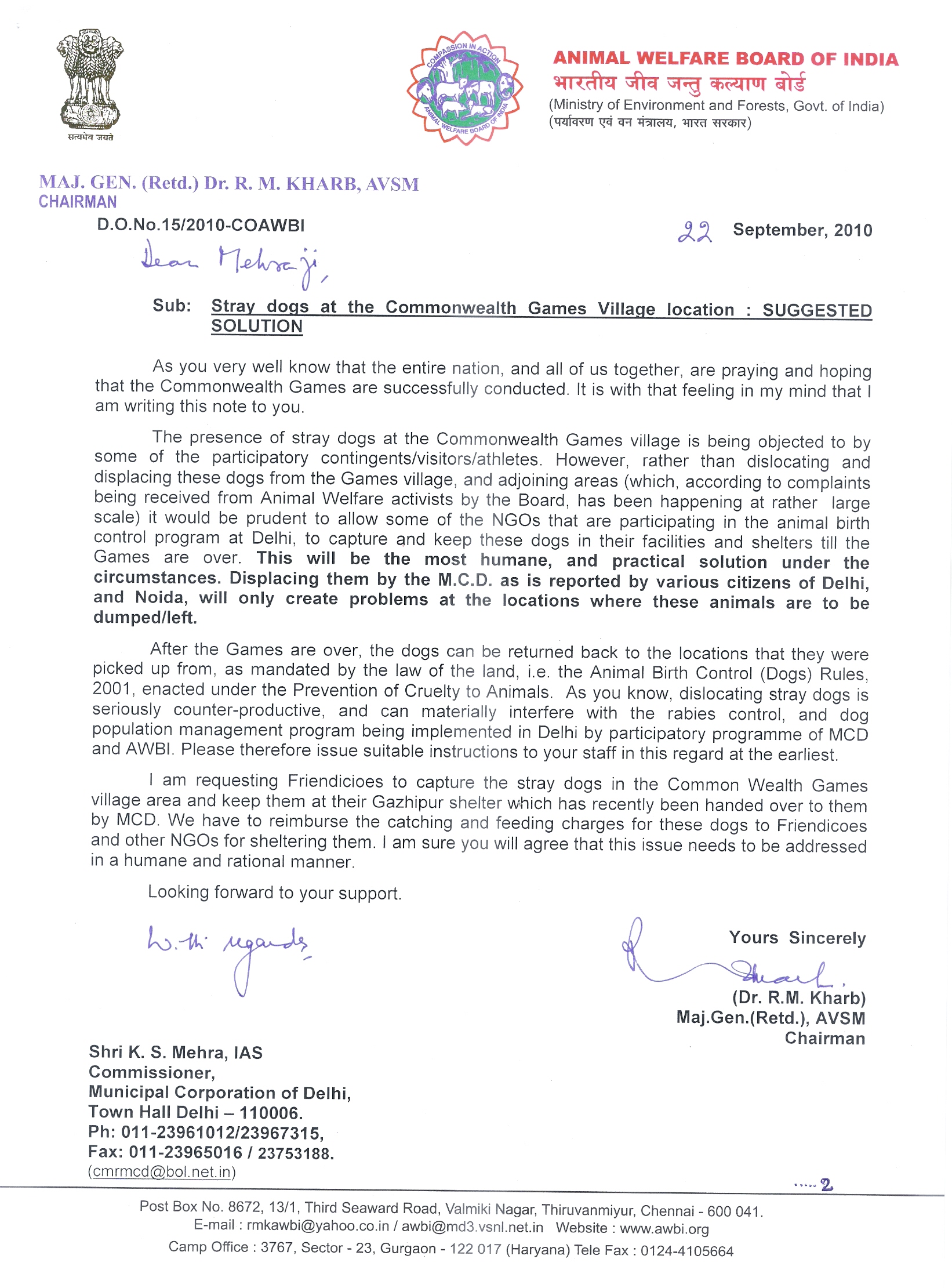
P.S: Though we at Jaagruti have shared exactly what transpired when we got this case treated and shared it here for all of yours information, we would still suggest that you consult your veterinarian for treating haematoma, while understanding that there are various options available to treat the same, depending upon the severity of the infection and age of the patient.
Commonwealth Games and Street Dogs


(Courtesy: Associated Press, http://oneclick.indiatimes.com)


After the news of the report submitted by Commonwealth Games Federation President and CEO was made public by the electronic media early this week,  it was apparently qouted and shown in the photographs submitted by the committee that, “there were pug marks of street dogs on the mattresses in the apartments of the games villages that are due to host the athletes as well as their faeces littered in the Games village”.

Since people in foriegn countries are not used to co-existing with dogs the way we Indians are, the CWG commitee had expressed their concern regarding the presence of street dogs in the Games village and asked for their removal.

But as per the Indian Prevention of Cruelty to Animals Act 1960, Delhi High Court orders and orders of the Supreme Court, the street dogs from any area can be removed only for sterilization and vaccination purposes and then they have to be released back into the same area from where they were picked up.

Thus, due to the timely intervention of Major General (Retd) Dr. R.M Kharb, Chairperson, Animal Welfare Board of India and Mr. Hiranmay Karlekar, Member, Animal Welfare Board of India and the pro-active humane outlook adopted by the Commissioner of Municipal Corporation of Delhi (MCD) Mr. K.S Mehra, IAS and the Chief Secretary, Government of Delhi Government, Mr. Rakesh Mehta, IAS- the street dogs living in and around the venues earmarked for the Commonwealth Games, 2010- have got a reprieve and in the process India has set an example in front of the other countries of the world with regard to humane treatment of street animals and has also in the process respected its own laws and India’s constitution.

Now the task of picking them up and looking after them till the period of the Games has been entrusted into the hands of SPCA Noida, Cure n Care, Sonadi Animal Care Hospital Friendicoes SECA, an NGO based out of South Delhi, who will be housing them at their South Delhi, Ghazipur and Gurgaon centres where each dog will be given a token with details of the area from where it was picked up.

Volunteers and food are invited by all these NGOs to help in tagging and feeding of the dogs coming in every day and also for helping release them back into their respective territories after the games get over. However, please remember to contact these respective shelters prior to going in there (The contact numbers of all these shelters can be accessed here).

In the interim period, if these dogs will are sterilized and vaccinated by the NGO, then that would be an added bonus for these dogs and the city.

Click on the thumbnails below to read the communication issued by Animal Welfare Board of India’s Chairperson to the Commissioner, Municipal Corporation of Delhi (MCD):

Below is the news in today’s Times of India with regard to this initiative and here is the link to today’s online news on this subject.

Treating a dog for a wasp/bee sting

This post comes out of sharing one of our experiences on dealing with insect bites on dogs and since insect bites are often misunderstood though it can be such a common reason behind sudden ailments in dogs/pets- what with most canines having a habit of sniffing around and poking their faces in the most wierd and strangest of places all the time for their pleasure. We are not offering any common solution to these cases but rather just wish to narrate our ignorance when suddenly faced with a situation like this in which we were left wondering what is wrong with the dog right till the time we reached the vet.

Wasp/bee stings on your dogs/pets could be dangerous and very painful to deal with: Contact a vet asap.

On 25th July, 2010 we were faced with a very confusing case of an approximately 7 month old young dog who suddenly started to yelp after splashing in the water placed in the water bath placed outside.

He started to run around with his tail pointed downwards and was pacing up and down in a  frenzied manner.

Within about 10 minutes, he started vomiting and the vomiting continued at an interval of one each every 10 minutes for the next one hour and after that he vomited twice with portions of blood and phlegm in the vomit. All this while we were trying to flush his mouth with cold water and even trying to force feed him water in the hope that if he has ingested something wrong, the same will get drained out one way or the other but nothing helped improvise his condition.

We were deeply worried and called the vet, in any case it was a Sunday so the first vet we called refused to tell us anything on the phone!

We kept trying and then got through two of our trusted veterinarians- and then narrated the chain of events to them. They said the symptoms we were sharing point to case of the dog ingesting something ‘poisonous’. Both of the vets asked us to give him some vanilla ice cream but the dog won’t have or even lick any of it and the vomiting wasn’t stopping either.

We called the vet again.

They asked us to give a few drops of Perinorm syrup to the dog (Perinorm is supposedly a medicine that helps stop vomiting).

Perinorm did help stop the dog’s vomiting and he slept for the next hour or so and then we had another shock in store when the dog woke up and started licking himself, we suddenly noticed that his genital organs swelled and so did his lips and eyes which were getting drastically swollen by the minute. Effectively, all the mucous membranes were showing swelling.

We were then asked to give the dog a 50mg Avil tablet.

By then it was two and a half hours since our agony had started with the suffering dog the vet- nearest to us reached his clinic on a torrid Sunday afternoon (much ahead of his schedule) and we rushed the young dog to the clinic.

While we were taking the dog to the vet’s clinic in the car, he began panting and we noticed that there was a blood-red long sting bite mark on the left side of his tongue.

We reached the vet and finally we realised that the young dog had become a victim of a possible wasp/bee sting while he was splashing around in the water bath while drinking water from the same. Te doctor promptly gave the young dog a set of anti-histamine injections and within fifteen minutes, the swelling on his lips, eyes and genital organs subsided and the dog was visibly relieved and looking far more comfortable, though he was still a bit subdued and sluggish in his movements.

Then the vet suggested that we feed the dog a powdered ‘charcoal’ tablet soon after as charcoal tablets help cleanse the body of all toxins sticking on the surface of the internal organs, we promptly did so and the dog eliminated all the toxins (supposedly) in his next faeces (which obviously was dark and partly black in colour).

Dime-sized charcoal tablets have long been used to treat stomach ailments. These tablets contain no chemicals and deliver about 250 milligrams of charcoal in each tablet. NetDoctor, a website that commissions material from United Kingdom health professionals, says charcoal tablets can relieve flatulence, gassy bloating, heartburn and upset stomach by attracting excess gas in the stomach and intestines. The gas binds to the surface of the charcoal and the tablet is digested. According to NetDoctor, charcoal tablets can be used to treat drug overdoses and poisonings. The charcoal absorbs chemicals and toxins the same way it does excess gas.

The young dog was back to his usual self in a day or two soon after all the toxins were flushed and elimnated out of his body.

And so this basically sums up our first experience of dealing with a dog stung by a wasp/bee.

We would like to summarise and share the main learnings we had from this experience below:

1. Dogs are playful animals and are often found sniffing and exploring unusual places. They tend to sniff under the bins, below the ledges, dark and mysterious corners and love digging up the soil. These places are homes to a number of insects and these insects bite the unsuspecting, curious dogs.

2. Wasps and bees generally tend to bite/stung the animal at places where they have less hair, like the nose, mouth, lips and the chest area.

3. Symptoms to look out for: The animal becomes restless, starts vomiting/shows symptoms of diarrhoea, inflammation or swelling of eye lids, nose, lips, muzzle area. The other symptoms of insect bites on dogs like wheezing, weakness, unconsciousness, weak and thready pulse, increased heart rate and fever may cause the animal to go into shock. Other symptoms of insect bites on dogs might lead to cold extremities, trembling, wheezing and collapse.

4. Do not ignore an insect bite, it could be serious and cause a series of allergic reactions in the dog which may even be fatal!

5. Take the dog to the vet immediately while administering first aid on the way to the clinic.

One useful backgrounder article on the subject of ‘Insect Bites on Dogs’ may be accessed here .

For any further queries, mail us at contact@jaagruti.org

Faith – the two legged dog

The below story is kind courtesy and copyright of : Daily Good.

We are sharing it here because it meets one of the objectives behind the intent of ‘Jaagruti’ which is – spreading respect and compassion towards members of the canine family.

Two-Legged Dog to Inspire British Troops Wounded in Afghanistan

BY MARC HERTZ | WEDNESDAY, AUGUST 18, 2010 5:45 AM ET

A dog named Faith inspires others simply by being able to walk with just her two hind legs.

picture_2.png

There are some things you have to see to believe, and Faith is one of those. She’s a labrador-chow mix born without one front leg and another that was severely deformed, only to be removed when Faith was seven months old due to atrophy. What’s truly amazing about Faith is that, despite having only her two hind legs, she can still walk on them, as you can see in the video below.

Faith is something of a celebrity, having appeared on Oprah a few years ago, and according to The Sun, she’s actually an honorary sergeant. The US Army gave her that title because she’s helped disabled veterans trying to overcome injuries they sustained in war zones, even donning a military jacket when she visits bases or hospitals. As her owner, Jude Stringfellow, was quoted, “Faith seems to inspire these young men. It’s very emotional watching them respond to her. She shows what can be achieved against great odds.”

Now, she’s planning to go international. Stringfellow wants to bring Faith to the UK, so she can bring her own brand of inspiration to those troops wounded in Afghanistan. Before she can do so, though, quarantine rules will have to be met. For the sake of those wounded soldiers, let’s hope they have the chance to see Faith “marching” their way.

Rabies and Street dog population control in India in 2010: Problems and Solutions

By Dr. Ilona Otter, DVM, Clinical Director of WVS ITC (Worldwide Veterinary Service India Training Center)

Dr. Ilona is also the Honorary Veterinary Consultant of Niligiri based Animal Welfare Organisation called IPAN- India Project on Animals and Nature.

In the article below Dr.Ilona pens down a brief summary about rabies and stray dogs in India to answer some questions and matters that are brought up in various discussion forums. Dr. Ilona hopes that this information will help those who are struggling with the facts and myths prevailing around the topic.

1. Introduction

Rabies kills more than 55 000 people in the world every year (WHO website). India counts at least for approximately 20000 of the number of human deaths (WHO SEA report 2009). These are very sad statistics of a disease that is 100% preventable by vaccination.

The main obstacle in preventing canine and human rabies in India is the lack of sustainable centralized effort and the fact that rabies by law is not a notifiable disease.

Canine rabies control is also often only associated with voluntary animal welfare organizations or groups even though it is a matter of public health and should therefore receive high priority in the public veterinary services and also in human health care sector, being the most cost-effective way to reduce human rabies cases.

The AWOs role in rabies control is, however, very much needed. Especially because often they only have the necessary infrastructure and staff to carry out mass rabies vaccinations on the field and to educate public of the importance of regular rabies vaccinations for their dogs. However, a greater understanding among AWOS of the need of effective canine and human rabies control by massive and sustainable mass vaccination campaigns for the sake of animal welfare is required. The cruelty and ignorance that many stray dogs face has often its roots in the fear that people have for rabies. We can’t expect the majority of general public to love dogs as long as there is such a high risk for rabies.

2. Options for prevention of human rabies

Rabies causes a horrible death and once the symptoms start there is no cure. However, there are three ways to prevent rabies in humans; by preventing the transmission of the rabies virus within the host species and by treating all people that have been bitten by dogs of unknown vaccination status or by vaccinating people with pre-exposure rabies vaccines. Prevention of canine rabies by dog vaccination and the post-exposure treatment are discussed further in this text. Public education is a crucial component of both approaches.

a. Preventing canine rabies:

Modern vaccines to prevent rabies are all derived from tissue-cultures. The sheep-brain culture method is no longer in use. Reputed international medical companies (e.g. Pfizer and Intervet) as well as Indian immunologicals produces reliable rabies vaccines that provide protective antibody titres when stored and administered properly. One dose of rabies vaccine for dogs in India costs Rs. 25. The manufacturers recommend a booster vaccination every 1-3 years depending on the rabies situation in the area. To achieve herd immunity and sufficient vaccination coverage to prevent transmission of rabies virus, 70% of the dog population has to be vaccinated. It has been shown that even in developing countries where dogs commonly roam free, most of them are accessible to parenteral vaccinations when vaccination camps are planned and arranged properly (Kaare et al., 2007). Oral rabies vaccine baits can be used in areas where it is difficult to achieve an adequate vaccination coverage by injectable vaccines only, especially when the wildlife reservoir is important (Matouch et al., 2007). Oral rabies vaccines have been used for decades in many European countries to prevent rabies transmission from wild carnivores like foxes and raccoon dogs.

b. Treatment of humans by post-exposure vaccination

According to some estimates, approximately 500 000 people in India receive every year the post-exposure vaccination treatment that consists of 5 vaccine doses and costs Rs. 1500 (excluding the cost of general wound care, hospitalization and time away from work). According to M.K.Sudarshan’s survey (2007) the full cost of post-exposure treatment of humans that have been bitten in India is $25million.

Unfortunately, many indigenous treatments still prevail among rural communities and not even everyone knows to wash their wounds after being bitten. Poverty, lack of understanding of the need to start the vaccinations on the very same day and also lack of availability in the rabies anti-serum which is needed in the treatment of the most severe bites all contribute to the sad statistics of human rabies in India (Sudarshan, M.K., 2007).

While it is common to hear the parties that are against dogs to defend their standpoint by saying that when people suffer money should not be spent on dogs, it is worth noting that at least 30 million dogs in India could be vaccinated against rabies every year with the amount of money that is spent on the post-exposure vaccinations of humans. The estimated stray dog population in India is 8-20 million. The fact that major savings in the human medical sector are likely to occur when mass vaccinations of dogs start effectively taking place has been noted by several published reports (Cleaveland, et al., 2003; Lembo et al., 2010).

c. Experiences from the world

The often quoted claim that most dogs in Asia or Africa are stray dogs and not accessible to vaccination has been proven wrong as recently reviewed by Lembo.  WHO-commisioned study of Tunisia, Sri Lanka and Ecuador concluded that “dogs which are not catchable by at least one person are rare and represent generally less than 15% of the dog population” (WHO, 1988). The same figure in India is not known but likely to be much higher. However, trained dog-catchers are able to catch dogs on the roads by catching nets and in more difficult terrains trap-cages can be used for catching.

Central-point vaccination programs that are announced before hand or door-to door vaccination teams have been able to reach to 80% of the dogs with a low as low as US$2/dog cost, as documented by several studies (Kaare et al., in 2007; Cleaveland et. al in 2003). In Nepal, 86-97% of dogs were accessible to parenteral (injectable) vaccination (Bogel, 1990).

In Mexico, human rabies cases declined to zero within ten years since mass vaccination of dogs started (Lucas et al., 2008).

In India, Jaipur is an example of a city where rabies control through mass vaccination and neutering of dogs has resulted in eradication of human rabies (Reece and Chawla, 2006).

In developed countries the low numbers of rabies cases are not the result of mass killing of dogs nor of spending millions in public medical care and post-exposure vaccinations. The secret for better than India rabies situations lies in the fact that rabies is a notifiable disease by law; dog vaccination to cover most of the dog population is a well-established practice, border control requires traveling dogs to be regularly vaccinated with a certificate of sufficient rabies antibody titre in the blood (Regulation (EC) No. 998/2003) , wild rabies from foxes and raccoon dogs is controlled by distributing oral vaccine baits in the forests and the habitat where garbage is not let in the open doesn’t support reproducing stray dog population.

3. What if ?  –  Elimination of dogs?

Elimination of absolutely all dogs, both owned and ownerless, both pedigree breed and mixed breed or country dogs, in India by killing them or banning them or by taking them to shelters is not possible. As long as there are enough susceptible individuals of the host species, virus transmission will continue. As long as there are free-roaming dogs somewhere, they will take the place of those that were removed.

a. Ecology and habitat matters

The poor garbage disposal system all over the country and the presence of chicken stalls and small butcher shops in and around the city markets and in the suburban surroundings means that there is edible waste for animals to feed and live on. If absolutely all dogs are eliminated by any method, it is likely that their place in the feast is taken over by another species, e.g. rats, monkeys, cats or wild pigs. All of them will carry their own risks for public health not to mention the harm that is caused if all that waste is just let to rotten below our windows.

Thieves are likely to become braver if a community or a colony does not have any watchdogs to guard the people and their property.

A zero-garbage city or even better the Zero-Garbage-India, would be an excellent benefit for the citizens in many ways, including the fact that stray/feral animal numbers would go dramatically down if there was nothing for them to eat on the roads and backyards. This is a challenge that the solid waste management department of every district in India should be made to take really seriously, by centralized incentive/penalty system if so required for compliance.

An observational report from the Wellington Cantonment, Coonoor, Tamil Nadu, by the Health Superintendant in 2010, states that since they started door-to-door collection of garbage in the civilian area of the Cantonment the dog population that used be very big has drastically declined.

b. Stray dogs in developed countries

Common policy in many western / developed countries is to take in all stray animals in shelters where they are neutered, vaccinated and then rehomed. Unlike in India, stray dogs in those countries are often actually strays, meaning they are run-away pets or abandoned pet dogs that would not survive on the roads on their own because there are no open garbage bins nor butcher shop backyards. As the numbers are limited, those animals can be taken in to rehoming shelters where they are neutered, vaccinated and rehomed to responsible owners.

Streets without stray dog problem in Singapore, Stockholm, San Francisco or Sydney are not the result of indiscriminate killing of thousands or millions of dogs but a fact that the problem has never risen to the extent because of different sanitary and ecological conditions, dog licensing programs, public education for responsible ownership and well-developed rehoming shelters.

4. Animal Birth Control program (ABC-program)

The objective of the ABC program is to reduce the population of dogs in a given area. To be effective in that, the work has to be intensive – 70% of the dogs should be neutered during one breeding cycle, that is during six months. This is possible but requires strategic planning and an experienced veterinary surgeon with trained assistants who can perform the operations without complications.

Dogs are territorial animals and therefore a small group of sterilized and vaccinated dogs protect and defend the community they live in from any outside dogs wandering in search for mate or new territory.

a. Role of ABC in rabies control

Having a dog neutered doesn’t prevent it from getting infected with rabies. Usually all the ABC programs include rabies vaccination to the operated dogs. However, the main benefit of the ABC program in rabies control is in the overall reduction of population growth. By doing ABC we aim to stabilize the dog population to a level where sufficient rabies vaccination coverage can be maintained by annual vaccination days. Success of ABC program in controlling the stray dog population has been demonstrated scientifically in India (Totton et al, 2010; Reece and Chawla, 2006).

However, whenever the pressure to prevent rabies is very bad, an effective mass vaccination campaign at first is the preferred option, followed immediately by intensive animal birth control program to maintain the vaccination coverage sufficient.

b. Population dynamics

Whenever and wherever ABC-program is judged not to work it is either that it has not even been implemented on that particular area or that it has not been implemented effectively enough. If only 200 dogs are operated from a population of 10 000 with great deal of media attention as the program starts, the public is likely to start questioning the sensibility of the program when they observe no results after a year. However, if two full-time teams are employed to work for six months they can achieve the required level of 7000-8000 neutered and vaccinated dogs and the impact is clear. Such a high volume campaign should easily receive media attention and have an impact in the public awareness meaning that people are likely to start bringing their pet dogs also for vaccination & for neutering, further improving the success of the program as less unwanted pet dog puppies will end up on the roads.

About the Worldwide Veterinary Service India Training Center

WVS India training center located in Ooty, Nilgiris, Tamil Nadu, is going to provide training for animal charities in arranging effective rabies control campaigns. The program consists of three modules that are to be attended by different people of the charity; managers, veterinarians and assistants/dog-catchers. While we initially target charities as participants, the courses will be open also for municipalities and corporations who want to train their staff to significantly reduce rabies in their areas for the benefit of the public.

The training center, known as the ITC, has an operation theatre for five surgeons to operate at a time, custom-made kennels to hold the dogs and several classrooms as well as dining and accommodation for 30 people.

Visiting foreign volunteer teachers as well as the experienced WVS ITC staff conduct the courses and all participating charities will be supported by advice, volunteers and materials to carry on the rabies control work in their areas after the courses. Participation is free of cost but a participating charity/municipality/corporation has to commit in implementing the rabies campaign as planned for that specific area during the course immediately after the training.

The opening ceremony of ITC is on the 28th September, the world rabies day. The center will be inaugurated by the Chairman of Animal Welfare Board of India, Dr. R.M. Kharb. While personal invitations will be send to the WVS associated charities and other key people in this field in India, we warmly welcome all interested people to join us for the ceremony.

More information at

www.wvs.org.uk

www.rabiesblueprint.com

www.worldrabiesday.org

References

Bogel K., Joshi DD (1990) Accessibility of dog populations for rabies control in Kathmandu valley, Nepal. Bull World Health Organization 68:611-617

Cleaveland, S.,  Kaare, M.,  Tiringa, P.,  Mlengeya, T., Barrat, J. (2003) A dog rabies vaccination campaign in rural Africa: impact on the incidence of dog rabies and human dog-bite injuries, Vaccine 21; 1965-1973

Lembo T, Hampson K, Kaare MT, Ernest E, Knobel D, et al. (2010) The Feasibility of Canine Rabies Elimination in Africa: Dispelling Doubts with Data. PLoS

Negl Trop Dis 4(2): e626. doi:10.1371/journal.pntd.0000626

Lucas CHPino FVBaer GMorales PKCedillo VGBlanco MAAvila MH (2008) Rabies control in Mexico, Dev Biol (Basel).;131:167-75.

Matouch O, Vitasek J, Semerad Z, Malena M.(2007) Rabies-free status of the Czech Republic after 15 years of oral vaccination. Rev Sci Tech. Dec;26(3):577-84.

Regulation, 2003 Regulation (EC) No. 998/2003 of the European Parliament and of the Council of 26 May 2003 on the animal health requirements applicable to the non-commercial movement of pet animals and amending Council Directive 92/65/EEC.

Sudarshan MK. Assessing burden of rabies in India. WHO sponsored national multi-centric rabies survey ( 2004). Assoc Prev Control Rabies India J 2004;6:44-5.

Reece, J.F., and  Chawla S.K.(2006) Control of rabies in Jaipur, India, by the sterilisation and vaccination of neighbourhood dogs. VetRec. 16: 159 (12):379-83

Totton, S.C., et al., Stray dog population demographics in Jodhpur, India following a population control/rabies vaccination program. PREVET (2010), doi:10.1016/j.prevetmed.2010.07.009

WHO report; Rabies in the South-East Asia region, 2009

WHO website www.who.org accessed in August 2010

WHO (1988) Report of a WHO consultation on a dog ecology studies related to rabies control. Geneva: Word Health Organization (WHO/Rab.Res/88.25)

How to act when your society RWA puts a bar on letting your pet dog use the building lift?

Pet Dogs: Should they be allowed on lifts or not? (Photo credit: theotokos.co.za)

On the afternoon of 10th August 2010, the Jaagruti helpline received a call from Mrs. Usha Gulati in Faridabad who informed that the residents welfare association of the colony in which they stay had objected to them taking their Pet dog Pixie up and down the building lift from their 5th floor flat. Ms. Gulati and her family was willing to take Pixie down (for his walks) using the stairs but given his age (Pixie is 10+ years old) and the fact that they live on the 5th Floor, the Gulati family was not willing to cow down to the demands and orders of the RWA in any way and were even willing to take this matter to court should the RWA remain adamant in its stance on this subject.
Most of the times the arguments that RWA office bearers give to pet owners while objecting them to using the building lift with their pets- ‘the pets odour is harmful for human health’, ‘pets are dirty’, ‘pets make the lift dirty’, ‘pets can pounce or growl or attack other people in the lift’ and the list goes on as per the whims and fancies of the RWA representatives.

Ms. Gulati mentioned to us that she has a copy of a news clipping that came out in Times of India newspaper in December 2008 in which a Mumbai resident had approached a consumer court for his pet dog Shimu.  Further to this Ms Gulati wanted to know from us if there was any previous judgment in this regard that they could use to help Pixie. Below is presented a step-by-step guide on how to tackle such a problem which, as we learnt is a common problem faced by many people living with their pets in buildings with lifts face across many cities in India. The key to coming out victors in such a situation is to have cent percent commitment towards your pet and to be willing to stand up for your pet’s rights, for pets are family!

Through the power of the internet, we enquired upon this ‘Pets being denied lift access’ subject from people across the animal welfare fraternity across India, the following facts came to light and we are sharing this information in our effort to inspire all those who face similar problems to act accordingly when faced with such situations. As for what transpired in the story of Pixie, read this till the end:

The only preceeding judgement in such a case was when Mr. Ajay Marathe, a resident of Mumbai’s Vashi Colony approached the Consumer Court (on 26th September, 2008) when his colony’s association passed a resolution disallowing them to use the building lift with their pet dog ‘Shimu’, who was then 11 years old who was suffering from osteo-arthritis (pain in the bones and joints)

The following trail of news stories on Shimu’s case illustrate the trail of events on this subject as well.

No entry for pets in lifts, Vashi housing society tells residents

Indian Express
N Ganesh Fri Sep 12 2008
Mumbai, September 11 : Says odour may be harmful to health; SPCA takes up issue
Life for 11-year-old Peter-Pan alias Shimu, a Labrador Retriever, has become tougher than ever. Shimu stays with his owners, Ajay and Nandini Marathe, on the fifth floor of New Sarvodaya Co-operative Housing Society, at Sector 4 in Vashi. Shimu has been diagnosed with osteoarthritis, an ailment in which the patient suffers from severe joint pain. However, Shimu will now have to use the staircase instead of the lift, as a resolution passed by the general body of the society bars pets from using the building elevator.

On August 3, 2008, the general body resolved to prevent use of lifts by residents accompanied by their pets. According to a notice issued to Marathe and the general body resolution, the society fears that the odour of the pets which is left behind in the lifts, can be hazardous to the life and health of the building residents. In the month of May 2008, the society sought numerous documents certifying the fitness levels of the dog. Marathe, who has a licence for the dog, produced a certificate issued by the Bombay Veterinary College that dog is licenced, vaccinated, healthy and does not suffer from any infectious or contagious disease. The Bombay Veterinary College certificate also adds that since the dog is aged and suffering from osteoarthritis, it should be allowed to use the lift, as climbing the stairs would be a painful task.

Marathe tried to find a way out by using air fresheners after the use of lift by the pet dog. However, the society officer tersely told Marathe that use of air fresheners was not recommended.

After a complaint of Marathe, the Society for Prevention of Cruelty to Animals (SPCA) has taken up the issue. S B Kadam, assistant secretary, SPCA said, “SPCA inspectors have paid a visit to the society and asked the office bearers to be practical and permit use of lift for the pet dog concerned. We will be hearing from them soon.”

Marathe said, “I paid the watchman from the neighouring building to carry the dog up and down the building thrice a day so that he could answer nature’s call. This arrangement worked fine for a few days, however he stopped coming after being warned by society office bearers.”

Meanwhile, Marathe has temporarily shifted Shimu to his in-laws place at Pen in Raigad district. Chairman of the housing society Arvind Palwankar said, “It is a very old sick dog with a bad odour. We only prevented Marathe from using the lift. Moreover, Marathe is a nuisance as he relentlessly complains against the society to the authorities about all things trivial.”

What the law says
Advocate Rahul Thakur who is associated with In Defense of Animals (IDA) said that the society resolution violates section 11 (3) of Prevention of Cruelty to Animal Act 1960. It is also against article 51 A (g) of the Indian Constitution according to which it is the duty of every citizen to have compassion for animals, living creatures and improve the natural environment. Thakur said, “The society resolution is illegal as it is unconstitutional.”

Please note the underlined portion in the last paragraph of the above story.

Luckily for Shimu, who is now in good heavens, the Consumer Court upheld the society’s resolution and passed the judgement in his favour and also asked the Association to pay Mr. Ajay Marathe Rs.5000/- in lieu of the damages and the expenses incurred by him on this court case.

Please read through the following news stories:

Peter Pan can use apartment lift now

Indian Express

N Ganesh Dec 17, 2008

Mumbai This 11-year-old dog was barred from using lift by the housing society in Navi Mumbai

The consumer forum came to the rescue of a 11-year-old dog, Peter Pan alias Shimu, who was not allowed to use the apartment lift by the office bearers of a housing society in Navi Mumbai. Shimu, a pet belonging to Ajay and Nandini Marathe, residing on the fifth floor of New Sarvodaya co-operative housing society was barred from using the society lift. Shimu had been diagnosed with osteoarthritis — an ailment that causes acute pain in the joints.

In its order dated December 11, 2008 the Thane District Additional Consumer Disputes Redressal Forum ruled that the housing society’s move to prevent pets from using the apartment lift without any valid reasons amounted to deficiency in service to the members as per section 2 (1) (g) of the Consumers Protection Act.

The Marathes were asked to produce documents certifying the illness of the dog. However, despite producing the required certificates and reports, the general body of the housing society in August 2008 resolved to ban pet animals from using apartment lifts.

The housing society contended before the forum that the dog was not a consumer of the housing society and hence the forum cannot hold the society liable. The consumer court however said in its order: “The issue of ‘dog’ being or not being the consumer of the society is not valid, instead the valid issue should be whether the complainant is consumer of the housing society or not.”

Since the membership of the Marathes to the housing society was not disputed, the consumer court said: “The dog has valid license and has been certified by a veterinary doctor of having no contagious and infectious disease. It has received all its vaccines. The doctor has also recommended the use of lifts owing to its condition.”

The housing society contended that the use of lifts by pets threatened the safety of the residents. However the Consumer court held that the housing society’s decision to ban pets from using lifts was without any valid reasons and hence amounted to deficiency in service. The court has ordered the housing society to pay Rs 3000 as damages and Rs 2000 as legal expenses to the Marathes.

Consumer court upholds dog’s right to use lift


18th December, 2008,  Published in: The Times of India

Mumbai: An 11-year-old Labrador has emerged a champion of dog rights by not only winning for himself the right to travel in the elevator of his apartment complex in a Mumbai suburb but getting his master a Rs 5,000 compensation from the apartment’s anti-pet managing committee.

The Thane District Consumer Disputes Redressal Forum passed an order, defending Shimu aka Peter Pan’s right to use the left and directed the society to compensate the owner for the harassment he faced. The dog’s owner, Ajay Marathe (52), a fifth floor resident of New Sarvoday Cooperative Society at Vashi, told TOI on Wednesday: This is a very good judgement given in our favour in real time. In fact, a lot of pet owners face the same problem in Mumbai; this order can be an important reference point to help them use their society lifts.

Marathe added that the 35-kg Shimu suffered from pain in the joints and couldn’t use the stairway. The society this May passed a resolution, saying pets like cats and dogs could not be allowed in the lift as their body odour could be injurious to health and life, which I found to be ridiculous, he said.

Marathe first went to the cops, but failing to get a sympathetic response from them, he lodged a case in the Thane consumer court. The consumer court has given this judgement in less than three months. The Rs 5,000 compensation for my pet is also welcome as I had to temporarily shift Shimu to my in laws house in Pen, which caused some discomfort to him, he said.

To read the full judgement given by the Consumer Court on this case in favour of Shimu the dog, please click here

Since Shimu passed away soon after this judgement was announced, Mr. Marathe donated the Rs.5000/- compensation he received to the animal welfare charity named PAWS which used this contribution to publish brochures on the ‘Tree Protection Act’, which carried Shimu’s name on it as a mark of honour to his spirit.

Now, coming back to Pixie’s case in Fraidabad, here is what happened-

Deriving inspiration from Mr. Marathe’s stance on getting justice for Shimu, Ms. Usha Gulati’s familytook the press clipping of Shimu’s news (which had come out in TOI in December 2008) and approached the Local  Police with the copy of the same and lodged a complaint against the RWA…the cops then called and came over to meet the RWA representatives and following all of this, an amicable solution was reached upon in which it was agreed that the  Gulati family would be allowed to bring their pet dog Pixie down the stairs for his walk and after he has relieved himself and there is apparently nothing in his stomach to ‘dirty’ the lift with, he can take the lift upstairs to his fifth floor house along with his owner.

So, next time you face such an issue, consider using all of this information above and stand up to seek justice for your animal friends. Trust us, its all worth the effort and a way to (try to) pay back  for all the love that your pet animal has showered upon you unconditionally.

However, we would like to also suggest to you that as always prevention is better than cure so please be mindful of a few other things a ‘responsible’ pet owner can follow while using the lift with their pet, to avoid inconvenience to the fellow lift users:

1. Make sure that your pet dog/cat is vaccinated to avoid any health related arguments from fellow building residents.

2. Keep your pet animal on a leash.

3. If your pet is aggressive and has a tendency to bite strangers, then it would be better to put a muzzle around the pet’s mouth while you move your pet in the lift. You can remove the muzzle once your pet is out of the lift.

4. Try using the lift when no one is in there, alternatively avoid using the lift when someone (you know) having a canine/feline-phobia (i.e someone who is well-known to be scared of dogs/cats) is already travelling in the lift.

5. Make sure that your pet doesn’t pee or defecate in there, so avoid taking young untrained pups in the lift as else you would most likely end up creating a lot more disgruntled neighbours or should we say enemies!

6. Take care of the health and hygiene of your pet dog/animal, give it a nice bath regularly so that it doesn’t emanate any sort of stinking odour in a public place like a lift, which may else be a cause of inconvenience for the fellow residents of your building.

* Credits: We deeply thank AWBI’s lawyer Anjali Sharma, PAWS founder trustee Nilesh Bhanage and Vishruti Aggarwal for sharing their experiences, the video link and the consumer court judgement with us.
Abandoning one’s pet: Could there be a crime bigger than that?

Such scenes are an everday occurence all around many cities across the world.

People buy pets, some even pamper them BUT then dump them on the road, at a city shelter in their old age-at an age when they need them the most.

Next time you see someone abandoning them, try telling them: “FOR YOU HE IS A DOG, BUT FOR THAT DOG YOU ARE EVERYTHING”. If nothing else, at least you could try and guilt such people into shame for there could be nothing more inhuman than that act of abandoning one’s best friend.

Never abandon your pets! (Courtesy: http://blog.thewaterdish.com.sg)

Instead of heartlessly abandoning one’s pet at a ripe old age at a city shelter, we would rather advocate that you have a heart and put your pet to sleep, atleast that would save that speechless animal a life of agony and stress at the thought of having been separated from those he considered his very own family for all the years that he has lived thus far

The words below penned by Meera Ahmad speak on the agony of  a pet being abandoned, being dumped at a city shelter by its heartless owners.

Just visualize the people come in their car, the dog feels he is going for just another car ride….they take him out on the road, he thinks it is just another lovely walk, the dog trots excitedly beside them like he has done all these years looking up to them as his guardians…

Unknowing to their unsuspecting dog, they look for a place to dump him, soon they find one, the kid feels weird being tied at a strange lonely unfamiliar road….whines and tugs hard….his eyes turn large with an unknown fear, ears drop still his tail wags beacuse he can still see the people he loves….till they walk away, like a streak they speed away…not looking back even once…the kid starts yelping barking like mad, tugging at the leash for his dear life so hard that it strangles his neck, till he drops limply as if he was dead….had he got free he would have raced to catch them up trying to overtake the car it would have run and run, till it would have stumbled sore and spent…now it lies limply in the dust…

Will you do this to someone you really love?

What is more disturbing is that if they could do this to their dog after having him for ten odd years God only knows how they would have kept him in those years…for I am mighty sure of one thing that they couldn’t have loved him as a dog deserves to be leave alone thinking of him as their family member or kid.

It is as ghastly as dumping your old parents in a old age home. Stll that dog of theirs would never stop loving them..never give up on them or let go…he will keep waiting for them till his last breath..everytime he hears a car in the shelter he will think they have come for him..just like the parents in the old age homes…the widowed mothers packed off on trains to holy places like Vrindavan until they breath their last.

Remember,  what goes around comes around, so don’t do onto others what you don’t wish others to do to you!

Animal ‘abuse’

How many times do people amongst us take names of an animal or refer to one in the abusive/bad language they utter (mostly without thinking) in one’s frequent bouts of anger?

These bad words could be in English or Hindi..Wondering what are we referring to here, think about these ‘ullu ka patha‘ (son of an owl) ‘kutte kamine‘, (rascal dog)  ‘suyar ki aulad‘ (child of a pig) or  English phrases like ‘looking sheepish‘ or ‘Quit horsing around!’

Ponder a second, do these words or phrases even mean anything?

Like us even Farhan Akhtar, the multitasking young bollywood director-actor-singer finds such bad-phrase- referrals to animals in our language meaningless.

For more on his take, read on:

Such an animal!

By Farhan Akhtar in HT City on 7th March, 2010

I wonder what animals ever did to the human race for us to have treated them in this manner. I refer here to the use, or rather, misuse of the species in the English language. I list here the top five violations to highlight my cause.

What does it mean when one says, ‘That guy really gets my goat!”? For years, I have heard about this fictional kid- napping from people who own as many goats as the acres of land I own on Saturn. So are we to assume that all of us own imaginary goats that get taken from us by annoying people? If you answered yes, I advise you consult the nearest shrink.

Another one, “No point in looking sheepish.” Now that’s a racial slur, if I ever heard one. Is it the sheep’s fault? And how can a person look like a sheep?
I ask this regardless of circum- stances!! Do we suddenly sprout wool when we feel guilty? Do we start eating leaves? Then why? The gentle creature is so fed up with this misrepresentation of its personality, that it now treats us with contempt….. Bah!!!

How about “Don’t trust him! He’s a snake!!” Now either the commenter has watched too many films about Ichhaadhaari Naag or then the commentee (to coin a word) slithers in and out of people’s homes and lives on a tree or in the ground! And what’s not to trust about a snake? Don’t mess with it, it leaves you alone. Mess with it and it will most likely kill you. Uncomplicated, if you ask me.

While on this, I must state that more people die annually of mosquito bites than snake bites but would it fill your heart with dread if someone warned you “Keep you eyes on that one… he’s a mosquito!!”?

“You’re being such a dog!! (male or female). This one really confuses me because we’ve been taught that dogs are loyal and friendly. We’ve read true stories about brave canines rescuing their masters from the jaws of death. Then why this complete reversal in the meaning? The only answer can be jealousy. An experiment conducted by someone who owned imaginary goats, revealed that when a dog and its master are in residence and guests come over, the dog gets approximately 75% of their attention. I hope you didn’t buy that theory because it wasn’t for sale. Like I said, this one really confuses me.

And finally my favorite. “Quit horsing around!” This is an old one though. Gone are the days when people wore saddles and took part in dressage. In the modern era, horsing around is described as ‘indulging in frivolous activity’. Do you suppose when a horse sees a person swinging a stick at a circular object, he thinks it frivolous and does not realize the importance of cricket as a national obsession! Goes to show how one species’ passion could be another’s frivolity.

I end this column on a hopeful note. I feel even now, people can restore faith in the hearts of the very creatures they’ve maligned over the years. The reason i know this is because we created a loophole in the same language….It’s human to make a mistake.

Now if we could only get those animals to start reading…

(Courtesy: htcity.desimartini.com)

GoD and DoG!

GoD and DoG (Courtesy: Kris, 5th July, 2010)

The above photograph  was clicked and contributed to us by Kris Kumar on 5th July, 2010.

It was clicked at PVR Anupam-Saket, a multiplex  in Delhi. In this small temple beneath a tree behind the multiplex where these two resident dogs with collars around their necks were sleeping peacefully,  demonstrative of the relationship between GoD and DoG…

For reporting animal cruelty cases: How to approach the police for help?

What comprises Animal Cruelty?

Contacting the Police on the Phone:
In an emergency situation telephone your local police station or dial 100 (Central Police Control Room) Get your “Ticket number” if you have dialled 100. Get the name and designation of the police personnel if you have called your local police station. Note the date and time on both occasions. If you wish to remain anonymous you do not need to reveal your identity.

At the Police Station:
i) Approach the police (above the rank of constable) politely and briefly explain the situation.

ii) Request them to take action against the offender.

iii) If they state it is not their job to protect animals as there are far too many human problems, politely enlighten them about their role in the PCA Act, 1960 (quote the relevant sections). If in Delhi, do tell them about the Delhi Police Act, 1978 Chapter IX entitled “the Prevention of Cruelty to animal”.

iv) Refer to http://awbi.org/awbi-pdf/apl.pdf for a compendium/factsheet of Animal Protection laws for the guidance of Police, NGOs, Animal Welfare Activists and Officers.

v) Insist on their involvement and offer your help.

vi) Inform them that the injured or distressed animal shelter and not left at the police station. This will reassure them.

vii) File an FIR if necessary.

viii) Do the necessary follow up.

ix) Do praise him/her after his involvement, no matter how small.

HOW TO FILE AN F.I.R. (FIRST INFORMATION REPORT):

• FIRs are filed at your local police station when you wish to put down in record an incident which you wish to bring to the notice of your local police and at the same time seek their help in solving it. (eg. loss of wallet, train ticket, incident, or any other loss).

• Make out a detailed description of the lost animal/incident with a photograph/s (or any cruelty complaint). Address it: to the SHO (Station House Officer), of your area.

• To file an FIR, write the facts on a plain piece of paper which you yourself may prepare in duplicate, with the date, your name and address, details of the complaint and the people involved, if any.

• The officer on duty at the police station is responsible for making all the necessary entries.

• The copy of the FIR should be duly signed, stamped and dated (note the time as well) by the police station which you should keep safely.

• This is applicable not only to lost animals, but to any animal you have found (which might be lost), cruelty to animals, illegal activities with regard to animals eg. trade in wildlife-bird sellers, snake charmers, turtle traders; illegal slaughtering of animals and illegal slaughter houses; bird sellers; cruelty to animals in zoos; circuses, pets/petshops etc.

• The Prevention of Cruelty to Animals Act, 1960 under section 11 covers a large number of cruelties and offences on the basis of which you could file FIRs.

• Insist on filing an FIR. It is your right. It is important to note that the police usually discourage the complainant from registering a FIR in cases which are not so clear. This is because once the FIR is filed, it becomes the responsibility of the police to ensure a conviction.

• Do not lose the stamped copy (by the officers on duty) of the FIR and keep enquiring about the progress. This copy is the proof that the Police have received the information.

• Please don’t forget about the well-being of the animals, make sure that you also contact an Animal Welfare Organization/activists to ensure that they follow up on the health status, rehabilitation/release of the animals in case custody.

Please share  with us your experiences while dealing with the Police /lodging an F.I.R on animal cases, practical learnings end up being different than what we write here, so please be candid in your sharing for it may help someone at a later date when stuck in a similar situation. Thanks-Vasudha

How to behave with Dogs and understand them better?

(Courtesy: DNA Ahmedabad 27th June 2010)

An article by Erika Abrams about how to interact with dogs and read their signals…

To read the second part of this article, please click here

Intelligent Animals: Meet the thirsty cow operating a hand pump

Each one of us would have heard the story of the thirsty crow who brings pebbles in his beak and throws them in a pot to raise the level of water in there so that he can sip it and quench his thirst…

(Cortesy: indif.com)

Now, in this real life story, we meet a thirsty cow on a Delhi road.

Below is an amazing account of Rishi Dev’s encounter with a thirsty cow operating a hand pump to quench her thirst on the hot summer afternoon of 20th June, 2010

Animals continue to amaze me with the level of intelligence they possess which is beyond our comprehension. Another example of it was displayed to me today when I was just driving through a village. It was hot as ever and I saw a cow trying to drink water from a handpump on the village road. First I thought she was trying to lick away water which was dropping from the pump. So I stopped to see what was going on.

To my amazement, she was operating the hand-pump with her horns and then drinking water at the same time. She was using her head to push down the lever and when water flowed through the spout, she drank that water and kept repeating the exercise. I shot a small video before doing anything. It can be viewed below :

After that I just walked over to her and stood there, very near to the pump. Then she stopped drinking and for a second the people watching thought that she would attack me. But to their amazement she looked straight into me eyes questioning me not to stand there like a fool and use my limbs to operate the pump so she can drink. That one moment between us was unspoken and as if she had an unwarranted right over me, that I was bound by some universal love to help her. It was so obvious for her that there was not an iota of hesitation or doubt that she had any other intention. She hadnt asked me, but was teling me to operate that pump, NOW!

So I started operating the pump.

प्यासे को पानी पिलाओ और पुण्य कमायो

She must have drunk at least 50-100 lts of water as I stood there for real 20 minutes operating the pump while she was drinking the water, non stop. When she was done she looked at me in satiation and contentment as if asking me to stop. First she closed her eyes for 15 seconds catching her breath. Then she looked at me straight and flipped her delicate ears with an expression as if showering her divine motherly love upon me. I really felt I was standing next to a mother and not an animal. She had so much love in her eyes that I felt I had actually drunk all that water on this hot afternoon and not her.

We both went our ways without greeting each other, but only sharing some short but real moments of love.

Even though I was a bit amazed by her intelligence but she was least touched or surprised by my involvement as if telling me & reminding me yet again that it was nothing else but “obvious” that all beings had equal right to water, food and shelter and it was our obvious duty to help each other with the same. Nothing great !

गर्मियां बहुत बड़ गईं है जनाब, इसलिए इन प्यासे पशु-पक्षियों की तरफ थोड़ी सहानुभूति दिखाओ,

घर के बाहर एक साफ़ बर्तन में सुबह शाम पानी रखकर इनकी प्यास भुजाओ और पुण्य कमाओ

Urvashi and her love for street dogs: A journey that will never end…

On her regular morning walks, Pooja Gulati of Faraidabad was amused by the sight of 4 street dogs regularly sitting on the boundary wall of a house in Sector 21, Faridabad (Haryana, India). Their unwavering devotion to guarding the premises of this house and the street facing it pointed to the fact these street dogs indeed had human guardians taking care of them and that is how Pooja was introduced to Urvashi and her 4-legged family!

On guard! Chotu, Noni and Motu

Urvashi Sharma, graduated from Lady Shri Ram College in Delhi and moved to Fraidabad from Delhi 25 years ago. She is now a lecturer in English by profession and stays her parents.

Her bonding with the dogs on the street began when in her younger years, she along with her elder sister Neelakshi befriended a few of the street dogs…after her sister’s marriage, Urvashi carried the baton forward.

Today, there are 4 four street dogs who maintain a vigil outside Urvashi’s house.  They have been loving named, Chotu, Chotti, Motu and Noni by her family and have been her friends for the past decade or so.

Urvashi is not only feeding the four of them on the street, she is also feeding and providing shelter to a female street dog named, Minni inside her house. On being asked about the possible cause behind Minni’s blindness, Urvashi shared that, ‘a few unruly boys in the street tried to pierce her eyes and that is what led her to lose their vision’.

Urvashi with Standlie-the Lhasa apso (in her arms) and Minni- the blind street dog (by her side)

Disability is no deterrent for Minni’s spirited personality; she now relies on her sniffing prowess and is a regular at going for her moring and evening walks. Urvashi’s retired parents guide her as she finds her way through the house.

Chiklu - Urvashi's Dachshund

Also sharing space with Minni at Urvashi’s home are her two pedigreed pets Chiklu, a Dachshund and Standlie, a Lhasa apso.

Initially (like many of us), she faced a lot of resistance from her neighbours towards feeding the dogs in her street. The neighbours knocked on her doors whenever the dog’s barked as well, not realizing that the dogs could well be barking on some unscrupulous elements that are walking past the street and scaring them away to keep the neighbourhood safe!

Street Dogs keep our streets safe from anti-social elements! (Cartoon Credit: Ajit Ninan and Vasudha Mehta)

Urvashi faced a tough time convincing and explaining them all the advantages and benefits the street dogs serve the society. But today, thanks to the Dog-feeding rules and growing awareness, things have gradually begun to show improvement.

For her these animals are an integral part of her world and caring for them is a journey that will never end…

In Urvashi’s words, “animals are a creation of God. We have no right to harm them. As human beings, the least we can do is respect them and their existence on this planet and in return be assured of their endless love and companionship, which makes each day memorable and worth living for us all”.

Kindness to Animals: What Religion says?

First Aid tips for taking care of the dog on your street

Hands that help are better than lips that Pray!  (Image Courtesy: Helping Hands-http://www.fsgp.org/storage/HH_Image.jpg)

Volunteer to provide quick medical relief to the dog who guards your street

A horrifying number of dogs and cats die because of lack of medical attention.  This is all the more tragic because wounds and injuries are surprisingly simple to treat, once you’ve learnt how. Especially for very serious cases, the dog does not even need to be hospitalized.  With your help, street dogs can live a happy and healthy life.  Some of the most common problems that street dogs suffer from are skin infections, wounds and maggot wounds.  All these can be treated easily on site, unless of course the symptoms or the injury are very  severe when the dog needs to be taken to a vet or a shelter.

* Please note: This page will be regularly updated in both Hindi and English language for the benefit of those who care for their community dogs. However, it is to be noted that the information written in there is for informative purposes only. We request you to please do contact a veterinary doctor or take the animal to a shelter for thorough treatment if symptoms look grave.

For further queries or guidance, please write to us at contact@jaagruti.org or call on our helpline +91-9818 144 244

First Aid Kit:

Scissors, forceps, thermometer, chain to restrain the dog, tape to muzzle the dog (or buy a regular muzzle from a vet), adhesive tape, Gauze Bandages, cotton wool, bandages.

Medicines: Betadine Lotion and Ointment, Neosporin or Nebasulf  powder, Himax Ointment (a miracle medicine for animals) or Skinoment, Betnovate Skin Cream, Soframycin skin ointment, Ivermectin – 10 ml vial, Topicure spray, Scabnil Oleo, Neem oil, antibiotic such as Cifran 500 mg (for 20 kg dog), Avil tablets (25 mg or 50 mg -depending on the age and weight of the dog), Petmosol soap, Ecktodex or Ridd, Ivermectin tablets, sulphur powder, camphor powder, boric powder, coconut oil, kerosene oil, Cetrimide Lotion (Anti-allergic wash from Piramal Healthcare)

SKIN DISEASES This is the most common problem that dogs suffer from.  In the first instance, try and avoid them getting skin infections by taking precautions.  Give a pinch of sulphur in the dog’s food once a week.  You can also give a neem tablet (from Himalaya Drug Co.) once a week which is most effective too.  If we can help treat their skin infections, it would eliminate a great deal of suffering the dog undergoes. The most common diseases are mange and scabies and fungal infection. Most dogs can be treated at site. There are various treatments:

Treatment 1 (allopathic treatment)

  • If possible, give the dog a bath with Petmosol soap.  (Repeat once a week till the dog heals).
  • Apply Ektodex 1 tsp in 1 litre solution (or as instructed on the bottle). Note: As this medication is poisonous, do not let the dog lick himself.  Try and walk the dog till the medicine dries.
  • Antibiotics have to be prescribed as the constant scratching will have caused bacterial infections.  Amoxycillin can be given 2 times a day for three days along with Vitamin B capsules.  Avil can also be given to relieve the itching.

Treatment 2Do not apply this mixture on cats.

  • Mix Scabnil Oleo with an equal part of Neem oil.
  • Apply on the dog with a brush.  Repeat every 4 days.
  • The main ingredient of Scabnil Oleo is karanj oil which is a powerful anti-fungal agent.  Neem oil is also strongly anti-fungal.

Treatment 3(Home remedy)Warm Coconut oil and mix 10 cubes of camphor (camphor packet available in the market) and 1 tsp sulphur powder in it.  Then put in 1 tsp Boric powder in it and then kerosene oil and cool the mixture.  Apply the mixture on the dog’s skin, so that it reaches the hair roots. (You can clip the hair if you cannot reach the roots.   You can keep this mixture in a small glass bottle and repeat it until the dog is healed.


Some general points for skin diseases.Treatment 2 is very effective for parasitic skin disease like mange or scabies.  In general we have found Treatment 3 to be very effective in heat-related skin problems. This is because of the cooling properties of camphor. At the time of application this treatment may irritate the skin and make the dog restless, but this will pass off in an hour or two. Usually dogs do not try to lick these ointments because of the strong smell. However, to be on the safe side it might be a good idea to keep the dog muzzled during application.


WOUNDS (Prevention of maggot wounds)

You may be lucky enough to spot a wound before a housefly does. Do not neglect even a small wound especially if the dog cannot reach it to lick it since they are the ones which very quickly become maggot infested.  A gaping wound, however, is going to require stitches and the dog would be required to be taken to the vet.  If it doesn’t, then you can treat it yourself.

Medicine: Betadine lotion, Neosporin powder, Himax ointment.

Treatment:

1. Clean the wound with Betadine lotion.

2. Sprinkle Neosporin (or Nebasulf) powder liberally into the wound.

3. Put Himax on the wound liberally to keep away flies so that it doesn’t become a maggot wound. If the dog has a caretaker, try leaving Himax with him and tell him to apply it on the wound everyday until it heals.

MAGGOT WOUNDS. An open, round and deep wound with bleeding and which also gives out a foul smell are usually clear indication of a maggot wound (see image).  Since it is a painful procedure, the dog must be muzzled when it is being treated.  Do not treat head wounds but take the dog to a vet or a shelter.

An exhaustive article on treating Maggot wounds can be read here https://jaagruti.org/2013/08/06/treating-dogs-with-maggot-infestations/

Medicine: Ivermectin 10ml vial, Topicure Spray, Betadine lotion, Nebasulf/Neosporin Powder, Lorexane ointment, Himax

Treatment:

  • Put in Ivermectin (about 4-5 drops) in the wound.
  • You can also spray Topicure deep into the wound so that it irritates the maggots to emerge out. If maggots start to emerge, remove them with tweezers.
  • Then apply Nebasulf or Neosporin powder into the wound to heal and dry it.  Next apply Lorexane cream and fill the wound with this.
  • The final and most important layer is the ayurvedic fly repellant Himax cream. Apply it liberally all over the wound so that flies do not get to the wound again.
  • The next day if you can treat the wound again, you will need to repeat the same steps again.
  • Once the wound is a pink colour, you can just sprinkle Neosporin powder in the wound and apply Himax liberally on top of it until it heals.

How to tie a muzzle to treat a dog?

  • Use a long strip of material or a tape (not adhesive or any sticky tape, please)
  • Place the strip of material on top of the dog’s nose.
  • Loop the material under the dog’s chin and tie it into a knot.
  • Bring the ends of the material back behind the dog’s ears and tie into a bow on top of the head.

Remember: Use the muzzle only for treating a dog for a few minutes as the dog can get overheated.

If you have more time at hand, please watch the videos below (uploaded on You Tube by Voice of Stray Dogs) and listen to Dr. Pavan, Founder of Cessna Lifeline Veterinary Hospital in Bangalore. He explains in this two part series as to how to attend to and intervene effectively on Medical emergencies in Animals

* Please note: This information is for informative purposes. Please do contact a veterinary doctor or take the animal to a shelter for thorough treatment if symptoms look grave. For further queries or guidance, please write to contact@jaagruti.org or call us on +91-9818 144 244

First Aid for Dogs- text translated in Hindi can be read below

कुत्तों के लिए प्राथमिक चिकित्सा

सड़क पर रहने वाले कुत्ते और बिल्लियाँ अक्सर उपचार के आभाव में मारे जाते हैंयह बात बहुत  दुखद: हैक्योंकि उनकी मृत्यु का कारण रहे घाव व चोटें आश्चर्यचकित रूप से बहुत आसानी से ठीक किये जा सकते हैं, एकबार आप ने सीख लिया की यह उपचार कैसे किया जाए विशेषतः कुछ गंभीर स्थितियों मेंजब कुत्ते को अस्पताल में रखने की जरुरत नही होतीआप सडकों पर रहने वाले कुत्तों की सु:खद व स्वस्थ जीवन जीने में सहायता कर सकते हैं|


त्वचा सम्बन्धी संक्रमणघाव व कृम घाव वे सामान्य समस्याओं में से कुछ हैं जिनसे सड़क पर रहने वाले कुत्ते  सबसे अधिक पीड़ित होते हैंइन सभी समस्याओं  का आसानी से यथा स्थान उपचार किया जा सकता है (यद्यपि ये इतने गंभीर न हों की कुत्ते को पशुचिकित्सक या आश्रय स्थल में ले जाने की जरुरत हो )

प्राथमिक चिकित्सा किट (विषय-वस्तु):

एक बार आपके पास प्राथमिक चिकित्सा किट का सारा सामान हो तो आप किसी भी जरूरतमंद कुत्ते को समय पर चिकित्सा उपलब्ध कराने के लिए तैयार हैं नीचे दी गई औषधियाँ साधारण रूप से कुत्तों के लिए हैंऔर संग्रह करके भविष्य में उपयोग के लिए रखी जा सकती हैं यह सभी औषधियाँ किसी भी पशु-औषधि विक्रेता के पास उपलब्ध होती हैं |


कैंचीचिमटाथर्मामीटरकुत्ते को बंधने के लिए चेनकुत्ते का मुहं बंधने के लिए फीता (और पशु चिकित्सक के पास उपलब्ध नियमित मज़ल टेप खरीदें)चिपकने वाला टेपगाज़पट्टी रुई व टॉर्च. दवाइयाँ:: Betadine Lotion, Nebasulf or Neosporin powder, Himax Ointment (पशुओं के लिए एक चमत्कारी औषधि), turpentine oil and chloroform mixture), Topicure spray, Scabnil Oleo, neem oil, antibiotic such as Cifran 500 mg (for 20 kg dog), Avil tablets, Petmosol soap, Ecktodex or Ridd, sulphur powder, camphor powder.


घाव (बचाव कृम/मगट घावों से) आप भाग्यशाली होंगे यदि आप घाव को घरेलु मक्खी से पहले देख लेंछोटे से घाव को अनदेखा न करें यही घाव जल्दी कष्टदायक

इसके लिए आवश्यकता हैBetadine lotion, Neosporin powder, Himax ointment.

1. घाव को Betadine lotion से साफ करें 2Nebsulf  Powder या Neosporin Powder को उदारता से घाव पर छिड़कें    3. Himax घाव पर लगाएं यह मक्खियों को दूर रखेगा और घाव को कीड़ों वाला घाव नही बनने देगा| यदि कुत्ते की देखभाल करने के लिए कोई हो तो कोशिश करें की Himax Powder उसके पास रहेउसे घाव पर लगाने के लिए कहें जब तक घाव ठीक न हो जाए|


उपचार के लिए कुत्ते का मुहँ कैसे बांधें

  • कपड़े व किसी पदार्थ की लम्बी पट्टी, नाड़ा व टेप (ध्यान रहे यह चिपकने वाला टेप न   हो )  का प्रयोग करें
  • पट्टी को कुत्ते की नाक के ऊपर रखें |
  • पट्टी को कुत्ते की ठोडी के नीचे ले जायें व गांठ बाँध दें
  • पट्टी के दोनों सिरों कुत्ते के कानों के पीछे ले जायें कुत्ते के सिर पर एक बो बाँध दें |

कुत्ते का मुँह केवल उपचार के लिए कुछ मिनटों के लिए बांधें क्योंकि इससे कुत्ते के शारीरिक तापमान में वृद्धि हो सकती है, जो उसके लिए हानिकारक है |


त्वचा सम्बन्धी संक्रमण

यह सबसे साधारण समस्या है जो कुत्तों में पाई जाती है | सर्वप्रथम कोशिश करें की संक्रमण बचाव के द्वारा टाला जा सके | चुटकी भर सल्फर कुत्ते के खाने में हफ्ते में एक बार मिलाएँ, आप नीम की गोली (आयुर्वेदिक) दे सकते हैं जो बहुत ही प्रभावकारी है,  यदि हम इनके त्वचा संक्रमण का उपचार  कर सकें तो यह उस कष्ट को बहुत हद तक कम कर सकता है जिसे कुत्ता इस संक्रमण के समय सहन करता है Mange  Scabies  Fungal Infection कुत्तों में सबसे अधिक होने वाली त्वचा की बीमारियाँ हैं|अधिकतर कुत्तों का यथास्थान पर ही उपचार किया जा सकता हैइनके विभिन उपचार हैं |


उपचार 1 (एलोपेथिक उपचार)

1. अगर सम्भव है तो कुत्ते को Petmosol साबुन से नहलायें (इसे हफ्ते में एक बार दोहराएँ जब तक कुत्ता ठीक न हो जाए) 2. Ektodex 1 लीटर पानी में चम्मच (या बोतल पर जैसा निर्देशित है ) घोल कर कुत्ते के शरीर पर लगाएं |नोट: यह दवाइयाँ जहरीली हो सकतीं हैंकुत्ता इसे चाट न पाए कुत्ते को जब तक चलायें जब सूख न जाए |3. Anti-biotic दवाइयाँ भी दी जानी चाहियेंक्योंकि कुत्ते द्वारा लगातार खुजाने से बैक्टिरिअल इन्फेक्शन हो सकता है |.  Amoxycillin दिन में बार दी Vitamin B कैप्सूल के साथ दी जा सकती है |  Avil भी दे सकतें हैं |

उपचार 2. इस मिश्रण को बिल्लियों पर न लगाएं | Scabnil oleo को बराबर मात्रा में नीम तेल के साथ मिलाएंकुत्ते पर ब्रुश की सहायता से लगाएंहर दिन में इसे दोहराएँ |  Scabnil oleo में मुख्य सामग्री Karanj oil हैजो एक शक्तिशाली एंटी-फंगल एजेंट है |नीम का तेल भी लाभदायक एंटी-फंगल है |

उपचार 3.  Sulphur Powder व कपूर बराबर मात्रा में अच्छी तरह मिलाएं इसमें नारियल का तेल डालें और मिलाएंध्यान रहे इसमें गाँठें न पड़ेंएवं मिश्रण तरल गाड़ा बनेयदि यह अधिक गाड़ा व गांठवाला होगा तो कुत्ते के शरीर से गिर जाएगा और अधिक तरल होगा तो यह कुत्ते के शरीर पर फ़ैल कर नही लग पायेगा| मिश्रण को कुत्ते पर सिर से पीठ की विपरीत दिशा में लगाएं ताकि यह बालों की जड़ तक पहुँच सके, इसे न रगड़े केवल पर्याप्त परत ही लगाएं |  हर 4 दिन में इस प्रक्रिया को दोहराएँ जब तक कुत्ता ठीक न हो जाए |

  • उपचार २ पैरासिटिक त्वचा सम्बन्धी बीमारी जैसे Mange व Scabies में बहुत प्रभावशाली है सामान्य अवस्थाओं में हमने पाया है की उपचार नम्बर 3 गर्मी से संबंधित त्वचा की बीमारियों में प्रभावकारी है क्योंकि इसमे कपूर होने के कारण शरीर में ठंडक पहुचाने के गुण हैं, इसे लगाते समय
  • कुत्ते कभी-कभी कुछ असुविधा महसूस कर सकतें हैं, परन्तु यह एक से दो घंटे में सामान्य हो जाता  है |अधिकतर कुत्ते इसकी तेज गंध के कारण इसे चाटते नही परन्तु फिर भी लगाते समय कुत्ते का मुहँ बांधना ही उचित है |
  • यदि त्वचा में से पस निकल रही हो तथा बाल झड़ना व खुजली के अलावा कोई और लक्षण हों तो कृपया किसी पेशेवर की सहायता लें, अधिक गंभीर समस्याओं में वर्णित उपचार काफी नही होंगें, यद्यपि अधिकतर स्थितियों में यह उपचार कारगर होतें हैं, यदि इनमें से एक मरहम काम न करे तो दो या तीन सप्ताह बाद दूसरा आजमाएँ |

त्वचा रोगों पर कुछ सामान्य बातें

पेट्स व कम्युनिटी पेट्स का एंटी-रेबीज व डिस्टेम्पर के टीकों से वार्षिक टीकाकरण इन खतरनाक बीमारियों को दूर रखने के लिए किया जाना चाहिए |

  • पिस्सू व चीच्चड़ – Notix Powder का उपयोग करें |
  • अपने पेट्स की हर 4 माह में डी-वोर्मिंग करें, इसके लिए Praziplus या Drontol Plus की एक गोली 15 kg  के भार के कुत्ते को दे |
  • कुत्ते को गोली कैसे दें- इसके लिए सबसे सरल तरीका गोली को बर्फी,  गुलाब जामुन या पनीर के बीच में रख कर दें | वे दवाई को इनके साथ ही निगल जायेंगे
  • सामान्य शारीरिक तापमान – 101.5F |
  • अतिसार–20 kg के कुत्ते के लिए 2 Dependol की गोलियां |सूजन (उदहारण के लिए पैर में व कुत्ता लंगड़ा रहा है ) यदि हड्डी टूटी है तो, कृपया कुत्ते को पशु चिकित्सक के पास ले जाएँ, यदि यह सिर्फ़ सूजन है तो Voveron की एक गोली दिन में दो बार जब तक दें जब तक की सूजन खत्म न हो जाए |

कृपया खुराक की मात्रा कुत्ते के आकार अनुसार तय करें |

*अस्वीकरण: यह सूचना मात्र जानकारी हेतु है,  संदेह की स्थिति में कृपया अपने पशु चिकित्सक से सम्पर्क करें.

For further queries or guidance, please write to us at contact@jaagruti.org or call on our helpline +91-9818 144 244

“किसी भी राष्ट्र की पहचान इसी से होती है की उसके यहाँ जीव-जंतुओं से कैसा व्यवहार किया जाता है”

– महात्मा गाँधी”