

…and ‘doggedly’ Moti opposes the Gujarat Cement Plant

By आशीष पांडे
Courtesy: Navbharat Times Monday March 14, 2011
एक शख्स ने पेपर में छपने के लिए शिकायत भेजी कि हमारे मोहल्ले में कई आवारा कुत्ते हैं। जब देखो भौंकते हुए पीछे पड़ जाते हैं, सड़क पर आराम से चलने भी नहीं देते। मौका मिले तो काट भी लेते हैं। उन्होंने इस बात पर अफसोस भी जताया कि हमारे कानून ऐसे हैं कि आवारा कुत्तों को मारा नहीं जा सकता।
एमसीडी (दिल्ली नगर निगम) वाले मरे मन से उन्हें पकड़ते हैं लेकिन जल्द ही छोड़ना पड़ता है। बाहर निकलकर वह अपनी तादाद फिर बढ़ा लेते हैं। इनकी समस्या इतनी बेकाबू हो गई है कि इंसानों का घर से बाहर निकलना भी मुश्किल हो गया है।
बहुत ही जेनुइन प्रॉब्लम है। कुछ वैसी ही जैसी हमारे दफ्तर में काम करने वाली, हमारे मोहल्लों में रहने वाली और हमारे कॉलेजों में पढ़ने वाली लड़कियां, औरतें और बुजुर्ग महिलाएं रोज झेलती हैं।
फर्क बस इतना है कि आवारा कुत्तों की जगह हमारे समाज के मर्द ले लेते हैं। जो जब देखो फब्तियां कसते हुए पीछे पड़ जाते हैं, सड़क पर तसल्ली से चलने भी नहीं देते। मौका मिले तो रेप करने या मर्डर करने तक से नहीं चूकते। अफसोस ऐसे लोगों के खिलाफ हमारे पास मौत की सजा का कानून नहीं है।
जो मजबूरी कुत्तों को पकड़ने में एमसीडी की है, कुछ वैसी ही मजबूरी दिल्ली पुलिस की भी है। मरे मन से पकड़ तो लेते हैं लेकिन जल्द छोड़ना पड़ता है। समस्या इतनी बेकाबू हो गई है कि लड़कियों और औरतों का इस दिल्ली में घर से निकलना मुश्किल हो रहा है।
बहरहाल, कुत्तों से परेशान मर्दों का सुझाव है कि इसका एक ही इलाज है, सभी आवारा कुत्तों को मार दिया जाए। न रहेंगे कुत्ते न रहेगी समस्या। भले ही एकाध कुत्ते ही इतने खतरनाक हों जो काटने को आते हों, लेकिन वे मानते हैं कि सभी को मार देने से यह समस्या खत्म हो जाएगी।
उनकी इस सोच के आधार पर मर्दों से परेशान औरतें क्या सोचती हैं, वह बताने की जरूरत है क्या….
With the onset of such chilly winters in the city, here is a simple home remedy we at ‘Jaagruti’ have used to treat dogs suffering from dry, flaky skin which can if ignored really leave the dog irriated and sleepless at nights:

Courtesy_the Times of India Newspaper dated 27th December 2010
Please also have a look here
In August, this year when we at ‘Jaagruti’ received a call from the Gulati family in Faridabad alerting us to the fact that their colony RWA was disallowing them to take their dog ‘Pixie’ in the building lift, it prompted us to do some research on such cases in India, following which we had come out with this article explaining how people could act in such cases.
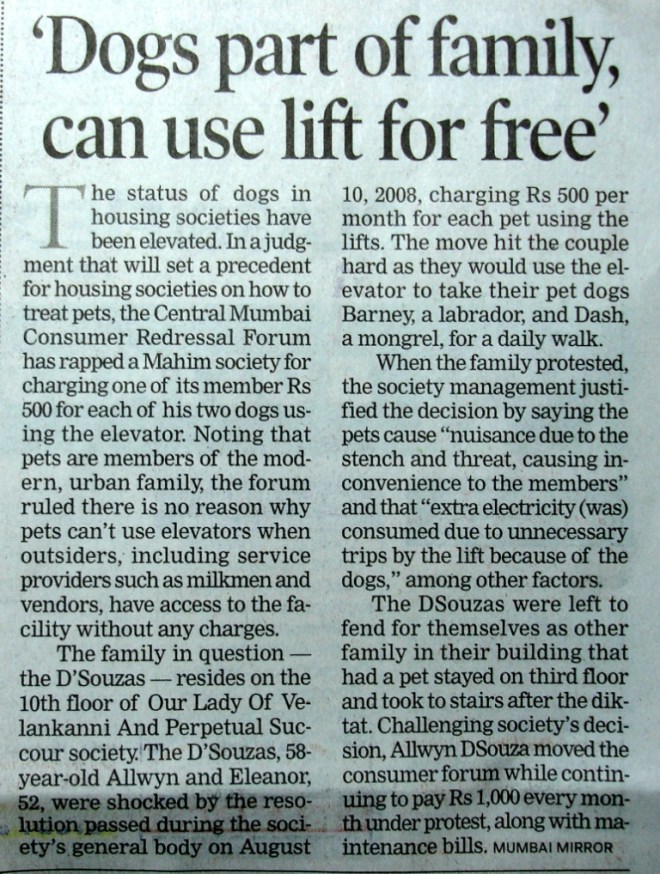
Yesterday, however brought good news to many a residents fighting this battle for their dogs with their colony RWAs with the Consumer Disputes Redressal Forum at Mumbai giving a judgement in favour of the D’Souza family and saying that, “Dogs are part of family, and they can use lifts for free”
Please read the article below in Times of India dated 30th November 2010
(Times of India_30th November 2010)
The below story Courtesy: Anand Holla and Mumbai Mirror gives more details on this ruling of the court.
Dogs are family, can use lifts for free, rules court
Mahim society asked to stop charging residents for letting pets use building elevators. Consumer forum says if milkmen can use it, so can dogs
The status of dogs in housing societies have been elevated. In a judgment that will set a precedent for housing societies on how to treat pets, the Central Mumbai Consumer Redressal Forum has rapped a Mahim society for charging one of its member Rs 500 for each of his two dogs using the elevator.
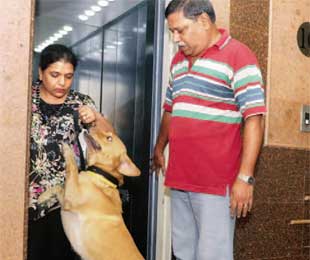 The D’Souzas had been paying Rs 500 a month so their dog Barney could use the lift
Noting that pets are members of the modern, urban family, the forum ruled there is no reason why pets can’t use elevators when outsiders, including service providers such as milkmen and vendors, have access to the facility without any charges.
The family in question — the D’Souzas — resides on the 10th floor of Our Lady Of Velankanni And Perpetual Succour society. The D’Souzas, 58-year-old Allwyn and Eleanor, 52, were shocked by the resolution passed during the society’s general body on August 10, 2008, charging Rs 500 per month for each pet using the lifts. The move hit the couple hard as they would use the elevator to take their pet dogs Barney, a labrador, and Dash, a mongrel, for a daily walk.
When the family protested, the society management justified the decision by saying the pets cause “nuisance due to the stench and threat, causing inconvenience to the members” and that “extra electricity (was) consumed due to unnecessary trips by the lift because of the dogs,” among other factors.
The D’Souzas were left to fend for themselves as the other family in their building that had a pet stayed on the third floor and took to stairs after the diktat. Challenging the society’s decision, Allwyn D’Souza moved the consumer forum while continuing to pay Rs 1,000 every month “under protest”, along with maintenance bills.
D’Souza’s lawyers Udav Wavikar and Rashmi Manne contended before the forum that pets are pampered and loved as much as any other family member, and hence, should be considered part of the family. Invoking religion and mythology, the lawyers said a dog is considered an incarnation of a deity in Maharashtrian culture.
The lawyers further argued that forcing dogs up and down 10 floors amounts to sheer cruelty. To bolster his case, Allwyn collected signatures of society residents to attest that they had no complaints against his dogs. The society, however, said the dogs dirtied lifts by either urinating in them or soiling them, and there was the danger of them biting other residents. The society also argued that dogs are not members of the D’Souza family, and the Maharashtra Co-operative Societies Act doesn’t include them in the bracket of family members. It claimed the forum had no jurisdiction to hear the complaint.
However, the bench of Nalin Majithia and Bhavna Pisaal observed last week, “We don’t find the society’s view correct. The D’Souzas pay all normal charges and to charge them an extra Rs 500 towards each dog is illegal, and is an instance of unfair trade practice. In Indian culture, dogs are common pets and usually treated as lovingly as other members of the family.”
The forum noted that no resident had ever taken any objection to D’Souzas’ pets. “In a populous city like Mumbai, there is always a shortage of space and multi-storeyed buildings are fast filling up the landscape. Several outsiders such as milkmen, newspaper and vegetable vendors, laundrymen, sweepers, etc, use the building lifts on a daily basis. In such a scenario, the society’s decision to levy charges on residents’ pets for lifts usage is inappropriate,” the forum held.
Ordering the society to return the entire amount it has collected from the D’Souzas along with nine per cent interest and Rs 5,500 towards mental and physical torture and legal costs, the forum held, “The society has indulged in unfair trade practices and it is incorrect on their part to charge the D’Souzas.”
From October 2008 till September 2010, D’Souza paid “dog fees” to the society. Allwyn said, “Our dogs were kept absolutely clean and healthy. We would take them out only twice a day and they never misbehaved with anybody, nor dirtied the lift or the society premises. Some members of the society passed this order only to harass us.” Happy with the order, he said, “This will come as a relief to many residents who are similarly harassed over their pets.”
Lawyer Wavikar said, “If pets dirty the premises, their owners should be made to clean up the place. However, charging residents for keeping pets is completely unjust. With the city constantly experiencing vertical growth, this landmark judgment will go a long way in settling the issue on pets and their rights to use building facilities.”
The society’s lawyer, Anand Patwardhan, termed the forum’s order as ‘perverse’ saying the case should have been decided by a co-operative court. “The society is fully justified in charging additional money as provided in the by-laws of the Co-operative Society Act. Consumer forums shouldn’t trespass the jurisdiction of other courts – in this case a co-operative court.”
While Dash died last year, Barney can now use the lift without burning a hole in his owner’s pocket.
After ‘Animal Helplines in Delhi and NCR‘ we at Jaagruti are happy to share with you all our new webpage titled, ‘Animal Helplines in Mumbai‘.
We hope to expand this list to an all-India level in times to come so that no one on the street ever feels helpless and ignores the sight of an animal in pain just because they find themselves clueless on whom they could call or take the animal to.
If you wish to list your organisation’s helpline number on this website, please do mail us at contact@jaagruti.org or post a comment underneath and we will make a note of it from there.
Thanks!
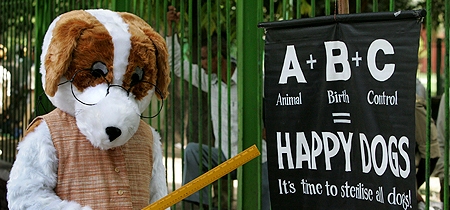
Animal Birth Control: Its as easy as ABC (Image Courtesy PETA)
Animal Birth Control/ABC Programm involves sterilizing street dogs, vaccinating them against rabies and releasing them back into the areas where they were picked up from.
The article below is kind courtesy of The Pioneer Newspaper, penned by noted senior journalist Mr. Hiranmay Karlekar who is also the author of a book titled ‘Savage Humans and Stray Dogs’, the article sheds light on the ‘ABC’ of Delhi’s Animal Birth Control/ABC Programme, comes in the wake of the Commonwealth Games recently organised in Delhi in which many street canines (sterilized as well as non-sterilized) were temporarily (for the period of these games) relocated to Animal shelters across Delhi and Noida from many games venues, stadia, hotels, all of whom have now been released back into the areas where they were picked up from (and those canines that were not sterilized were also sterilized in the process and vaccinated against Rabies at the shelters/hospitals they were housed at prior to being released back to their homes). There is a whole scientific basis and reasoning behind doing so and that is what Mr. Karlekar enlightens us all on below. If you still have doubts, drop in a comment underneath or mail us at contact@jaagruti.org
—
The Pioneer EDITS | Saturday, October 23, 2010, By Hiranmay Karlekar
It’s a fallacy to believe that killing street dogs will bring down their numbers. But sterilising them helps in reducing and stabilising their population
According to a report, the Mayor of Delhi has said in an interview to a news channel that the national capital’s stray dogs, which had been removed from their habitats for the duration of the Commonwealth Games, should be killed or kept where they had been taken. He, however, has also reportedly said on television that it was inhuman to kill dogs. I have neither heard either statement nor talked to him. I will, therefore, not go into what he did or did not say. Nor will I criticise him on that account. Instead, I would focus on the issues in question.
Animal Birth Control (Dog) Rules, notified in December 2001 under the Prevention of Cruelty to Animals Act (1960), prohibits the killing of stray dogs except in special cases, as when they are rabid or terminally ill. In these too, prescribed procedures have to be followed. Besides, the Rules provide that stray dogs can only be removed from their habitats for neutering and immunisation against rabies. Both done, they have to be returned to places from which they had been taken.
The Rules prescribe the only scientific — and also humane — way of controlling stray dog populations. Killing or removal has not helped anywhere. Dr K Vogel, Chief Veterinary, Public Health, Division of Communicable Diseases, World Health Organisation, and Mr John Hoyt, then President, World Society for the Protection of Animals, made this clear in their joint preface to the Guidelines for Dog Population Management, released by the WHO and WSPA in May 1990. They stated, “All too often, authorities confronted by problems caused by these (stray) dogs have turned to mass destruction in the hope of finding a quick solution, only to find that the destruction had to continue year after year, with no end in sight.”
In its Eighth Report (WHO Technical Report Series 824), WHO’s Expert Committee on Rabies, which met in Geneva from September 24 to 30, stated, “There is no evidence that the removal of dogs has ever had a significant impact on dog population densities and the spread of rabies. The population turnover of dogs may be so high that even the highest recorded removal rates (about 15 per cent of the dog population) are easily compensated by survival rates.” This has been conclusively established in Delhi. In his “Dogs and Dog Control in Developing Countries”, published in The State of Animals 2005, Dr JF Reese writes, “In Delhi, a concerted effort (pre-Animal Birth Control, or ABC) at dog removal killed a third of the straying dogs with no reduction in dog population.”
It has been the same experience everywhere. In his paper, “ABC responsible for decline in human rabies cases”, Dr Chinny Krishna, co-founder and chairman of the Blue Cross Society of India, cites the instance of Madras Corporation’s catch-and-kill programme that began in 1860. He quotes Mr Theodore Bhaskaran, a retired Post Master-General, as stating in an article, “In the 1970s the number of stray dogs destroyed by the corporation was so high that the Central Leather Institute, Madras, designed products —such as neckties and wallets — from dog skins.” Dr Krishna has pointed out elsewhere that the number of dogs killed by the corporation had gone up to 30,000 per year by 1995. Yet the city’s stray dog population and the incidence of rabies continued to increase.
Why does killing or removal not help? According to the Guidelines for Dog Population Management, each habitat has “a specific carrying capacity for each species”, which “essentially depends on the availability, quality and distribution of the resources (shelter, food, water) for the species concerned. The density of population for higher vertebrates (including dogs) is almost always near the carrying capacity of the environment. Any reduction in the population density through additional mortality is rapidly compensated by better reproduction and survival.”
The argument that such a situation will not arise if all stray dogs in a city or country are killed at one go, holds little water. Nowhere has such a venture succeeded. Besides, dogs are territorial. Dogs from one area do not allow those from other areas to enter their areas. Dogs from other areas will occupy any area in which all stray dogs have been massacred. This territorial character of dogs lies at the heart of the ABC programme. With sterilised and vaccinated dogs keeping un-sterilised and un-vaccinated dogs away from their areas, those implementing the programme can concentrate on progressing area by area until a whole city is covered. Otherwise, they will have to keep returning to areas where they had already been with the stray dog population continuing to grow elsewhere.
Significantly, WHO’s Expert Consultation on Rabies, held in Geneva from October 5 to 8, 2004, had stated (WHO: Technical Report Series 824), “Since the 1960s, ABC programmes coupled with rabies vaccination have been advocated as a method to control urban street male and female dog populations and ultimately human rabies in Asia The rationale is to reduce the dog population turnover as well as the number of dogs susceptible to rabies in Asia and limit aspects of male dog behaviour (such as dispersal and fighting) that facilitate the spread of rabies.”
Delhi has had a reasonably successful ABC programme since 2003. Between 40 and 50 per cent of the dogs removed from the Commonwealth Games sites to the care of NGOs were found neutered. At this rate the target of 70 per cent, required to stabilise and then gradually bring down stray dog populations, should be reached in the next few years. Meanwhile, one needs to congratulate the Government and Municipal Corporation of Delhi, the New Delhi Municipal Council and NGOs like Friendicoes, Cure & Care, Sonadi, PAWS and Sanjay Gandhi Animal Care Centre and SPCA NOIDA for the manner in which they temporarily relocated and looked after around 700 dogs. The glitches that occurred were perhaps inevitable in an exercise of the magnitude undertaken. While Mr Rakesh Mehta, Chief Secretary of Delhi, and Mr KS Mehra, Commissioner of MCD, cut through all bureaucratic red tape to promptly take the big decisions, Dr RBS Tyagi and Dr Alok Agarwal of MCD and Dr Dinesh Yadav of NDMC worked tirelessly, almost round-the-clock. Animal lovers throughout India need to warmly applaud all of them.
FOOD TO AVOID FOR DOGS-
FOOD TO AVOID FOR CATS-
POISONOUS PLANTS-
10 Most Common Poisonous Plants
other well-known and common plants that can be poisonous or toxic to pets.
This post is kind courtesy of Luigi Aero‘s Facebook Page
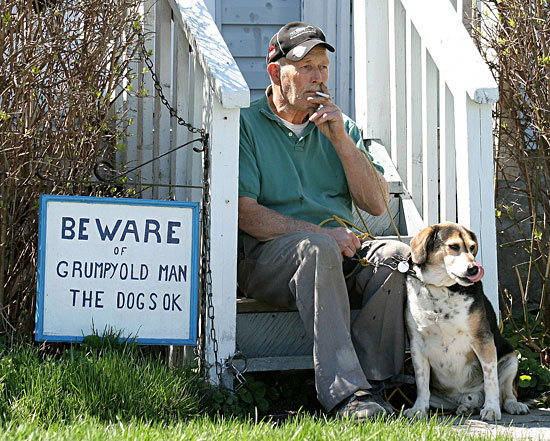
"Blessed is the person who has earned the love of an old dog."- Sydney Jeanne Seward
One of the saddest things is an old dog left in a shelter by an uncaring human family. Common excuses people use are that they don’t have enough time for the dogs or that they are moving (although I have never heard of any state in the U.S. where dogs are illegal). In this disposable society we live in, some people actually dump their family dog in a shelter and walk out with a new puppy. Imagine the fear, sadness and confusion that an old shelter dog faces.Even worse, their time in the shelter is spent watching people walk past their cages, barely seeing them, instead rushing to the cute puppies.
Why would anyone consider sharing their home with an older dog, when there are so many younger ones available?
By adopting an older dog, you can make a statement about compassion and the value of all life at all ages, as well as register a protest against the indiscriminate and inhumane breeding of dogs, whether it is for profit or to “teach the children about birth.” And, of course, just as a puppy has his whole life ahead of him, so does an older dog have the rest of his life in front of him. You can give that older dog the best years of his life while at the same time bringing a wonderful addition into your family.
1. What You See Is What You Get
Older dogs are open books—from the start, you’ll know important things like their full-grown size, personality and grooming requirements. All this information makes it easier to pick the right dog and forge that instant love connection that will last a lifetime. If you’re not so into surprises, an older dog is for you!
2. Easy to Train
Think you can’t teach an old dog new tricks? Hogwash! Older dogs are great at focusing on you—and on the task at hand—because they’re calmer than youngsters. Plus, all those years of experience reading humans can help them quickly figure out how to do what you’re asking.
3. Seniors are Super-Loving
these dogs give you—and those of you who adopted dogs already in their golden years told us how devoted and grateful they are. It’s an instant bond that cannot be topped!
4. They’re Not a 24-7 Job
Grownup dogs don’t require the constant monitoring puppies do, leaving you with more freedom to do your own thing. If you have young children, or just value your “me time,” this is definitely a bonus.
5. They Settle in Quickly
Older dogs have been around the block and already learned what it takes to get along with others and become part of a pack.They’ll be part of the family in no time!
6. Fewer Messes
Your floors, shoes and furniture will thank you for adopting a senior pooch! Older dogs are likely to already be housetrained—and even if they’re not, they have the physical and mental abilities to pick it up really fast (unlike puppies). With their teething years far behind them, seniors also are much less likely to be destructive chewers.
7. You Won’t Bite Off More Than You Can Chew
There are those who yearn for a doggie friend of their own, but hold back because they worry what might happen in their lives in the years to come. And they are wise to do so—a puppy or young dog can be anywhere from an 8- to 20-year responsibility, which is not appropriate for the very elderly or those with certain long-term future plans. Providing a loving home for a dog in her golden years is not a less serious commitment, but it can be a shorter one.
8. They Enjoy Easy Livin’
Couch potato, know thyself! Please consider a canine retiree rather than a high-energy young dog who will run you ragged. Not that older dogs don’t require any exercise—they do—but they’re not going to need, or want, to run a marathon every day.
9. A good night’s sleep
Older dogs let you get a good night’s sleep because they’re accustomed to human schedules and don’t generally need nighttime feedings, comforting, or bathroom breaks.
10. Time for yourself –
Older dogs leave you time for yourself, because they don’t make the kinds of demands on your time and attention that puppies and young dogs do.
11. Companionship.
Senior dogs whose lives have been disrupted in their later years have so much love to give and like nothing better than giving it. They tend to rely heavily on their owner for companionship and therefore bond very quickly. The desire to reciprocate the companionship given to them is very strong.
12. Seniors for seniors.
An attractive concept used by many animal rescue/humane organizations, an older dog can be successfully matched up with a senior citizen. Lifestyle requirements of an older person often mix well with the lifestyle of an older dog. It’s a win/win situation, resulting in quality retirement companionship for both.
13. Who says you can’t teach an old dog new tricks?
You sure can. While it may take an older dog a bit longer to adjust to new situations, they can; they will; they do. Their only requirement is to be given the opportunity. Generally, older dogs are calmer and therefore will focus much easier on what you are trying to teach them.
14. Save a Life, Be a Hero
At shelters, older dogs are often the last to be adopted and the first to be euthanized. Saving an animal’s life offers an unparalleled emotional return on your investment, and you’ll feel the rewards every day you spend together.
15. They’re CUTE!
Need I say more?
Please consider adopting a senior dog , you won’t be sorry. Your decision to adopt a senior pet will be rewarded with unconditional love and devotion..
For a background or part 1 of this story on Commonwealth Games (Delhi, 2010) and street dogs, kindly click here and then read on below
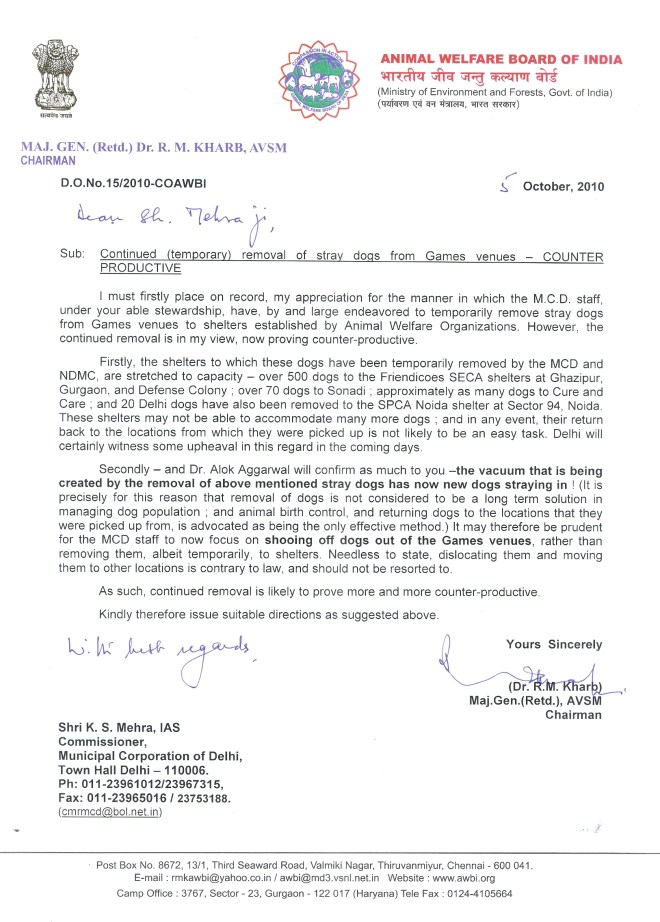
On 5th October, 2010, the Animal Welfare Board of India wrote to the Municipal Corporation of Delhi to apprise them of the fact that the Continued (temporary) removal of stray dogs by the municipal agencies from Commonwealth Games venues is turning out to be ‘COUNTER PRODUCTIVE’.
To understand how random displacement of street dogs can turn counter-productive, please read the letter from AWBI mentioned above by clicking on the image below:
Dateline: July 2010
The patient is an Indian Street Dog aged around 12 years or so.
His colour is Black so as per a general thumb rule, most Indian dogs who are black in colour and adopted by their communities get just one name: ‘Kaalu’. If one was to translate that into English, ‘Kaalu’ would read as Blackie.
On 2nd July, 2010, we noticed Kaalu walking on the street with his head tilted towards the left. We went closer, he was in visible discomfort. We went even further and tried to check his ears, fearing he had a maggot infestation in his left ear. But what we saw was something different- his pinna (ear flap) was swollen which was causing it to be heavy and thus Kaalu was walking with his head titled/hanging at one end.
This condition is referred to as ‘Haematoma of the ear’ or ‘Aural Haematoma‘. An Aural Haematoma is a blood clot in the ear; aural refers to the ear, and a haematoma is a localized collection of blood or serum. It is the swelling of ear because of fluid accumulation between the ear membrane because of rupture of a blood vessel. Why exactly this happens is not really known, it could be due to vigorous shaking of the head, the scratching of ear next to an infected metal object, like a car or even on the walls, it could also be due to an infection by the mites.

A close up shot of an Aural/Ear Haematoma in a Dog (file photo from the Internet)
Kaalu is an old dog, we at Jaagruti thus took a mutual decision of not putting him through a surgery for this haematoma as subjecting him to sedatives at this age would just be a tad too risky.
We consulted on of our vets for this case, and he advised us to put Kaalu on Medicines for the first 5 days and note whether the haematoma increases or reduces in size.
This was the doctor’s prescription for the first 5 days:
1. Two capsules of Ampilclox 500 mg, once in the morning and once at night
(Open the capsule and put the medicine powder in something sweet and edible to help the dog eat it, else it is very bitter)
2. Remember to supplement this with one capsule of Vitamin B-12/B-complex daily as Ampiclox is a strong antibiotic that can otherwise also harm the dog’s kidneys and liver
3. Clean the infected ear daily and apply a liberal dose of Betadiene ointment on the infected ear to prevent any further re-infestation of any other insets or mites on it
The haematoma neither reduced nor increased in size.
On 7th July, 2010: we decided to non-surgically treat Kaalu’s haematoma and took him to the vet and requested him to aspirate the fluid out, i.e drain the fluid out of Kaalu’s ear.
We covered Kaalu’s eyes with a dark cloth and tied a light muzzle around his mouth. The vet inserted a hypodermic needle to drain the fluid that had accumulated in the ear by pricking through that spot after cleansing the ear with spirit and then compressing the pinna to prevent accumulation of haematoma fluid.
The vet then repeatedly flushed the ear with saline and Gentamycin and some other antibiotics to help cleanse the internal tissue where the blood had accumulated.
The vet reassured us that these antibiotics will help heal the wound and the fluid won’t accumulate again if Kaalu allows himself to bandaged across his ears. We did that but that was to no avail as Kaalu was feeling discomforted after being bandaged around and he removed it by trying to scratch himself around on the walls. We them removed the bandage on our own and hoped that the fluid won’t accumulate again
Another visit to Kaalu a week later and we noticed that his ear had swollen again, so on 17th July, 2010, we took Kaalu to the vet again and this was followed by another round of non-surgical aspiration/draining out of haematoma fluid- but this time there was no fluid, but rather just the antibiotics that had been put into his ear the last time to help the blood vessels clot.
Then again a few days later we noticed the swelling again on Kaalu’s ear and honestly, we didn’t want to put the old dog through the trouble of travelling to the vet again.
So, on 27th July 2010 we consulted with another senior vet and explained him the situation, he suggested that we give him a doze of an antibiotic medicine, a tablet named Bidanzen Forte, twice daily for 5 days. Bidanzen Forte is an anti-inflammatory drug i.e it helps reduce inflammation and swelling due to blood accumulation and also helps heal a wound.
This just did the trick for us as the swelling in his ear completely subsided though the ear has got a bit deformed following this.
It has been two months now and there has been no relapse of the haematoma, although Kaalu’s ears differ in their appearance now–while the pinna of the right ear is straight, upright and also notched (because he is a sterilized dog) while the left ear which had haematoma is now bent over or curved and floppy.

Kaalu's ear as it looks today-post non-surgical drainage of haematoma
This is what Kaalu’s left ear look likes now internally (post-recovery from haematoma), though it is slightly mis-shapen and is termed as ‘cauliflower’ ear because a lot of boxers suffer from this too.
Physical beauty doesn’t really matter or does it? not for Kaalu, he is fine with the weight of his ear now and we at Jaagruti are happy that we didn’t have to put Kaalu through a painful surgery at this age and so is he we think!
P.S: Though we at Jaagruti have shared exactly what transpired when we got this case treated and shared it here for all of yours information, we would still suggest that you consult your veterinarian for treating haematoma, while understanding that there are various options available to treat the same, depending upon the severity of the infection and age of the patient.
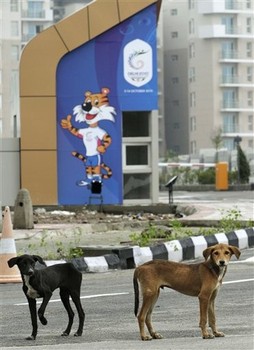
(Courtesy: Associated Press, http://oneclick.indiatimes.com)
After the news of the report submitted by Commonwealth Games Federation President and CEO was made public by the electronic media early this week, it was apparently qouted and shown in the photographs submitted by the committee that, “there were pug marks of street dogs on the mattresses in the apartments of the games villages that are due to host the athletes as well as their faeces littered in the Games village”.
Since people in foriegn countries are not used to co-existing with dogs the way we Indians are, the CWG commitee had expressed their concern regarding the presence of street dogs in the Games village and asked for their removal.
But as per the Indian Prevention of Cruelty to Animals Act 1960, Delhi High Court orders and orders of the Supreme Court, the street dogs from any area can be removed only for sterilization and vaccination purposes and then they have to be released back into the same area from where they were picked up.
Thus, due to the timely intervention of Major General (Retd) Dr. R.M Kharb, Chairperson, Animal Welfare Board of India and Mr. Hiranmay Karlekar, Member, Animal Welfare Board of India and the pro-active humane outlook adopted by the Commissioner of Municipal Corporation of Delhi (MCD) Mr. K.S Mehra, IAS and the Chief Secretary, Government of Delhi Government, Mr. Rakesh Mehta, IAS- the street dogs living in and around the venues earmarked for the Commonwealth Games, 2010- have got a reprieve and in the process India has set an example in front of the other countries of the world with regard to humane treatment of street animals and has also in the process respected its own laws and India’s constitution.
Now the task of picking them up and looking after them till the period of the Games has been entrusted into the hands of SPCA Noida, Cure n Care, Sonadi Animal Care Hospital Friendicoes SECA, an NGO based out of South Delhi, who will be housing them at their South Delhi, Ghazipur and Gurgaon centres where each dog will be given a token with details of the area from where it was picked up.
Volunteers and food are invited by all these NGOs to help in tagging and feeding of the dogs coming in every day and also for helping release them back into their respective territories after the games get over. However, please remember to contact these respective shelters prior to going in there (The contact numbers of all these shelters can be accessed here).
In the interim period, if these dogs will are sterilized and vaccinated by the NGO, then that would be an added bonus for these dogs and the city.
Click on the thumbnails below to read the communication issued by Animal Welfare Board of India’s Chairperson to the Commissioner, Municipal Corporation of Delhi (MCD):
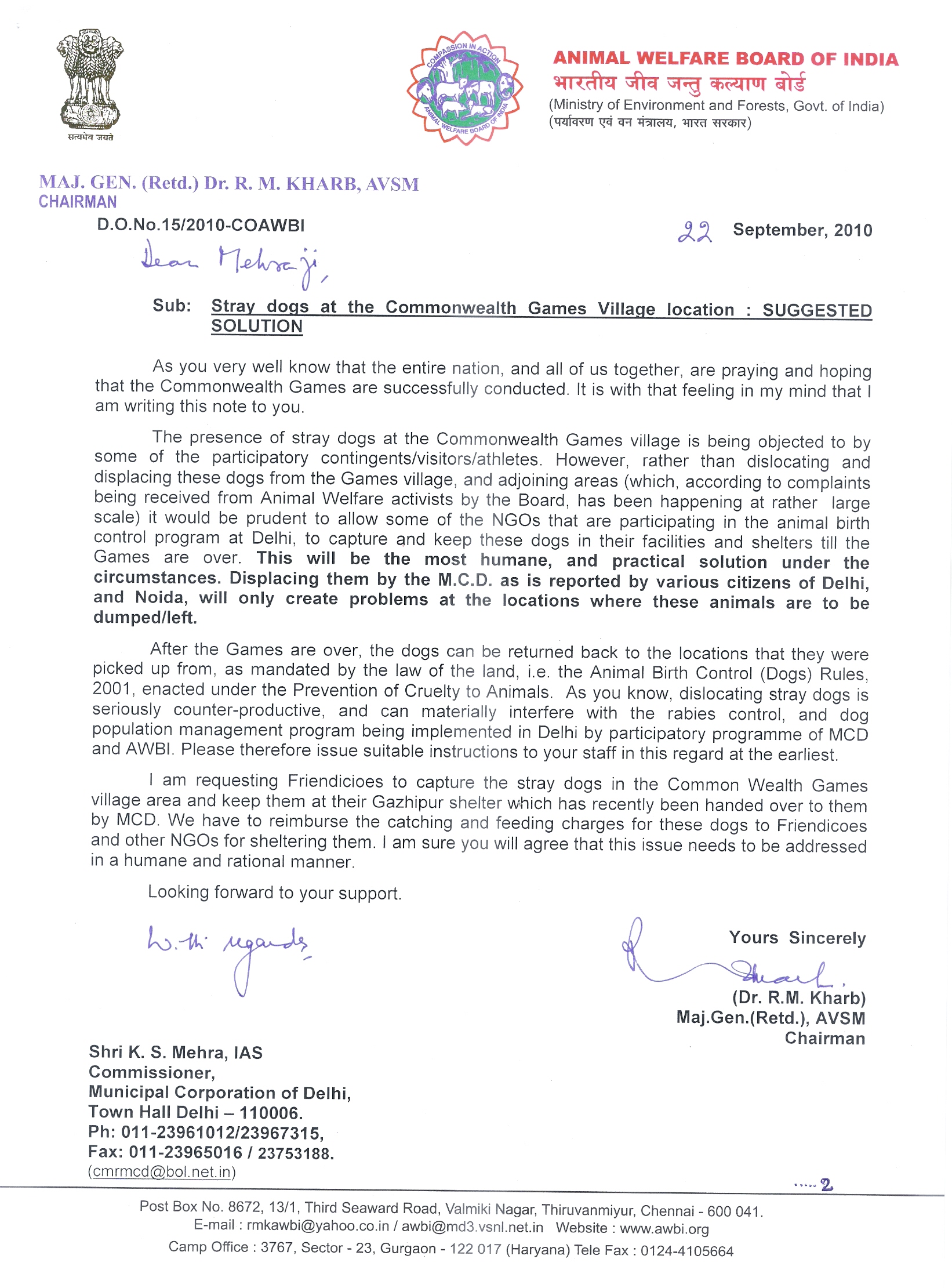
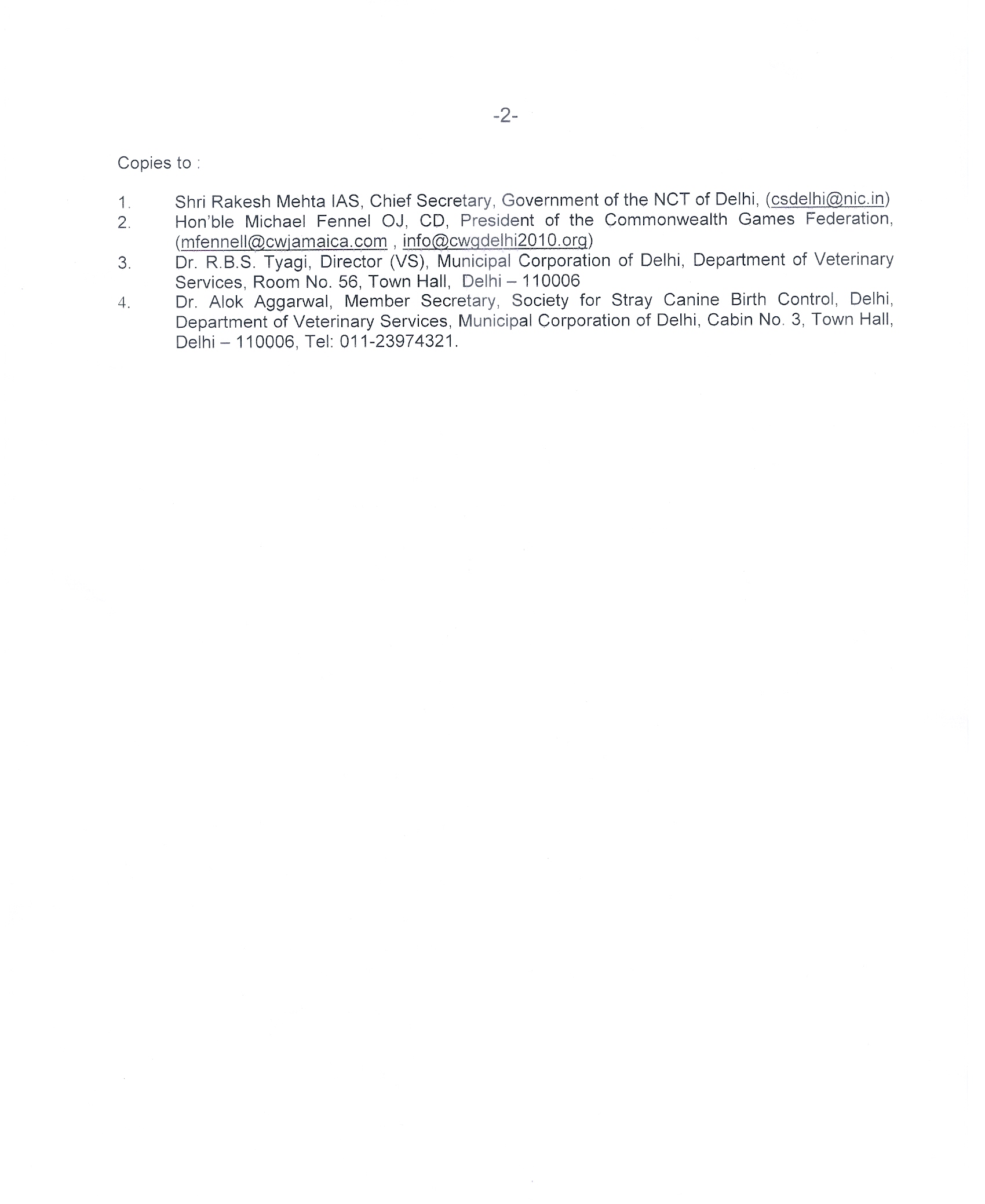
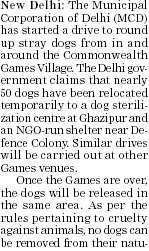
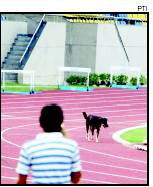
Below is the news in today’s Times of India with regard to this initiative and here is the link to today’s online news on this subject.

The below story is kind courtesy and copyright of : Daily Good.
We are sharing it here because it meets one of the objectives behind the intent of ‘Jaagruti’ which is – spreading respect and compassion towards members of the canine family.
BY MARC HERTZ | WEDNESDAY, AUGUST 18, 2010 5:45 AM ET
A dog named Faith inspires others simply by being able to walk with just her two hind legs.

There are some things you have to see to believe, and Faith is one of those. She’s a labrador-chow mix born without one front leg and another that was severely deformed, only to be removed when Faith was seven months old due to atrophy. What’s truly amazing about Faith is that, despite having only her two hind legs, she can still walk on them, as you can see in the video below.
Faith is something of a celebrity, having appeared on Oprah a few years ago, and according to The Sun, she’s actually an honorary sergeant. The US Army gave her that title because she’s helped disabled veterans trying to overcome injuries they sustained in war zones, even donning a military jacket when she visits bases or hospitals. As her owner, Jude Stringfellow, was quoted, “Faith seems to inspire these young men. It’s very emotional watching them respond to her. She shows what can be achieved against great odds.”
Now, she’s planning to go international. Stringfellow wants to bring Faith to the UK, so she can bring her own brand of inspiration to those troops wounded in Afghanistan. Before she can do so, though, quarantine rules will have to be met. For the sake of those wounded soldiers, let’s hope they have the chance to see Faith “marching” their way.
| Courtesy: Mail Today, dated: 17th August 2010
|
| Shopkeepers of Aada Bazaar in Indore downed their shutters as a mark of respect for Lallu — a much- loved 15- year- old stray dog of the locality who died on July 17.
As the news of Lallu’s death spread like wildfire, area residents assembled to mourn the dog and decided to conduct his last rites (pic above). For, Lallu was no ordinary dog. Rakesh Kumar, who lives near the bazaar, said: “ Lallu used to follow the shav yatra (last journey) of the dead and spent his time with the deceased’s family for 12 to 13 days after that.” Not just that, the canine was different from his breed. Garages, parking areas and chairs were his favourite places to retire. And he gorged on ordinary food and was fond of Indian meals. A local revealed that on the 13th day after Lallu’s death, milk and jalebis were served to the others dogs of the area. Some dogs truly have their day! R.I. P Lallu… |
इस टूटती बनती घपलो के बीच फंसी देहली मैं मेरा छोटा सा आशियाना भी टूट ही जायेगा कम से कम थोड़ी नींद तो पूरी कर लूं
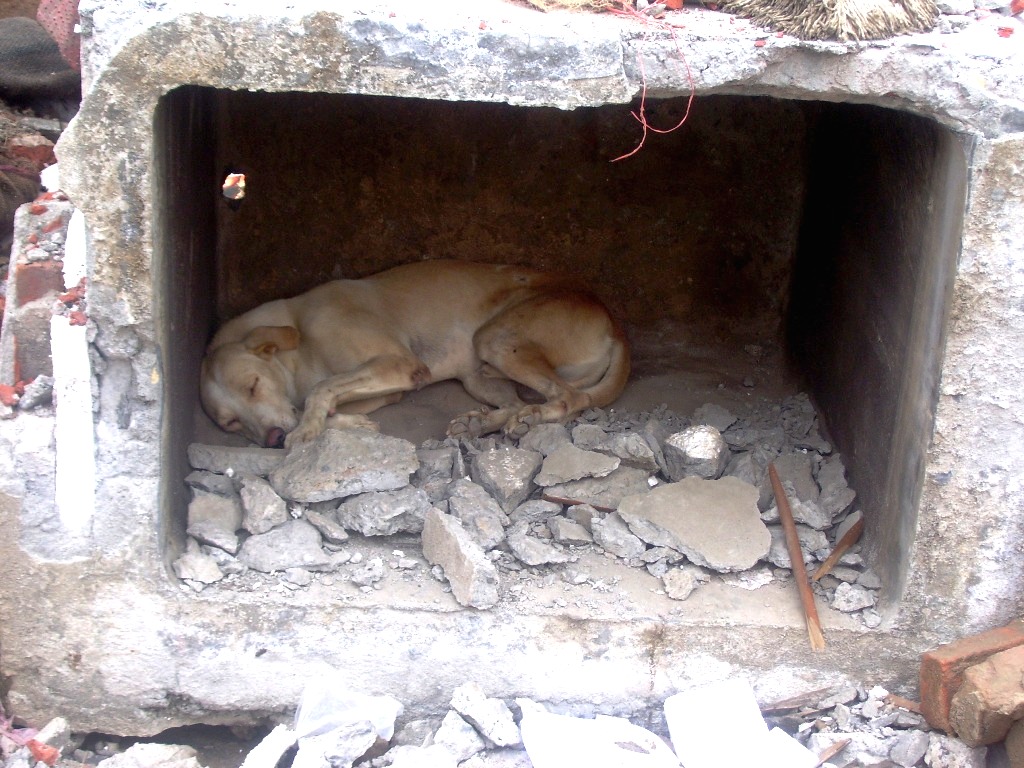
*Credits: Poem and Photograph by Mr. Raakesh Khatri

Pet Dogs: Should they be allowed on lifts or not? (Photo credit: theotokos.co.za)
On the afternoon of 10th August 2010, the Jaagruti helpline received a call from Mrs. Usha Gulati in Faridabad who informed that the residents welfare association of the colony in which they stay had objected to them taking their Pet dog Pixie up and down the building lift from their 5th floor flat. Ms. Gulati and her family was willing to take Pixie down (for his walks) using the stairs but given his age (Pixie is 10+ years old) and the fact that they live on the 5th Floor, the Gulati family was not willing to cow down to the demands and orders of the RWA in any way and were even willing to take this matter to court should the RWA remain adamant in its stance on this subject.
Most of the times the arguments that RWA office bearers give to pet owners while objecting them to using the building lift with their pets- ‘the pets odour is harmful for human health’, ‘pets are dirty’, ‘pets make the lift dirty’, ‘pets can pounce or growl or attack other people in the lift’ and the list goes on as per the whims and fancies of the RWA representatives.
Ms. Gulati mentioned to us that she has a copy of a news clipping that came out in Times of India newspaper in December 2008 in which a Mumbai resident had approached a consumer court for his pet dog Shimu. Further to this Ms Gulati wanted to know from us if there was any previous judgment in this regard that they could use to help Pixie. Below is presented a step-by-step guide on how to tackle such a problem which, as we learnt is a common problem faced by many people living with their pets in buildings with lifts face across many cities in India. The key to coming out victors in such a situation is to have cent percent commitment towards your pet and to be willing to stand up for your pet’s rights, for pets are family!
Through the power of the internet, we enquired upon this ‘Pets being denied lift access’ subject from people across the animal welfare fraternity across India, the following facts came to light and we are sharing this information in our effort to inspire all those who face similar problems to act accordingly when faced with such situations. As for what transpired in the story of Pixie, read this till the end:
The only preceeding judgement in such a case was when Mr. Ajay Marathe, a resident of Mumbai’s Vashi Colony approached the Consumer Court (on 26th September, 2008) when his colony’s association passed a resolution disallowing them to use the building lift with their pet dog ‘Shimu’, who was then 11 years old who was suffering from osteo-arthritis (pain in the bones and joints)
The following trail of news stories on Shimu’s case illustrate the trail of events on this subject as well.
No entry for pets in lifts, Vashi housing society tells residents
Indian ExpressN Ganesh Fri Sep 12 2008Mumbai, September 11 : Says odour may be harmful to health; SPCA takes up issueLife for 11-year-old Peter-Pan alias Shimu, a Labrador Retriever, has become tougher than ever. Shimu stays with his owners, Ajay and Nandini Marathe, on the fifth floor of New Sarvodaya Co-operative Housing Society, at Sector 4 in Vashi. Shimu has been diagnosed with osteoarthritis, an ailment in which the patient suffers from severe joint pain. However, Shimu will now have to use the staircase instead of the lift, as a resolution passed by the general body of the society bars pets from using the building elevator.On August 3, 2008, the general body resolved to prevent use of lifts by residents accompanied by their pets. According to a notice issued to Marathe and the general body resolution, the society fears that the odour of the pets which is left behind in the lifts, can be hazardous to the life and health of the building residents. In the month of May 2008, the society sought numerous documents certifying the fitness levels of the dog. Marathe, who has a licence for the dog, produced a certificate issued by the Bombay Veterinary College that dog is licenced, vaccinated, healthy and does not suffer from any infectious or contagious disease. The Bombay Veterinary College certificate also adds that since the dog is aged and suffering from osteoarthritis, it should be allowed to use the lift, as climbing the stairs would be a painful task.
Marathe tried to find a way out by using air fresheners after the use of lift by the pet dog. However, the society officer tersely told Marathe that use of air fresheners was not recommended.
After a complaint of Marathe, the Society for Prevention of Cruelty to Animals (SPCA) has taken up the issue. S B Kadam, assistant secretary, SPCA said, “SPCA inspectors have paid a visit to the society and asked the office bearers to be practical and permit use of lift for the pet dog concerned. We will be hearing from them soon.”
Marathe said, “I paid the watchman from the neighouring building to carry the dog up and down the building thrice a day so that he could answer nature’s call. This arrangement worked fine for a few days, however he stopped coming after being warned by society office bearers.”
Meanwhile, Marathe has temporarily shifted Shimu to his in-laws place at Pen in Raigad district. Chairman of the housing society Arvind Palwankar said, “It is a very old sick dog with a bad odour. We only prevented Marathe from using the lift. Moreover, Marathe is a nuisance as he relentlessly complains against the society to the authorities about all things trivial.”
What the law says
Advocate Rahul Thakur who is associated with In Defense of Animals (IDA) said that the society resolution violates section 11 (3) of Prevention of Cruelty to Animal Act 1960. It is also against article 51 A (g) of the Indian Constitution according to which it is the duty of every citizen to have compassion for animals, living creatures and improve the natural environment. Thakur said, “The society resolution is illegal as it is unconstitutional.”
Please note the underlined portion in the last paragraph of the above story.
Luckily for Shimu, who is now in good heavens, the Consumer Court upheld the society’s resolution and passed the judgement in his favour and also asked the Association to pay Mr. Ajay Marathe Rs.5000/- in lieu of the damages and the expenses incurred by him on this court case.
Please read through the following news stories:
Peter Pan can use apartment lift now
Indian Express
N Ganesh Dec 17, 2008
Mumbai This 11-year-old dog was barred from using lift by the housing society in Navi Mumbai
The consumer forum came to the rescue of a 11-year-old dog, Peter Pan alias Shimu, who was not allowed to use the apartment lift by the office bearers of a housing society in Navi Mumbai. Shimu, a pet belonging to Ajay and Nandini Marathe, residing on the fifth floor of New Sarvodaya co-operative housing society was barred from using the society lift. Shimu had been diagnosed with osteoarthritis — an ailment that causes acute pain in the joints.
In its order dated December 11, 2008 the Thane District Additional Consumer Disputes Redressal Forum ruled that the housing society’s move to prevent pets from using the apartment lift without any valid reasons amounted to deficiency in service to the members as per section 2 (1) (g) of the Consumers Protection Act.
The Marathes were asked to produce documents certifying the illness of the dog. However, despite producing the required certificates and reports, the general body of the housing society in August 2008 resolved to ban pet animals from using apartment lifts.
The housing society contended before the forum that the dog was not a consumer of the housing society and hence the forum cannot hold the society liable. The consumer court however said in its order: “The issue of ‘dog’ being or not being the consumer of the society is not valid, instead the valid issue should be whether the complainant is consumer of the housing society or not.”
Since the membership of the Marathes to the housing society was not disputed, the consumer court said: “The dog has valid license and has been certified by a veterinary doctor of having no contagious and infectious disease. It has received all its vaccines. The doctor has also recommended the use of lifts owing to its condition.”
The housing society contended that the use of lifts by pets threatened the safety of the residents. However the Consumer court held that the housing society’s decision to ban pets from using lifts was without any valid reasons and hence amounted to deficiency in service. The court has ordered the housing society to pay Rs 3000 as damages and Rs 2000 as legal expenses to the Marathes.
Consumer court upholds dog’s right to use lift
18th December, 2008, Published in: The Times of India
Mumbai: An 11-year-old Labrador has emerged a champion of dog rights by not only winning for himself the right to travel in the elevator of his apartment complex in a Mumbai suburb but getting his master a Rs 5,000 compensation from the apartment’s anti-pet managing committee.
The Thane District Consumer Disputes Redressal Forum passed an order, defending Shimu aka Peter Pan’s right to use the left and directed the society to compensate the owner for the harassment he faced. The dog’s owner, Ajay Marathe (52), a fifth floor resident of New Sarvoday Cooperative Society at Vashi, told TOI on Wednesday: This is a very good judgement given in our favour in real time. In fact, a lot of pet owners face the same problem in Mumbai; this order can be an important reference point to help them use their society lifts.
Marathe added that the 35-kg Shimu suffered from pain in the joints and couldn’t use the stairway. The society this May passed a resolution, saying pets like cats and dogs could not be allowed in the lift as their body odour could be injurious to health and life, which I found to be ridiculous, he said.
Marathe first went to the cops, but failing to get a sympathetic response from them, he lodged a case in the Thane consumer court. The consumer court has given this judgement in less than three months. The Rs 5,000 compensation for my pet is also welcome as I had to temporarily shift Shimu to my in laws house in Pen, which caused some discomfort to him, he said.
To read the full judgement given by the Consumer Court on this case in favour of Shimu the dog, please click here
Since Shimu passed away soon after this judgement was announced, Mr. Marathe donated the Rs.5000/- compensation he received to the animal welfare charity named PAWS which used this contribution to publish brochures on the ‘Tree Protection Act’, which carried Shimu’s name on it as a mark of honour to his spirit.
Now, coming back to Pixie’s case in Fraidabad, here is what happened-
Deriving inspiration from Mr. Marathe’s stance on getting justice for Shimu, Ms. Usha Gulati’s familytook the press clipping of Shimu’s news (which had come out in TOI in December 2008) and approached the Local Police with the copy of the same and lodged a complaint against the RWA…the cops then called and came over to meet the RWA representatives and following all of this, an amicable solution was reached upon in which it was agreed that the Gulati family would be allowed to bring their pet dog Pixie down the stairs for his walk and after he has relieved himself and there is apparently nothing in his stomach to ‘dirty’ the lift with, he can take the lift upstairs to his fifth floor house along with his owner.
So, next time you face such an issue, consider using all of this information above and stand up to seek justice for your animal friends. Trust us, its all worth the effort and a way to (try to) pay back for all the love that your pet animal has showered upon you unconditionally.
However, we would like to also suggest to you that as always prevention is better than cure so please be mindful of a few other things a ‘responsible’ pet owner can follow while using the lift with their pet, to avoid inconvenience to the fellow lift users:
1. Make sure that your pet dog/cat is vaccinated to avoid any health related arguments from fellow building residents.
2. Keep your pet animal on a leash.
3. If your pet is aggressive and has a tendency to bite strangers, then it would be better to put a muzzle around the pet’s mouth while you move your pet in the lift. You can remove the muzzle once your pet is out of the lift.
4. Try using the lift when no one is in there, alternatively avoid using the lift when someone (you know) having a canine/feline-phobia (i.e someone who is well-known to be scared of dogs/cats) is already travelling in the lift.
5. Make sure that your pet doesn’t pee or defecate in there, so avoid taking young untrained pups in the lift as else you would most likely end up creating a lot more disgruntled neighbours or should we say enemies!
6. Take care of the health and hygiene of your pet dog/animal, give it a nice bath regularly so that it doesn’t emanate any sort of stinking odour in a public place like a lift, which may else be a cause of inconvenience for the fellow residents of your building.
* Credits: We deeply thank AWBI’s lawyer Anjali Sharma, PAWS founder trustee Nilesh Bhanage and Vishruti Aggarwal for sharing their experiences, the video link and the consumer court judgement with us.
Such scenes are an everday occurence all around many cities across the world.
People buy pets, some even pamper them BUT then dump them on the road, at a city shelter in their old age-at an age when they need them the most.
Next time you see someone abandoning them, try telling them: “FOR YOU HE IS A DOG, BUT FOR THAT DOG YOU ARE EVERYTHING”. If nothing else, at least you could try and guilt such people into shame for there could be nothing more inhuman than that act of abandoning one’s best friend.
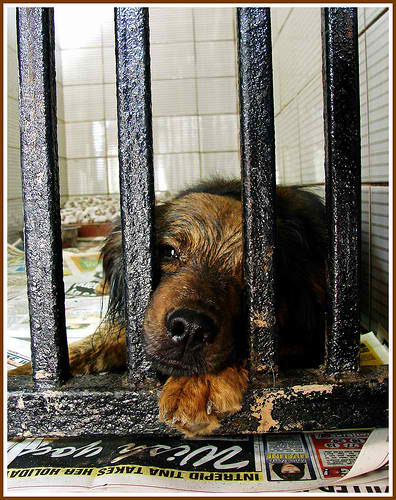
Never abandon your pets! (Courtesy: http://blog.thewaterdish.com.sg)
Instead of heartlessly abandoning one’s pet at a ripe old age at a city shelter, we would rather advocate that you have a heart and put your pet to sleep, atleast that would save that speechless animal a life of agony and stress at the thought of having been separated from those he considered his very own family for all the years that he has lived thus far
The words below penned by Meera Ahmad speak on the agony of a pet being abandoned, being dumped at a city shelter by its heartless owners.
Just visualize the people come in their car, the dog feels he is going for just another car ride….they take him out on the road, he thinks it is just another lovely walk, the dog trots excitedly beside them like he has done all these years looking up to them as his guardians…
Unknowing to their unsuspecting dog, they look for a place to dump him, soon they find one, the kid feels weird being tied at a strange lonely unfamiliar road….whines and tugs hard….his eyes turn large with an unknown fear, ears drop still his tail wags beacuse he can still see the people he loves….till they walk away, like a streak they speed away…not looking back even once…the kid starts yelping barking like mad, tugging at the leash for his dear life so hard that it strangles his neck, till he drops limply as if he was dead….had he got free he would have raced to catch them up trying to overtake the car it would have run and run, till it would have stumbled sore and spent…now it lies limply in the dust…
Will you do this to someone you really love?
What is more disturbing is that if they could do this to their dog after having him for ten odd years God only knows how they would have kept him in those years…for I am mighty sure of one thing that they couldn’t have loved him as a dog deserves to be leave alone thinking of him as their family member or kid.
It is as ghastly as dumping your old parents in a old age home. Stll that dog of theirs would never stop loving them..never give up on them or let go…he will keep waiting for them till his last breath..everytime he hears a car in the shelter he will think they have come for him..just like the parents in the old age homes…the widowed mothers packed off on trains to holy places like Vrindavan until they breath their last.
Remember, what goes around comes around, so don’t do onto others what you don’t wish others to do to you!
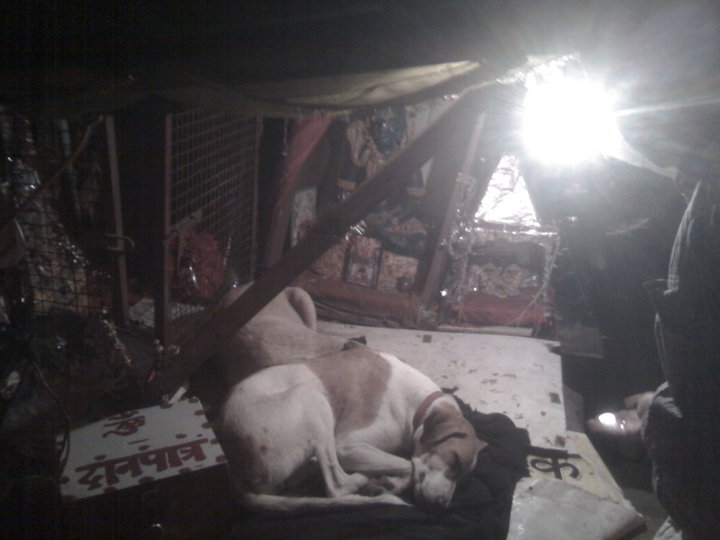
GoD and DoG (Courtesy: Kris, 5th July, 2010)
The above photograph was clicked and contributed to us by Kris Kumar on 5th July, 2010.
It was clicked at PVR Anupam-Saket, a multiplex in Delhi. In this small temple beneath a tree behind the multiplex where these two resident dogs with collars around their necks were sleeping peacefully, demonstrative of the relationship between GoD and DoG…
What comprises Animal Cruelty?
Contacting the Police on the Phone:
In an emergency situation telephone your local police station or dial 100 (Central Police Control Room) Get your “Ticket number” if you have dialled 100. Get the name and designation of the police personnel if you have called your local police station. Note the date and time on both occasions. If you wish to remain anonymous you do not need to reveal your identity.
At the Police Station:
i) Approach the police (above the rank of constable) politely and briefly explain the situation.
ii) Request them to take action against the offender.
iii) If they state it is not their job to protect animals as there are far too many human problems, politely enlighten them about their role in the PCA Act, 1960 (quote the relevant sections). If in Delhi, do tell them about the Delhi Police Act, 1978 Chapter IX entitled “the Prevention of Cruelty to animal”.
iv) Refer to http://awbi.org/awbi-pdf/apl.pdf for a compendium/factsheet of Animal Protection laws for the guidance of Police, NGOs, Animal Welfare Activists and Officers.
v) Insist on their involvement and offer your help.
vi) Inform them that the injured or distressed animal shelter and not left at the police station. This will reassure them.
vii) File an FIR if necessary.
viii) Do the necessary follow up.
ix) Do praise him/her after his involvement, no matter how small.
HOW TO FILE AN F.I.R. (FIRST INFORMATION REPORT):
• FIRs are filed at your local police station when you wish to put down in record an incident which you wish to bring to the notice of your local police and at the same time seek their help in solving it. (eg. loss of wallet, train ticket, incident, or any other loss).
• Make out a detailed description of the lost animal/incident with a photograph/s (or any cruelty complaint). Address it: to the SHO (Station House Officer), of your area.
• To file an FIR, write the facts on a plain piece of paper which you yourself may prepare in duplicate, with the date, your name and address, details of the complaint and the people involved, if any.
• The officer on duty at the police station is responsible for making all the necessary entries.
• The copy of the FIR should be duly signed, stamped and dated (note the time as well) by the police station which you should keep safely.
• This is applicable not only to lost animals, but to any animal you have found (which might be lost), cruelty to animals, illegal activities with regard to animals eg. trade in wildlife-bird sellers, snake charmers, turtle traders; illegal slaughtering of animals and illegal slaughter houses; bird sellers; cruelty to animals in zoos; circuses, pets/petshops etc.
• The Prevention of Cruelty to Animals Act, 1960 under section 11 covers a large number of cruelties and offences on the basis of which you could file FIRs.
• Insist on filing an FIR. It is your right. It is important to note that the police usually discourage the complainant from registering a FIR in cases which are not so clear. This is because once the FIR is filed, it becomes the responsibility of the police to ensure a conviction.
• Do not lose the stamped copy (by the officers on duty) of the FIR and keep enquiring about the progress. This copy is the proof that the Police have received the information.
• Please don’t forget about the well-being of the animals, make sure that you also contact an Animal Welfare Organization/activists to ensure that they follow up on the health status, rehabilitation/release of the animals in case custody.
Please share with us your experiences while dealing with the Police /lodging an F.I.R on animal cases, practical learnings end up being different than what we write here, so please be candid in your sharing for it may help someone at a later date when stuck in a similar situation. Thanks-Vasudha
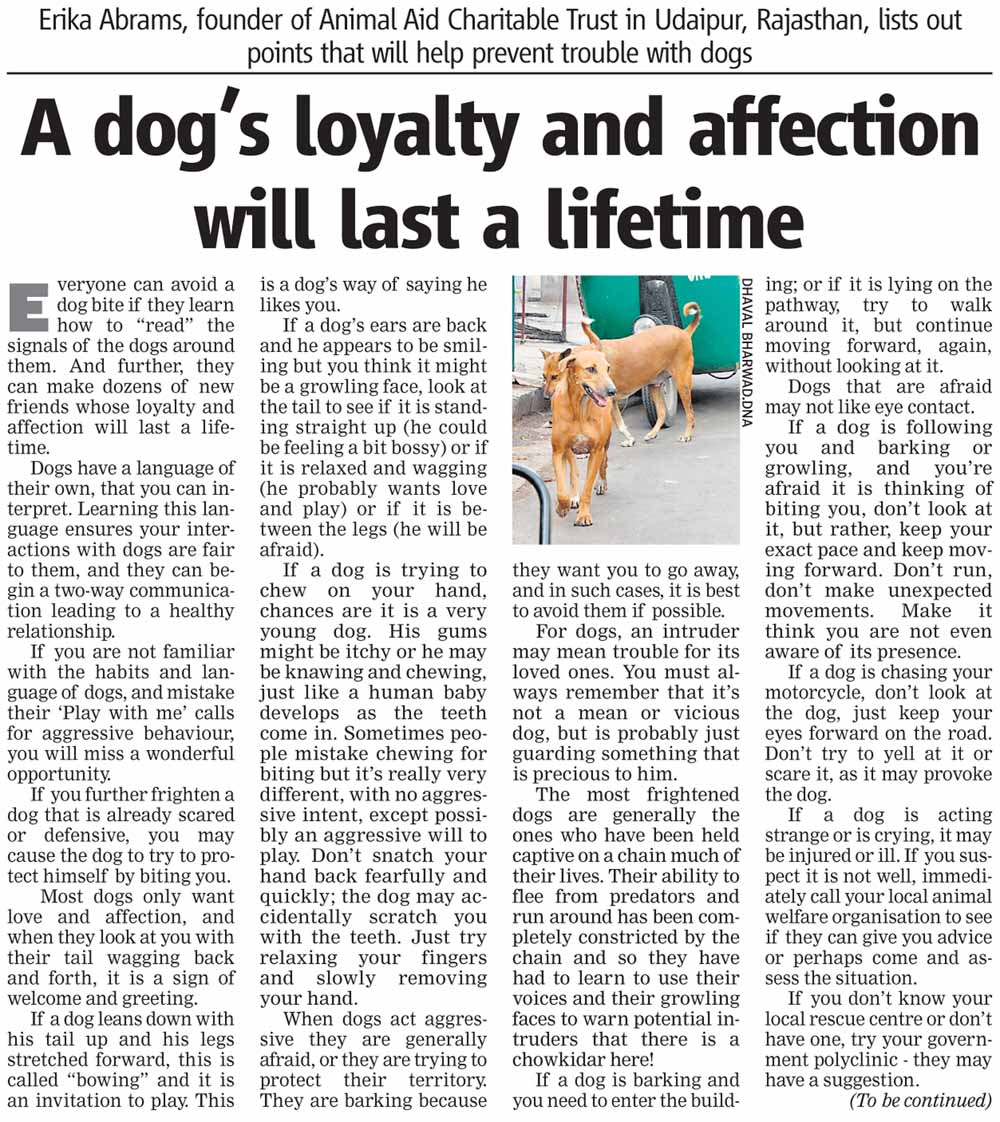
(Courtesy: DNA Ahmedabad 27th June 2010)
To read the second part of this article, please click here
On her regular morning walks, Pooja Gulati of Faraidabad was amused by the sight of 4 street dogs regularly sitting on the boundary wall of a house in Sector 21, Faridabad (Haryana, India). Their unwavering devotion to guarding the premises of this house and the street facing it pointed to the fact these street dogs indeed had human guardians taking care of them and that is how Pooja was introduced to Urvashi and her 4-legged family!
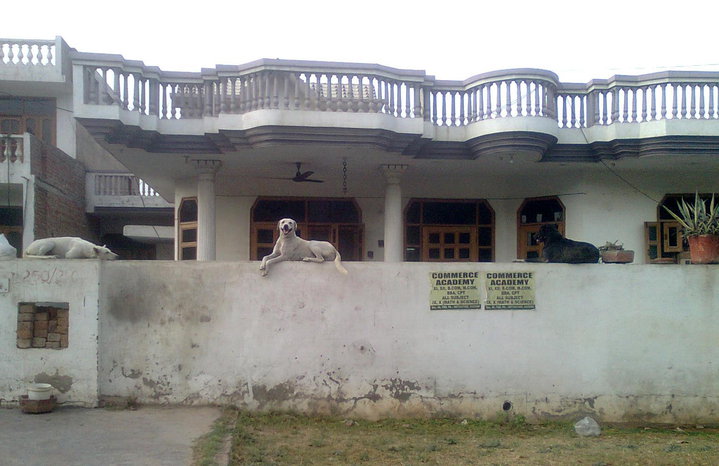
On guard! Chotu, Noni and Motu
Urvashi Sharma, graduated from Lady Shri Ram College in Delhi and moved to Fraidabad from Delhi 25 years ago. She is now a lecturer in English by profession and stays her parents.
Her bonding with the dogs on the street began when in her younger years, she along with her elder sister Neelakshi befriended a few of the street dogs…after her sister’s marriage, Urvashi carried the baton forward.
Today, there are 4 four street dogs who maintain a vigil outside Urvashi’s house. They have been loving named, Chotu, Chotti, Motu and Noni by her family and have been her friends for the past decade or so.
Urvashi is not only feeding the four of them on the street, she is also feeding and providing shelter to a female street dog named, Minni inside her house. On being asked about the possible cause behind Minni’s blindness, Urvashi shared that, ‘a few unruly boys in the street tried to pierce her eyes and that is what led her to lose their vision’.

Disability is no deterrent for Minni’s spirited personality; she now relies on her sniffing prowess and is a regular at going for her moring and evening walks. Urvashi’s retired parents guide her as she finds her way through the house.
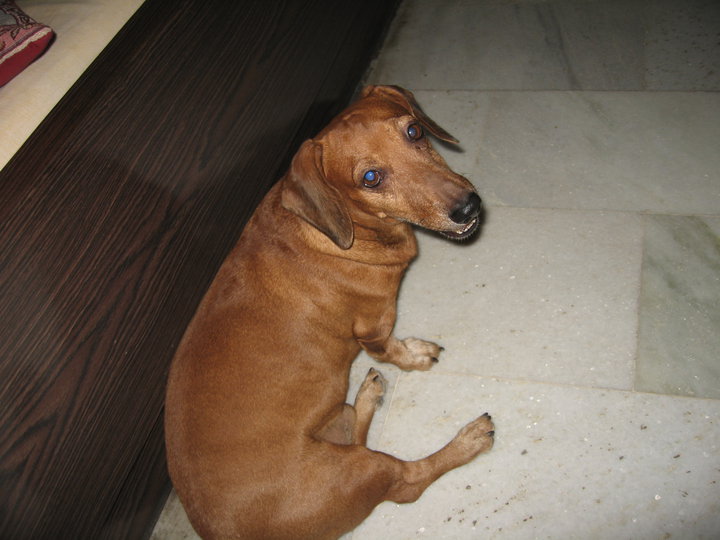
Chiklu - Urvashi's Dachshund
Also sharing space with Minni at Urvashi’s home are her two pedigreed pets Chiklu, a Dachshund and Standlie, a Lhasa apso.
Initially (like many of us), she faced a lot of resistance from her neighbours towards feeding the dogs in her street. The neighbours knocked on her doors whenever the dog’s barked as well, not realizing that the dogs could well be barking on some unscrupulous elements that are walking past the street and scaring them away to keep the neighbourhood safe!

Street Dogs keep our streets safe from anti-social elements! (Cartoon Credit: Ajit Ninan and Vasudha Mehta)
Urvashi faced a tough time convincing and explaining them all the advantages and benefits the street dogs serve the society. But today, thanks to the Dog-feeding rules and growing awareness, things have gradually begun to show improvement.
For her these animals are an integral part of her world and caring for them is a journey that will never end…
In Urvashi’s words, “animals are a creation of God. We have no right to harm them. As human beings, the least we can do is respect them and their existence on this planet and in return be assured of their endless love and companionship, which makes each day memorable and worth living for us all”.
“Until one has loved an animal, a part of one’s soul remains unawakened”- Anatole France (1844-1924)
Ask anyone who has ever shared his life with an animal friend, and they will vouch for the fact that the most difficult phase in one’s life is often the loss of your special animal friend. The loss is irreplaceable to say the least, the void of their love and presence is too big to be filled ever.
It is simply so hard to bid good-bye to our faithful special animal companions who have filled our lives with so much joy, blessed us with their unconditional love no matter how we are or how we look, thin or fat, ugly or beautiful, interesting or bland and the list goes on..they never judged us and thats what made them so very special. They teach us lessons that stay with us for life… and after they pass away, the only way by which we can pay their souls a just tribute is by spreading love, kindness and compassion that they gave you to other animals and humans alike and become as wonderful a person as your animal friend thought of you to be.
This link is for those who have like me suffered the emotional trauma of losing a beloved animal. May be these words by Dr. Linda Harper will provide comfort to an aching soul seeking solace after the loss of their beloved animal companion. Dr. Harper is also director of Blessed Bonds.

We came across this story by an unknown veterinarian and found it apt to share through this platform, it highlights the essence of the life of the dog, the most faithful companion nature created for humans…
Essence of a Dog’s Life
– By an anonymous veterinarian
Being a veterinarian, I had been called to examine a ten-year-old Irish Wolfhound named Belker. The dog’s owners, Ron, his wife Lisa, and their little boy Shane, were all very attached to Belker, and they were hoping for a miracle. I examined Belker and found he was dying of cancer. I told the family we couldn’t do anything for Belker, and offered to perform the euthanasia procedure for the old dog in their home. As we made arrangements, Ron and Lisa told me they thought it would be good for six-year-old Shane to observe the procedure. They felt as though Shane might learn something from the experience.
The next day, I felt the familiar catch in my throat as Belker ‘s family surrounded him. Shane seemed so calm, petting the old dog for the last time, that I wondered if he understood what was going on. Within a few minutes, Belker slipped peacefully away.
The little boy seemed to accept Belker’s transition without any difficulty or confusion. We sat together for a while after Belker’s Death, wondering aloud about the sad fact that animal lives are shorter than human lives.
Shane, who had been listening quietly, piped up, ”I know why.”
Startled, we all turned to him. What came out of his mouth next stunned me. I’d never heard a more comforting explanation. It has changed the way I try to live.
He said,”People are born so that they can learn how to live a good life — like loving everybody all the time and being nice, right?” The Six-year-old continued, ”Well, dogs already know how to do that, so they don’t have to stay as long.”
Live simply.
Love generously.
Speak kindly.
Care deeply.

When loved ones come home, always run to greet them.
Never pass up the opportunity to go for a joyride.
Allow the experience of fresh air and the wind in your face to be pure ecstasy.
When it’s in your best interest, practice obedience.
Let others know when they’ve invaded your territory.
Take naps.
Stretch before rising.
Run, romp, and play daily.
Thrive on attention and let people touch you.
Avoid biting when a simple growl will do.
On warm days, stop to lie on your back on the grass.
On hot days, drink lots of water and lie under a shady tree.
When you’re happy, dance around and wiggle your entire body.
No matter how often you’re scolded, don’t buy into the guilt thing and pout. Run right back and make friends.
Delight in the simple joy of a long walk.
Eat with gusto and enthusiasm. Stop when you have had enough.
Be loyal.
Never pretend to be something you’re not.
If what you want lies buried, dig until you find it.
When someone is having a bad day, be silent, sit close by and nuzzle them gently.
And finally, —
Never trust anyone until you sniff their ass. :)
(Courtesy: http://www.birddogsforever.com/humor/dog_teachers.htm)

(Courtesy: http://www.aplacetolovedogs.com)
Abhinav Bindra won the Olympic Gold Medal in 10 meter air rifle event at the 2008 Beijing Olympics. In his guest column in today’s HT City, the ace shooter writes about his bonding with dogs.
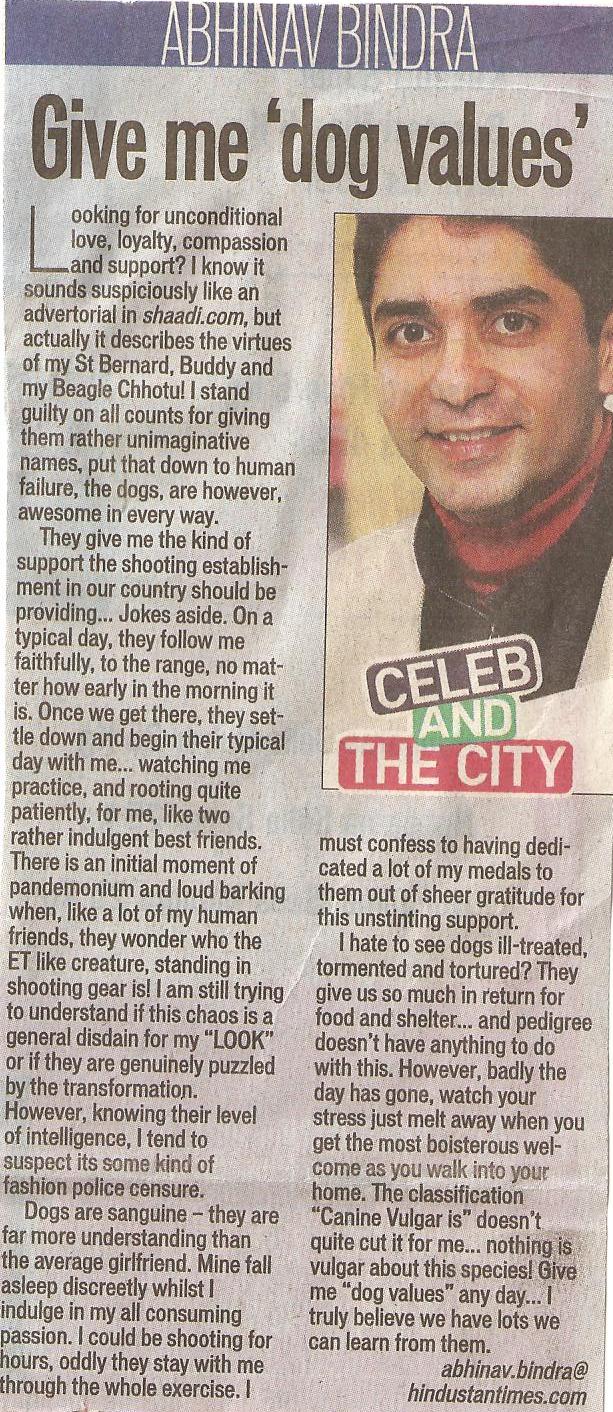
Courtesy: HT City (Hindustan Times) dated 15th May 2010
Take Action:
Protest tomorrow i.e 7th May, 2010 (Friday) by animal activists and concerned citizens at 3.30 pm at Delhi Jal Board Office – located at Jal Sadan, Opposite MCD Building, Shiv Mandir Marg , Near Jal Vihar Terminal at Lajpat Nagar-II, Delhi.
This is to demand strong action against those employees/people who are suspected to have rounded up 11 street dogs within the Delhi Jal Board compound and mercilessly cut and pierced them all to death.
Be there!
This gory incident is believed to have transpired in broad daylight on Sunday the 2nd May, 2010, between 2 to 3pm.
For more details of the incident, please click on the thumbnails below to enlarge the copies of the self-explanatory letter sent by Maj Gen (Retd) Dr. Kharb, Chairman AWBI on 5th May, 2010 to the CEO of Delhi Jal Board.


To prompt the officials into taking stern action against the perpetrators of this crime, you can write letters of strong protest to Mr. Ramesh Negi, the C.E.O. of the Delhi Jal His e-mail address is ceodjb@hotmail.com – and shame him into taking action.
His mailing address is :
Shri Ramesh Negi, Chief Executive Officer
Delhi Jal Board,
Varunalaya, Phase II, Karol Bagh,
New Delhi-110005
Please mark copies to:
Mr. B.P. Saraswat
Executive Engineer, South IInd
Delhi Jal Board, Jal Sadan Building ,
Near Shiv Mandir, Lajpat Nagar
New Delhi
&
The S.H.O.
Police Station Lajpat Nagar
New Delhi.
For the benefit of those who are unable to download/click open the above image files of AWBI’s letter, the soft copy of the mail sent by Maj Gen (Retd) DR. Kharb, Chairperson, Animal Welfare Board of India to to Mr. Ramesh Neg, CEO, Delhi Jal Board is pasted below:
5th May 2010
To,
Shri Ramesh Negi
Chief Executive Officer
Delhi Jal Board
Varunalaya
Phase II, Karol Bagh,
New Delhi-110005
SUB: SHOCKING BUTCHERY AT THE JAL BOARD BUILDING AT LAJPAT NAGAR
Dear Sir,
In my capacity as Chairperson of the Animal Welfare Board of India, a statutory body set up under the Prevention of Cruelty to Animals Act, I am writing to you to invite your attention to a shocking instance of butchery, and utterly brutal killings of stray dogs at the Jal Board office, Jal Sadan, Lajpat Nagar, on Sunday, the 2ndof May, a little after 2.00 p.m., that has come to light a little while ago. As information filters out, several agitated residents of Delhi are calling me up and demanding that the perpetrators of the criminal acts be brought to book.
Apparently, on Sunday, the 2nd of May, 2010, between 2 and 3 p.m., when 4 (four) guards, including one Ram Kher, were ostensibly guarding the complex, and 12 (twelve) Delhi Jal Board staff, including one Rakesh, and one Ashok, were on emergency water supply duty, and therefore present at the complex, and some canteen staff were also present, 5 to 6 miscreants easily breached the security and entered the complex ! We have learnt that they were probably from the adjoining Vinoba Puri area. Despite the sensitive nature of the installation – a Delhi Jal Board installation – they were allowed to enter. Thereafter, in connivance with the 4 guards on duty, and either some or all of the staff on emergency duty, the miscreants, and the guards, and some of the others brutally beat up and cut / chopped 11 community dogs (i.e. stray dogs resident at the complex), to a horribly painful death. Apparently, legs were broken, cuts were inflicted, and bodies pierced with bhalas and other sharp objects, before the poor, hapless animals died. Some dogs, in a desperate bid to escape, ran into the building. However, the guards, and some or all of the 12 staff of duty kicked and beat them out. They were then killed in the gruesome and horribly sub-human manner described above.
The Board has also learnt that thereafter, the flesh and some parts of the body of the poor animals that suffered and died were eaten/kept aside for eating later. Some animal remains were thrown into an adjoining area, and other remains and blood were strewn over the place at that time. What is shocking is that none of the persons present called up the police, or even the Number 100, clearly demonstrating that they were all participating in the act. It was only yesterday, and today, that the other employees learnt what had occurred, and informed some Animal Welfare Organizations and the Animal Welfare Board of India.
The Board would have you know that animal cruelty is an offence – under Section 11 of the Prevention of Cruelty to Animals Act, and Sections 428 and 429 of the Indian Penal Code – punishable with imprisonment and fine. The Animal Welfare Board of India shall of course be lodging a criminal complaint and taking legal recourse ; but I urge you as well to investigate, and take strong action against the employees who connived with the miscreants and perpetrated the heinous crime described above.
Please bear in mind that apart from the shameful slaughter of community dogs that the guards, and some/all of the employees present at the complex on Sunday, the 2nd of May, 2010, resorted to, a sensitive Jal Board installation was breached with impunity! The miscreants could have as easily mixed hazardous substances with water, leading to human casualties / illness.
What has occurred is serious enough to merit your intervention and strong action. Kindly do the needful, and please keep me informed.
Yours Sincerely
(Dr. R.M. Kharb)
Maj.Gen.(Retd.), AVSM
Chairman, AWBI
Copies to:-
Mr. B.P. Saraswat
Executive Engineer, South IInd
Delhi Jal Board, Jal Sadan Building ,
Near Shiv Mandir, Lajpat Nagar
New Delhi
&
The S.H.O.
Police Station Lajpat Nagar
New Delhi.
The dogs you pet gives an insight into your personality as well. Click on the thumbnail below to enlarge the image, which is a scanned version of the article that was published in the ‘Hello Delhi’ supplement of Navbharat Times newspaper on 4th May, 2010
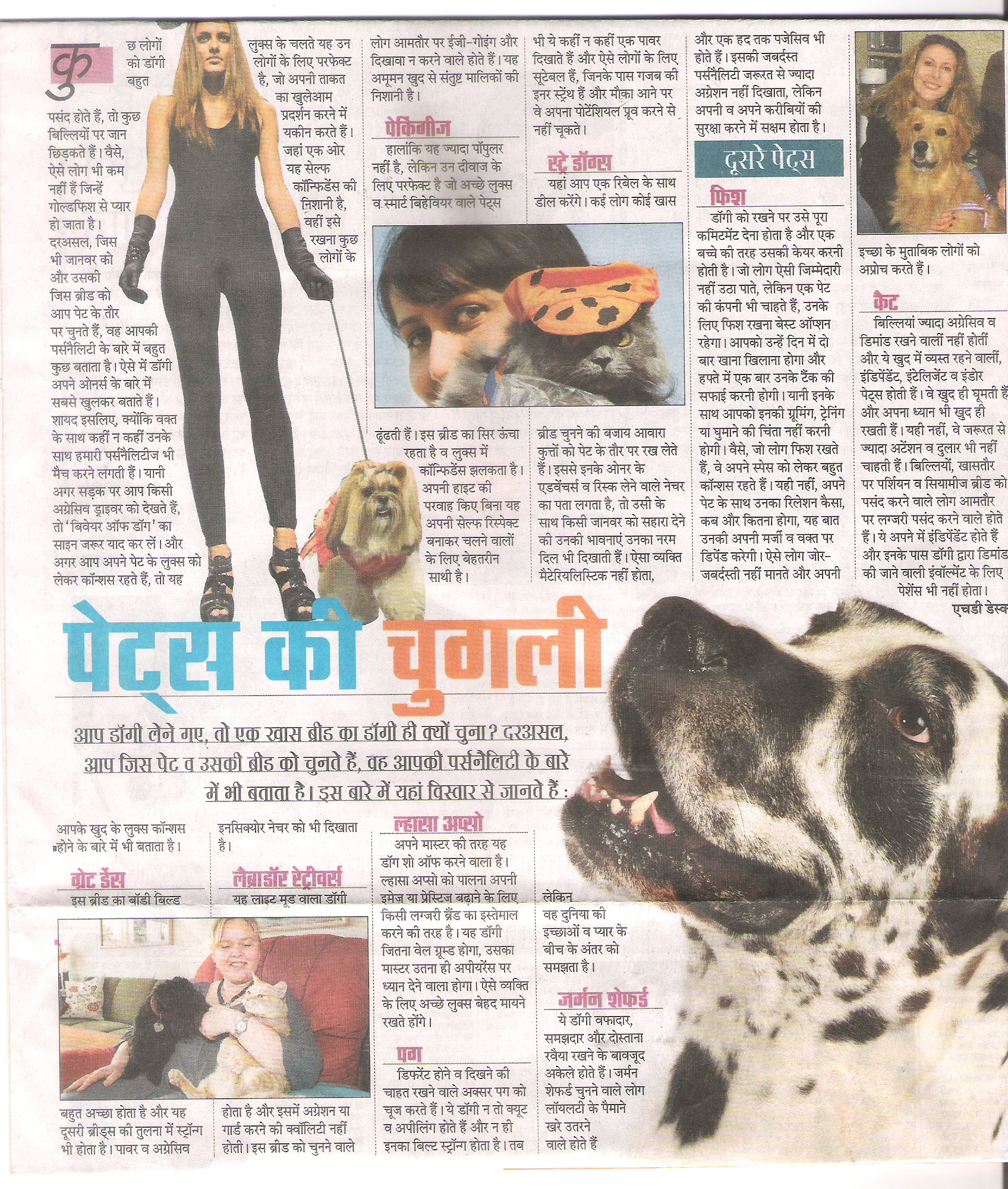
(Courtesy: Navbharat Times_4th May 2010)

 JAAGRUTI® -