Wildlife Crime Investigations and the Legal system

By Vasudha Mehta [Mail : vasudha@jaagruti.org]

We learn much in life through our respective experiences, trials and errors and this article traces my experience while working with animal rescue groups on wildlife crime based investigative operations. We do understand that what I did was just one tiny drop in the ocean but atleast it was a single drop…and through this article we at ‘Jaagruti’ hope that many more of you who hope to crack the mystery behind nabbing wildlife criminals or the lack of it- will get a peep into the whole process and somewhere down the line be inspired to act to nab those who toy with our country’s much cherished natural heritage, thereby helping in minimising wildlife crime, which has the potential to wipe out India’s magnificent animals if left unchecked!
Nabbing wildlife criminals

All species of animals and products derived there from that find mention under the Indian Wildlife Protection Act 1972 are considered to be protected under the legal system and the punishments for killing/possessing the same varies as per the degree of the crime committed and the schedule to which the animal belongs. And by law, all wild animals and products listed and protected under this act are considered a property of the Government of India and the responsibility to enforce this law rests entirely on the state wildlife departments (wildlife inspectors/forest officers). However, Section 50 of the Wildlife Protection Act, 1972, also empowers “a Police official of the rank of a Sub-Inspector or above has the powers to search, seize and arrest”.

It is important to note that while undertaking a raid to nab wildlife criminals, one requires the help of the Police and/or the Forest/Wildlife department for the power to search a spot seize the animals and arrest the accused lies with these government officials; representatives of the NGO circuit, individual activists or the common man don’t have legal powers to do so, but there exist a number of ways in which individuals/NGOs and the government machinery can assist each other to nab wildlife criminals by utilizing their respective skills/resources and legal powers respectively.

Kinds of Wildlife criminals (and Investigations):

There are three levels of wildlife criminals operating in the city. The lowest rung is that of the roadside vendors which include bird-sellers, dog-sellers, pet-shops, snake charmers, madaris etc. Nabbing the people involved in the lower rung helps in reaching the mid-level gang that includes the wholesale-dealers, who retail the animals to these local pheri-wallahs. Catching these wholesale dealers leads us to the source, which includes the traders who are involved in capturing these animals from their wild habitat and the knowledge of the areas from where the animals are being captured and an idea about their trade routes.

Broadly, wildlife crime investigations in our country can be categorized into the following-

  1. Those conducted by NGOs/activists/individuals in the cities which involve seizure of wildlife products like mongoose hair brushes, owl claws etc. or raid and rescue operations involving live wild animals exploited in cities by street entertainers like madaris and saperas-monkeys, bears and snakes or those animals held by pet shops, meat sellers, street vendors/part-time traders or the dubious tantriks. Such animals include birds like Pigeons, Parakeets, Munias, kites, peacocks and owls; reptiles like snakes, turtles and monitor lizards and; animals like mongoose and civet cats.
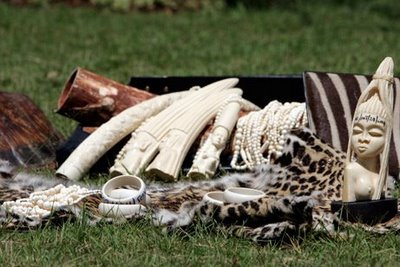
  2. Raid/seizure of wildlife contrabands involving highly protected Schedule 1 animals like skins and claws of tigers, lions and leopards, rhino horns, Elephant ivory, Otter skin, Bear biles, Crocodile skins. Such investigations are more time consuming as well as life-threatening in nature since the investigators end up dealing with organised gangs of wildlife criminals that work across national and international boundaries. Such investigations involve a united effort on part of many agencies, the Wildlife Departments, Police, Crime Investigation agencies and the investigative/decoy support and intelligence provided by Wildlife NGOs.

How is an investigation and operation carried out?

  1. The tip-off: Generally, various wildlife NGOs have an enforcement unit comprising of a Research team and a Field Raiding Team, consisting of a network of informers, decoys and field workers. Tip offs are generally received through the aware and sensitized individuals within the society or generated by the informers hired by the NGO’s Research Team.  This system of informers employed by the NGOs is generally paid as per the authenticity and accuracy of the information provided by them.
  2. Conducting a Reccee: To authenticate the information provided to the research team, normally decoys are used to validate the leads so obtained, however sometimes under time constraints for an on the move wildlife contraband or criminal, the luxury of conducting a recee can be least afforded!
  3. The raid: The raiding team generally comprises of NGO resource persons accompanied by officials from the Police, Wildlife Department and or Wildlife Crime Control Bureau who are well acquainted with the laws.In addition to the Wildlife Protection Act, 1972, even the Prevention of Cruelty to Animals Act 1960 can be enforced upon under many cases.Knowledge of the laws, specific sections and penalties outlined within the act helps in registering a strong case and is crucial for putting the convict behind bars.
  4. Once the raid conducted, the police prepare a seizure memo. The job of the raiding squad is to get the accused arrested, seize the animals and the police then presents the accused and the seized animals/products before the Metropolitan Magistrate in the local district Courts.
  5. The accused is generally sent to 14 days of Judicial Custody (JC) by the Metropolitan Magistrate and the investigation of the case is subsequently handed over to the Wildlife Department.
  6. More often than not, once the Wildlife Department is not represented by a lawyer after the JC period is over, the accused is released on bail. Hence, all the effort of nabbing a criminal goes to waste. Therefore, all that we require from the Wildlife Department is to convict the accused with the help of an efficient public prosecutor.

The (apathy of) State Wildlife Departments, the Police and the legal lacunae:

These departments often do not work to their full potential and the reasons for these are manifold for they neither have the infrastructure, nor the staff or the spirit to do this kind of investigative work.

In Delhi, for example, there are 5 Wildlife Inspectors that joined this department about two decades back and in all these years, they haven’t even been promoted once! When they joined they were Wildlife Inspectors and they remain so even now. In all these years, there are no new recruitments that have taken place either. As a result, there is no one to work under them or work with and naturally so, over all these years these inspectors also tend to lose out on the youthful energy they carried when they first joined these departments, hence it is natural to assume that the officials lack spirit and enterprise and suffer from demonization and frustration.

Coupled with it, is rampant corruption, lack of political will and the complete lack of infrastructure. These wildlife inspectors move on motorbikes and don’t even have a car and a driver at their disposal thus making it difficult for them to move the rescued animals or even take the accused for a Medical examination before presenting him in front of the district court magistrate as per the provisions of the law.

Also, The Wildlife Department and the Police are not armed with a team of animal handlers so they are generally apprehensive of carrying out wildlife crime seizures. Despite knowing that showing snakes to people on roadsides or selling birds is illegal, the authorities fail to nab street entertainers using animals as the whole thought of handling snakes, monkeys, bears and mongooses (after conducting the seizure) scares them off!

The Wildlife Departments don’t have the space to house rescued animals till their release orders are issued by the court. Zoos are most unwilling as they are already starved of space and cash. Also, the Wildlife Departments don’t have lock ups to house the arrested accused before being presented to the court and thus they have to turn to the Police for lock-up assistance which adds to the headache of the police stations as they get thrusted with the responsibility of ensuring that the accused doesn’t suffer health wise or die in their police custody

As Rajeev Jain, an animal activist associated with the Delhi chapter of NGO People for Animals shares below; there are many hurdles that prop up at different stages of a wildlife crime combating operation, mostly because the police and judges are not sensitized to animal welfare or aware of the laws and seriousness of the crime. “The judges in the district courts normally take pity on the bird sellers or a snake charmer we catch hold of in a city because they consider them to be poor people and thus give them the most meager punishment and accept their bail plea very easily. Lives of animals are not considered precious enough”, lamented Rajeev.

Also the Police authorities and wildlife officers are found wanting especially when it comes to handling, identifying and rehabilitating the live animals seized and it is here that the NGOs pitch in with their expertise. For example: NGOs pitch in with their knowledge of handling, health, habitat and feeding habits of the animals rescued along with providing temporary shade and shelter to the rescued animals. Often, many rescued animals die in the police station before being presented to the courts as the police officials are not provided with any budget to administer first aid or purchase the adequate feed/feeding bowls to help the stressed animals.

But all is not lost, gradually with growing awareness levels, the authorities are being increasingly and regularly forced to cooperate and extend support to individual activists and NGOs to nab wildlife criminals and it is up to individuals like you to acquaint yourself with the laws and the modus-operandi mentioned above so that you can assist as well as request the cooperation of enforcement authorities to take wildlife crime seriously. Only when more people take these issues up, will the authorities be on tender hooks and the government will be compelled to carry out the infrastructural and procedural improvements required to make the wildlife departments more effective and efficient.

Lastly, what is NOT Right?

Nilesh Bhanage of PAWS shares below his valuable insight on where exactly lies the problem with those people/NGO activists who consider themselves to be over and above the law and become overnight wildlife activists who go on to break every rule in the book in sheer exuberance, enthusiasm or most commonly for the sake of greed of money and media attention!

Most of the wildlife crime investigations in India happens out of heart & not with minds/ideas, careful planning or tricks and therein lies the only problem. Any animal lover starts posing as wildlife activist and starts doing  raids is clearly wrong. They will not do work in a stepwise manner and risk getting into trouble and that is one of the reasons wildlife crime conviction rates in India are so low.When anyone conducts raids, they must provide photos, video CDs,  veterinary treatment certificates, proofs, panchnama of seized material from criminals and even use supporting laws (i.e. using kids for wildlife trade is also punishable under child labor laws, using wildlife items for medicines comes under Food & Drug administration Act etc), so there are multiple factors that are involved.For Example: One girl posing animal activist goes to someone’s house & just pick-up their pet parakeet & squirrel which was hand-raised by someone. Then this girl goes & releases these animals and birds, confiscated by her back into wild, then in our eyes that girl herself is criminal under Indian Wildlife protection Act 1972 because she has flaunted the following following norms:

  1. Making illegal/unauthorised entry into someone’s private house
  2. Taking photos of gallery / bedroom
  3. Rescuing wildlife without prior intimation/information being conveyed to forest/wildlife department and also without their permission.
  4. Seizure of animals is also illegal as it can be done only by Police or Wildlife Department officials or honorary officers appointed by these two departments for this task.
  5. Abandoning wildlife anywhere (which was never exposed to wild area as it was kept as pets) to die in name of rehab
  6. Not doing any paper work for such seizure.
  7. Stealing someones property like cages.

Remember, if we want to help animals or our wildlife, it is important that we follow the rules, for our safety and also for the health of the animal.

Useful resources:

  1. Animal Laws of India http://unilawonline.com/animallaw/ReadContent.asp
  2. Indian Wildlife Crime Control Bureau: http://wccb.gov.in/
For reporting animal cruelty cases: How to approach the police for help?

What comprises Animal Cruelty?

Contacting the Police on the Phone:
In an emergency situation telephone your local police station or dial 100 (Central Police Control Room) Get your “Ticket number” if you have dialled 100. Get the name and designation of the police personnel if you have called your local police station. Note the date and time on both occasions. If you wish to remain anonymous you do not need to reveal your identity.

At the Police Station:
i) Approach the police (above the rank of constable) politely and briefly explain the situation.

ii) Request them to take action against the offender.

iii) If they state it is not their job to protect animals as there are far too many human problems, politely enlighten them about their role in the PCA Act, 1960 (quote the relevant sections). If in Delhi, do tell them about the Delhi Police Act, 1978 Chapter IX entitled “the Prevention of Cruelty to animal”.

iv) Refer to http://awbi.org/awbi-pdf/apl.pdf for a compendium/factsheet of Animal Protection laws for the guidance of Police, NGOs, Animal Welfare Activists and Officers.

v) Insist on their involvement and offer your help.

vi) Inform them that the injured or distressed animal shelter and not left at the police station. This will reassure them.

vii) File an FIR if necessary.

viii) Do the necessary follow up.

ix) Do praise him/her after his involvement, no matter how small.

HOW TO FILE AN F.I.R. (FIRST INFORMATION REPORT):

• FIRs are filed at your local police station when you wish to put down in record an incident which you wish to bring to the notice of your local police and at the same time seek their help in solving it. (eg. loss of wallet, train ticket, incident, or any other loss).

• Make out a detailed description of the lost animal/incident with a photograph/s (or any cruelty complaint). Address it: to the SHO (Station House Officer), of your area.

• To file an FIR, write the facts on a plain piece of paper which you yourself may prepare in duplicate, with the date, your name and address, details of the complaint and the people involved, if any.

• The officer on duty at the police station is responsible for making all the necessary entries.

• The copy of the FIR should be duly signed, stamped and dated (note the time as well) by the police station which you should keep safely.

• This is applicable not only to lost animals, but to any animal you have found (which might be lost), cruelty to animals, illegal activities with regard to animals eg. trade in wildlife-bird sellers, snake charmers, turtle traders; illegal slaughtering of animals and illegal slaughter houses; bird sellers; cruelty to animals in zoos; circuses, pets/petshops etc.

• The Prevention of Cruelty to Animals Act, 1960 under section 11 covers a large number of cruelties and offences on the basis of which you could file FIRs.

• Insist on filing an FIR. It is your right. It is important to note that the police usually discourage the complainant from registering a FIR in cases which are not so clear. This is because once the FIR is filed, it becomes the responsibility of the police to ensure a conviction.

• Do not lose the stamped copy (by the officers on duty) of the FIR and keep enquiring about the progress. This copy is the proof that the Police have received the information.

• Please don’t forget about the well-being of the animals, make sure that you also contact an Animal Welfare Organization/activists to ensure that they follow up on the health status, rehabilitation/release of the animals in case custody.

Please share  with us your experiences while dealing with the Police /lodging an F.I.R on animal cases, practical learnings end up being different than what we write here, so please be candid in your sharing for it may help someone at a later date when stuck in a similar situation. Thanks-Vasudha

Sultanpur Lake: Wetland turns Graveyard…but does anybody care?

Image Courtesy for the photos  on this post: CNN IBN and Hindustan Times dated 16th June 2010

For video link to a story that illustrates how official neglect and government’s apathy has destroyed this river body and killed many an animals, birds and fishes  in Sultanpur National Park, please click here.

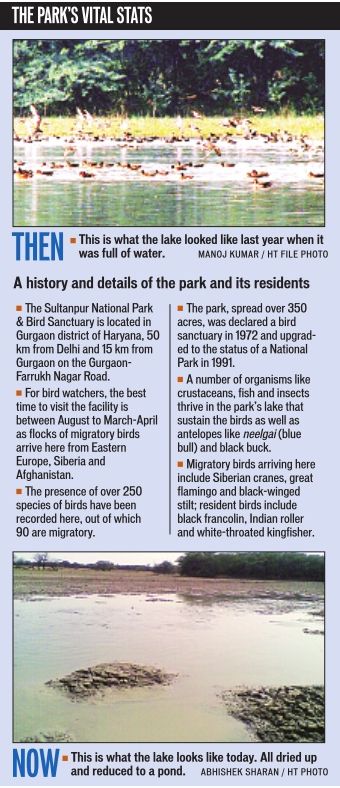
The Sultanpur National Park, situated in Indian state of Haryana may be India’s smallest National Park but it’s a haven for migratory birds in Haryana.

This slideshow requires JavaScript.

Set up by late Indian Prime Minister – Indira Gandhi in 1971 Sultanpur National Park is today dying a slow death.

There is no water in the wetland and dying fish and carcasses dot the sanctuary.

Sultanpur Lake: Then and Now..

Can only a trial by Media save it?

More news reports on this subject can be accessed at the links below:

1. Sultanpur lake: Liquidated!

2. Sultanpur Lake is becoming a dry bed

3. Dry lake blessing in disguise, say wildlife officials

4. Save Sultanpur park, Jairam tells Hooda

Spot a sick and ailing Tree, call the doctor: Delhi gets a Tree Ambulance

News piece in Hindustan Times dated 5th February, 2010

Please click on images to enlarge. Thanks.


‘Bali’ (Animal Sacrifice) in 21st Century India: The Law (Video)

Ready to be sacrificed!

This photo of a ‘young baby goat’ (referred to as a ‘kid’ in proper English language) tied to the side of a temple railing-waiting to be sacrificed was shared with us by Mr. Satish C. Gupta, an Agra resident.  It was clicked on his recent visit to Kamakhya Temple in  Guwahati, Assam.

He also shared with us another photograph clicked at this temple which shows the remnants of a recently sacrificed bird lying on the floor of this temple.

Kamakhya temple, Guwahati (Assam, India)

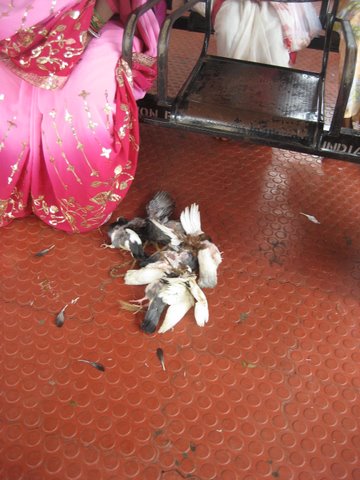
On the floor: Remnants of a bird sacrificed at this temple

It is strange that in a progressively developing country like India, the practice of sacrificing animals for religious reasons, in the hope that doing so will please the deities and grant a person’s wish! And we learn that Animal Sacrifice is legal in Bengal and Assam, that is why perhaps we see the shots like the ones above from Kamakhya Temple (located in Guwahati, Assam).

To learn more about the practice of Animal Sacrifices in India, their legal angle and what you can do to help stop it, please have a look at the video below.

But there are laws banning animal sacrifices in many states across India and also national laws, and the reason these laws are not being enforced is because the authorities are as ignorant of the laws as much as we are, so this puts all the more responsibility on us to inform people of the laws and inspire them to use them tactfully for the benefit of animals and also share these with the authorities and educate people alike to put an end to the archaic and cruel practice of ‘Animal Sacrifices’.

https://jaagruti.org/wp-content/uploads/2010/06/copy-of-animal-sacrifices.avi: Save this link please to watch this video.

Below is the list of Indian states where Animal Sacrifice is ILLEGAL:

Tamil Nadu: Tamil Nadu Animals and Birds Sacrifices Prevention Act, 1950

Karnataka: Karnataka Animal Sacrifice Prohibition Act 1959

Gujarat:Gujarat Animals and Birds Sacrifice Prohibition Act, 1972

Andhra Pradesh: Andhra Pradesh Animals and Birds Sacrifices (Prohibition) Act, 1950

Kerala: The Kerala Animals and Birds Sacrifices Prohibition Act, 1968

Rajasthan: The Rajasthan Animals and Birds Sacrifice (Prohibition) Act,1975.

Pondicherry: The Pondicherry Animals and Birds Sacrifices Prohibition Act, 1965

….

If you would like to meet a few goats who got sacrificed during last Id celebrations in Delhi on 28th November 2009..scroll below

India: Prevention of Cruelty to Animals Act 1960 (Also referred to as the PCA Act, 1960)

Click on the link below to download this PDF file to make yourself familiar with Animal Protection laws in India. Share this booklet with your neighbourhood Police Station too, its important we spread the word around on these largely unknown laws.

Click on this link that would lead you to a Dossier on animal protection laws for the guidance of police, HAWOs(Honorary Animal Welfare Officers), NGOs AND AWOs(Animal Welfare Organisations), that contains a compilation of Frequently Asked Questions answered thematically

Other useful resources are as follows:

Animals and the Law: A Powerpoint presentation by Advocate Ms. Aparna Rajagopal

The Indian PCA Act 1960: PDF File of The PCA – Prevention of Cruelty to Animals Act 1960, a central act.


Rules under Prevention of Cruelty to Animals Act 1960


Also, kindly consider watching the below video on Section 11 of the Indian Prevention of Cruelty to Animals Act 1960

11 Street Dogs ‘allegedly’cut & pierced to death: Protest on 7th May’10 at Delhi Jal Board Office in Lajpat Nagar, Delhi

Take Action:

Protest tomorrow i.e 7th May, 2010 (Friday) by animal activists and concerned citizens at 3.30 pm at Delhi Jal Board Office – located at Jal Sadan, Opposite MCD Building, Shiv Mandir Marg , Near Jal Vihar Terminal at Lajpat Nagar-II, Delhi.

This is to demand strong action against those employees/people who are suspected to have rounded up 11 street dogs within the Delhi Jal Board compound and mercilessly cut and pierced them all to death.

Be there!

This gory incident is believed to have transpired in broad daylight on Sunday the 2nd May, 2010, between 2 to 3pm.

For more details of the incident, please click on the thumbnails below to enlarge the copies of the self-explanatory letter sent by Maj Gen (Retd) Dr. Kharb, Chairman AWBI on 5th May, 2010  to the CEO of Delhi Jal Board.

To prompt the officials into taking stern action against the perpetrators of this crime, you can write letters of strong protest to Mr. Ramesh Negi, the C.E.O. of the Delhi Jal  His e-mail address is ceodjb@hotmail.com – and shame him into taking action.

His mailing address is :

Shri Ramesh Negi,  Chief Executive Officer

Delhi Jal Board,

Varunalaya, Phase II, Karol Bagh,

New Delhi-110005

Please mark copies to:

Mr. B.P. Saraswat

Executive Engineer, South IInd

Delhi Jal Board, Jal Sadan Building ,

Near Shiv Mandir, Lajpat Nagar

New Delhi

&

The S.H.O.

Police Station Lajpat Nagar

New Delhi.


For the benefit of those who are unable to download/click open the above image files of AWBI’s letter, the soft copy of the mail sent by Maj Gen (Retd) DR. Kharb, Chairperson, Animal Welfare Board of India to to Mr. Ramesh Neg, CEO, Delhi Jal Board is pasted below:

5th May 2010

To,

Shri Ramesh Negi

Chief Executive Officer

Delhi Jal Board

Varunalaya

Phase II, Karol Bagh,

New Delhi-110005

(ceodjb@hotmail.com )


SUB:  SHOCKING BUTCHERY AT THE JAL BOARD BUILDING AT LAJPAT NAGAR

Dear Sir,

In my capacity as Chairperson of the Animal Welfare Board of India, a statutory body set up under the Prevention of Cruelty to Animals Act, I am writing to you to invite your attention to a shocking instance of butchery, and utterly brutal killings of stray dogs at the Jal Board office, Jal Sadan, Lajpat Nagar, on Sunday, the 2ndof May, a little after 2.00 p.m., that has come to light a little while ago.  As information filters out, several agitated residents of Delhi are calling me up and demanding that the perpetrators of the criminal acts be brought to book.

Apparently, on Sunday, the 2nd of May, 2010, between 2 and 3 p.m., when 4 (four) guards, including one Ram Kher, were ostensibly guarding the complex, and 12 (twelve) Delhi Jal Board staff, including one Rakesh, and one Ashok, were on emergency water supply duty, and therefore present at the complex, and some canteen staff were also present, 5 to 6 miscreants easily breached the security and entered the complex ! We have learnt that they were probably from the adjoining Vinoba Puri area. Despite the sensitive nature of the installation – a Delhi Jal Board installation – they were allowed to enter.   Thereafter, in connivance with the 4 guards on duty, and either some or all of the staff on emergency duty, the miscreants, and the guards, and some of the others brutally beat up and cut / chopped 11 community dogs (i.e. stray dogs resident at the complex), to a horribly painful death. Apparently, legs were broken, cuts were inflicted, and bodies pierced with bhalas and other sharp objects, before the poor, hapless animals died. Some dogs, in a desperate bid to escape, ran into the building. However, the guards, and some or all of the 12 staff of duty kicked and beat them out. They were then killed in the gruesome and horribly sub-human manner described above.

The Board has also learnt that thereafter, the flesh and some parts of the body of the poor animals that suffered and died were eaten/kept aside for eating later. Some animal remains were thrown into an adjoining area, and other remains and blood were strewn  over  the  place  at  that  time. What  is  shocking  is that  none  of the persons present called up the police, or even the Number 100, clearly demonstrating that they were all participating in the act. It was only yesterday, and today, that the other employees learnt what had occurred, and informed some Animal Welfare Organizations and the Animal Welfare Board of India.

The Board would have you know that animal cruelty is an offence – under Section 11 of the Prevention of Cruelty to Animals Act, and Sections 428 and 429 of the Indian Penal Code – punishable with imprisonment and fine. The Animal Welfare Board of India shall of course be lodging a criminal complaint and taking legal recourse ; but I urge you as well to investigate, and take strong action against the employees who connived with the miscreants and perpetrated the heinous crime described above.

Please bear in mind that apart from the shameful slaughter of community dogs that the guards, and some/all of the employees present at the complex on Sunday, the 2nd of May, 2010, resorted to, a sensitive Jal Board installation was breached with impunity! The miscreants could have as easily mixed hazardous substances with water, leading to human casualties / illness.

What has occurred is serious enough to merit your intervention and strong action. Kindly do the needful, and please keep me informed.

Yours Sincerely

(Dr. R.M. Kharb)

Maj.Gen.(Retd.), AVSM

Chairman, AWBI

Copies to:-

Mr. B.P. Saraswat

Executive Engineer, South IInd

Delhi Jal Board, Jal Sadan Building ,

Near Shiv Mandir, Lajpat Nagar

New Delhi

&

The S.H.O.

Police Station Lajpat Nagar

New Delhi.

First Aid tips for taking care of the dog on your street

Hands that help are better than lips that Pray!  (Image Courtesy: Helping Hands-http://www.fsgp.org/storage/HH_Image.jpg)

Volunteer to provide quick medical relief to the dog who guards your street

A horrifying number of dogs and cats die because of lack of medical attention.  This is all the more tragic because wounds and injuries are surprisingly simple to treat, once you’ve learnt how. Especially for very serious cases, the dog does not even need to be hospitalized.  With your help, street dogs can live a happy and healthy life.  Some of the most common problems that street dogs suffer from are skin infections, wounds and maggot wounds.  All these can be treated easily on site, unless of course the symptoms or the injury are very  severe when the dog needs to be taken to a vet or a shelter.

* Please note: This page will be regularly updated in both Hindi and English language for the benefit of those who care for their community dogs. However, it is to be noted that the information written in there is for informative purposes only. We request you to please do contact a veterinary doctor or take the animal to a shelter for thorough treatment if symptoms look grave.

For further queries or guidance, please write to us at contact@jaagruti.org or call on our helpline +91-9818 144 244

First Aid Kit:

Scissors, forceps, thermometer, chain to restrain the dog, tape to muzzle the dog (or buy a regular muzzle from a vet), adhesive tape, Gauze Bandages, cotton wool, bandages.

Medicines: Betadine Lotion and Ointment, Neosporin or Nebasulf  powder, Himax Ointment (a miracle medicine for animals) or Skinoment, Betnovate Skin Cream, Soframycin skin ointment, Ivermectin – 10 ml vial, Topicure spray, Scabnil Oleo, Neem oil, antibiotic such as Cifran 500 mg (for 20 kg dog), Avil tablets (25 mg or 50 mg -depending on the age and weight of the dog), Petmosol soap, Ecktodex or Ridd, Ivermectin tablets, sulphur powder, camphor powder, boric powder, coconut oil, kerosene oil, Cetrimide Lotion (Anti-allergic wash from Piramal Healthcare)

SKIN DISEASES This is the most common problem that dogs suffer from.  In the first instance, try and avoid them getting skin infections by taking precautions.  Give a pinch of sulphur in the dog’s food once a week.  You can also give a neem tablet (from Himalaya Drug Co.) once a week which is most effective too.  If we can help treat their skin infections, it would eliminate a great deal of suffering the dog undergoes. The most common diseases are mange and scabies and fungal infection. Most dogs can be treated at site. There are various treatments:

Treatment 1 (allopathic treatment)

  • If possible, give the dog a bath with Petmosol soap.  (Repeat once a week till the dog heals).
  • Apply Ektodex 1 tsp in 1 litre solution (or as instructed on the bottle). Note: As this medication is poisonous, do not let the dog lick himself.  Try and walk the dog till the medicine dries.
  • Antibiotics have to be prescribed as the constant scratching will have caused bacterial infections.  Amoxycillin can be given 2 times a day for three days along with Vitamin B capsules.  Avil can also be given to relieve the itching.

Treatment 2Do not apply this mixture on cats.

  • Mix Scabnil Oleo with an equal part of Neem oil.
  • Apply on the dog with a brush.  Repeat every 4 days.
  • The main ingredient of Scabnil Oleo is karanj oil which is a powerful anti-fungal agent.  Neem oil is also strongly anti-fungal.

Treatment 3(Home remedy)Warm Coconut oil and mix 10 cubes of camphor (camphor packet available in the market) and 1 tsp sulphur powder in it.  Then put in 1 tsp Boric powder in it and then kerosene oil and cool the mixture.  Apply the mixture on the dog’s skin, so that it reaches the hair roots. (You can clip the hair if you cannot reach the roots.   You can keep this mixture in a small glass bottle and repeat it until the dog is healed.


Some general points for skin diseases.Treatment 2 is very effective for parasitic skin disease like mange or scabies.  In general we have found Treatment 3 to be very effective in heat-related skin problems. This is because of the cooling properties of camphor. At the time of application this treatment may irritate the skin and make the dog restless, but this will pass off in an hour or two. Usually dogs do not try to lick these ointments because of the strong smell. However, to be on the safe side it might be a good idea to keep the dog muzzled during application.


WOUNDS (Prevention of maggot wounds)

You may be lucky enough to spot a wound before a housefly does. Do not neglect even a small wound especially if the dog cannot reach it to lick it since they are the ones which very quickly become maggot infested.  A gaping wound, however, is going to require stitches and the dog would be required to be taken to the vet.  If it doesn’t, then you can treat it yourself.

Medicine: Betadine lotion, Neosporin powder, Himax ointment.

Treatment:

1. Clean the wound with Betadine lotion.

2. Sprinkle Neosporin (or Nebasulf) powder liberally into the wound.

3. Put Himax on the wound liberally to keep away flies so that it doesn’t become a maggot wound. If the dog has a caretaker, try leaving Himax with him and tell him to apply it on the wound everyday until it heals.

MAGGOT WOUNDS. An open, round and deep wound with bleeding and which also gives out a foul smell are usually clear indication of a maggot wound (see image).  Since it is a painful procedure, the dog must be muzzled when it is being treated.  Do not treat head wounds but take the dog to a vet or a shelter.

An exhaustive article on treating Maggot wounds can be read here https://jaagruti.org/2013/08/06/treating-dogs-with-maggot-infestations/

Medicine: Ivermectin 10ml vial, Topicure Spray, Betadine lotion, Nebasulf/Neosporin Powder, Lorexane ointment, Himax

Treatment:

  • Put in Ivermectin (about 4-5 drops) in the wound.
  • You can also spray Topicure deep into the wound so that it irritates the maggots to emerge out. If maggots start to emerge, remove them with tweezers.
  • Then apply Nebasulf or Neosporin powder into the wound to heal and dry it.  Next apply Lorexane cream and fill the wound with this.
  • The final and most important layer is the ayurvedic fly repellant Himax cream. Apply it liberally all over the wound so that flies do not get to the wound again.
  • The next day if you can treat the wound again, you will need to repeat the same steps again.
  • Once the wound is a pink colour, you can just sprinkle Neosporin powder in the wound and apply Himax liberally on top of it until it heals.

How to tie a muzzle to treat a dog?

  • Use a long strip of material or a tape (not adhesive or any sticky tape, please)
  • Place the strip of material on top of the dog’s nose.
  • Loop the material under the dog’s chin and tie it into a knot.
  • Bring the ends of the material back behind the dog’s ears and tie into a bow on top of the head.

Remember: Use the muzzle only for treating a dog for a few minutes as the dog can get overheated.

If you have more time at hand, please watch the videos below (uploaded on You Tube by Voice of Stray Dogs) and listen to Dr. Pavan, Founder of Cessna Lifeline Veterinary Hospital in Bangalore. He explains in this two part series as to how to attend to and intervene effectively on Medical emergencies in Animals

* Please note: This information is for informative purposes. Please do contact a veterinary doctor or take the animal to a shelter for thorough treatment if symptoms look grave. For further queries or guidance, please write to contact@jaagruti.org or call us on +91-9818 144 244

First Aid for Dogs- text translated in Hindi can be read below

कुत्तों के लिए प्राथमिक चिकित्सा

सड़क पर रहने वाले कुत्ते और बिल्लियाँ अक्सर उपचार के आभाव में मारे जाते हैंयह बात बहुत  दुखद: हैक्योंकि उनकी मृत्यु का कारण रहे घाव व चोटें आश्चर्यचकित रूप से बहुत आसानी से ठीक किये जा सकते हैं, एकबार आप ने सीख लिया की यह उपचार कैसे किया जाए विशेषतः कुछ गंभीर स्थितियों मेंजब कुत्ते को अस्पताल में रखने की जरुरत नही होतीआप सडकों पर रहने वाले कुत्तों की सु:खद व स्वस्थ जीवन जीने में सहायता कर सकते हैं|


त्वचा सम्बन्धी संक्रमणघाव व कृम घाव वे सामान्य समस्याओं में से कुछ हैं जिनसे सड़क पर रहने वाले कुत्ते  सबसे अधिक पीड़ित होते हैंइन सभी समस्याओं  का आसानी से यथा स्थान उपचार किया जा सकता है (यद्यपि ये इतने गंभीर न हों की कुत्ते को पशुचिकित्सक या आश्रय स्थल में ले जाने की जरुरत हो )

प्राथमिक चिकित्सा किट (विषय-वस्तु):

एक बार आपके पास प्राथमिक चिकित्सा किट का सारा सामान हो तो आप किसी भी जरूरतमंद कुत्ते को समय पर चिकित्सा उपलब्ध कराने के लिए तैयार हैं नीचे दी गई औषधियाँ साधारण रूप से कुत्तों के लिए हैंऔर संग्रह करके भविष्य में उपयोग के लिए रखी जा सकती हैं यह सभी औषधियाँ किसी भी पशु-औषधि विक्रेता के पास उपलब्ध होती हैं |


कैंचीचिमटाथर्मामीटरकुत्ते को बंधने के लिए चेनकुत्ते का मुहं बंधने के लिए फीता (और पशु चिकित्सक के पास उपलब्ध नियमित मज़ल टेप खरीदें)चिपकने वाला टेपगाज़पट्टी रुई व टॉर्च. दवाइयाँ:: Betadine Lotion, Nebasulf or Neosporin powder, Himax Ointment (पशुओं के लिए एक चमत्कारी औषधि), turpentine oil and chloroform mixture), Topicure spray, Scabnil Oleo, neem oil, antibiotic such as Cifran 500 mg (for 20 kg dog), Avil tablets, Petmosol soap, Ecktodex or Ridd, sulphur powder, camphor powder.


घाव (बचाव कृम/मगट घावों से) आप भाग्यशाली होंगे यदि आप घाव को घरेलु मक्खी से पहले देख लेंछोटे से घाव को अनदेखा न करें यही घाव जल्दी कष्टदायक

इसके लिए आवश्यकता हैBetadine lotion, Neosporin powder, Himax ointment.

1. घाव को Betadine lotion से साफ करें 2Nebsulf  Powder या Neosporin Powder को उदारता से घाव पर छिड़कें    3. Himax घाव पर लगाएं यह मक्खियों को दूर रखेगा और घाव को कीड़ों वाला घाव नही बनने देगा| यदि कुत्ते की देखभाल करने के लिए कोई हो तो कोशिश करें की Himax Powder उसके पास रहेउसे घाव पर लगाने के लिए कहें जब तक घाव ठीक न हो जाए|


उपचार के लिए कुत्ते का मुहँ कैसे बांधें

  • कपड़े व किसी पदार्थ की लम्बी पट्टी, नाड़ा व टेप (ध्यान रहे यह चिपकने वाला टेप न   हो )  का प्रयोग करें
  • पट्टी को कुत्ते की नाक के ऊपर रखें |
  • पट्टी को कुत्ते की ठोडी के नीचे ले जायें व गांठ बाँध दें
  • पट्टी के दोनों सिरों कुत्ते के कानों के पीछे ले जायें कुत्ते के सिर पर एक बो बाँध दें |

कुत्ते का मुँह केवल उपचार के लिए कुछ मिनटों के लिए बांधें क्योंकि इससे कुत्ते के शारीरिक तापमान में वृद्धि हो सकती है, जो उसके लिए हानिकारक है |


त्वचा सम्बन्धी संक्रमण

यह सबसे साधारण समस्या है जो कुत्तों में पाई जाती है | सर्वप्रथम कोशिश करें की संक्रमण बचाव के द्वारा टाला जा सके | चुटकी भर सल्फर कुत्ते के खाने में हफ्ते में एक बार मिलाएँ, आप नीम की गोली (आयुर्वेदिक) दे सकते हैं जो बहुत ही प्रभावकारी है,  यदि हम इनके त्वचा संक्रमण का उपचार  कर सकें तो यह उस कष्ट को बहुत हद तक कम कर सकता है जिसे कुत्ता इस संक्रमण के समय सहन करता है Mange  Scabies  Fungal Infection कुत्तों में सबसे अधिक होने वाली त्वचा की बीमारियाँ हैं|अधिकतर कुत्तों का यथास्थान पर ही उपचार किया जा सकता हैइनके विभिन उपचार हैं |


उपचार 1 (एलोपेथिक उपचार)

1. अगर सम्भव है तो कुत्ते को Petmosol साबुन से नहलायें (इसे हफ्ते में एक बार दोहराएँ जब तक कुत्ता ठीक न हो जाए) 2. Ektodex 1 लीटर पानी में चम्मच (या बोतल पर जैसा निर्देशित है ) घोल कर कुत्ते के शरीर पर लगाएं |नोट: यह दवाइयाँ जहरीली हो सकतीं हैंकुत्ता इसे चाट न पाए कुत्ते को जब तक चलायें जब सूख न जाए |3. Anti-biotic दवाइयाँ भी दी जानी चाहियेंक्योंकि कुत्ते द्वारा लगातार खुजाने से बैक्टिरिअल इन्फेक्शन हो सकता है |.  Amoxycillin दिन में बार दी Vitamin B कैप्सूल के साथ दी जा सकती है |  Avil भी दे सकतें हैं |

उपचार 2. इस मिश्रण को बिल्लियों पर न लगाएं | Scabnil oleo को बराबर मात्रा में नीम तेल के साथ मिलाएंकुत्ते पर ब्रुश की सहायता से लगाएंहर दिन में इसे दोहराएँ |  Scabnil oleo में मुख्य सामग्री Karanj oil हैजो एक शक्तिशाली एंटी-फंगल एजेंट है |नीम का तेल भी लाभदायक एंटी-फंगल है |

उपचार 3.  Sulphur Powder व कपूर बराबर मात्रा में अच्छी तरह मिलाएं इसमें नारियल का तेल डालें और मिलाएंध्यान रहे इसमें गाँठें न पड़ेंएवं मिश्रण तरल गाड़ा बनेयदि यह अधिक गाड़ा व गांठवाला होगा तो कुत्ते के शरीर से गिर जाएगा और अधिक तरल होगा तो यह कुत्ते के शरीर पर फ़ैल कर नही लग पायेगा| मिश्रण को कुत्ते पर सिर से पीठ की विपरीत दिशा में लगाएं ताकि यह बालों की जड़ तक पहुँच सके, इसे न रगड़े केवल पर्याप्त परत ही लगाएं |  हर 4 दिन में इस प्रक्रिया को दोहराएँ जब तक कुत्ता ठीक न हो जाए |

  • उपचार २ पैरासिटिक त्वचा सम्बन्धी बीमारी जैसे Mange व Scabies में बहुत प्रभावशाली है सामान्य अवस्थाओं में हमने पाया है की उपचार नम्बर 3 गर्मी से संबंधित त्वचा की बीमारियों में प्रभावकारी है क्योंकि इसमे कपूर होने के कारण शरीर में ठंडक पहुचाने के गुण हैं, इसे लगाते समय
  • कुत्ते कभी-कभी कुछ असुविधा महसूस कर सकतें हैं, परन्तु यह एक से दो घंटे में सामान्य हो जाता  है |अधिकतर कुत्ते इसकी तेज गंध के कारण इसे चाटते नही परन्तु फिर भी लगाते समय कुत्ते का मुहँ बांधना ही उचित है |
  • यदि त्वचा में से पस निकल रही हो तथा बाल झड़ना व खुजली के अलावा कोई और लक्षण हों तो कृपया किसी पेशेवर की सहायता लें, अधिक गंभीर समस्याओं में वर्णित उपचार काफी नही होंगें, यद्यपि अधिकतर स्थितियों में यह उपचार कारगर होतें हैं, यदि इनमें से एक मरहम काम न करे तो दो या तीन सप्ताह बाद दूसरा आजमाएँ |

त्वचा रोगों पर कुछ सामान्य बातें

पेट्स व कम्युनिटी पेट्स का एंटी-रेबीज व डिस्टेम्पर के टीकों से वार्षिक टीकाकरण इन खतरनाक बीमारियों को दूर रखने के लिए किया जाना चाहिए |

  • पिस्सू व चीच्चड़ – Notix Powder का उपयोग करें |
  • अपने पेट्स की हर 4 माह में डी-वोर्मिंग करें, इसके लिए Praziplus या Drontol Plus की एक गोली 15 kg  के भार के कुत्ते को दे |
  • कुत्ते को गोली कैसे दें- इसके लिए सबसे सरल तरीका गोली को बर्फी,  गुलाब जामुन या पनीर के बीच में रख कर दें | वे दवाई को इनके साथ ही निगल जायेंगे
  • सामान्य शारीरिक तापमान – 101.5F |
  • अतिसार–20 kg के कुत्ते के लिए 2 Dependol की गोलियां |सूजन (उदहारण के लिए पैर में व कुत्ता लंगड़ा रहा है ) यदि हड्डी टूटी है तो, कृपया कुत्ते को पशु चिकित्सक के पास ले जाएँ, यदि यह सिर्फ़ सूजन है तो Voveron की एक गोली दिन में दो बार जब तक दें जब तक की सूजन खत्म न हो जाए |

कृपया खुराक की मात्रा कुत्ते के आकार अनुसार तय करें |

*अस्वीकरण: यह सूचना मात्र जानकारी हेतु है,  संदेह की स्थिति में कृपया अपने पशु चिकित्सक से सम्पर्क करें.

For further queries or guidance, please write to us at contact@jaagruti.org or call on our helpline +91-9818 144 244

“किसी भी राष्ट्र की पहचान इसी से होती है की उसके यहाँ जीव-जंतुओं से कैसा व्यवहार किया जाता है”

– महात्मा गाँधी”